À Niamey, la Russie et l’AES renforcent leur partenariat
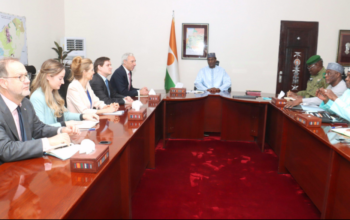
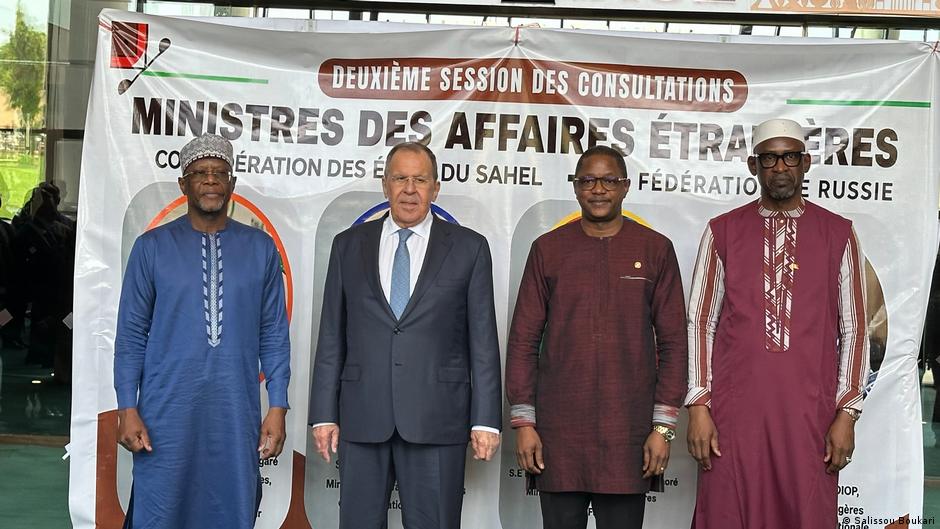
In a significant diplomatic move, Russian Foreign Minister Sergey Lavrov visited Niamey this Wednesday, engaging with his counterparts from the Alliance of Sahel States (AES). The high-level meeting aimed to further cement the burgeoning partnership between Russia and the three member nations of the AES: Mali, Burkina Faso, and Niger.
Over recent years, the military authorities in Bamako, Ouagadougou, and Niamey have increasingly gravitated towards Moscow, signaling a notable shift away from their traditional Western partners, particularly France. Russia now plays an expanding role in the diplomatic strategies of these Sahelian states, which frequently emphasize the diversification of their international alliances and the staunch defense of their national sovereignty. Notably, Moscow has emerged as a crucial partner in the realm of security for the West Africa Sahel region.
According to Daouda Emile Ouédraogo, a political analyst and coordinator for the US-based NGO Stand for Life and Liberty, the AES countries are receiving substantial security assistance. This includes “military training, deliveries of weapons and equipment, and the sharing of intelligence for cooperation against jihadist groups,” he noted, highlighting the practical aspects of this Sahel Russia cooperation.
Joint Force Ambitions with Russian Backing
The AES nations are also banking on Russian assistance to establish a joint armed force, designed to confront the persistent security threats plaguing the region. During the inaugural consultation session between the foreign ministers of the AES and Russia in Moscow in April 2025, Russia had reiterated its commitment to supporting this ambitious project through providing training, military equipment, and technical expertise.
However, the effectiveness of this military cooperation has drawn scrutiny from some observers, particularly in the wake of the jihadist attacks on April 25 in Mali. These attacks tragically claimed the life of Defense Minister Sadio Camara, a staunch advocate for closer ties with Moscow within the military government. Furthermore, the withdrawal of Africa Corps elements from Kidal illustrates some of the operational challenges Russia faces in the region, adding a complex layer to current Sahel breaking news.
Real Impact for Sahelian Populations?
Beyond military objectives, certain analysts contend that while this intensified military cooperation officially targets armed groups, it also serves to bolster the power of the incumbent military regimes. This raises a critical question: are the populations truly benefiting from this closer alignment with Russia?
Analyst Daouda Emile Ouédraogo pointed out that for the general populace, “we don’t see increased investments in mining, energy, or infrastructure. It’s much like before; there were criticisms of Western countries for exploiting natural and mineral resources. The same pattern appears to be continuing today.”
The expert further elaborated that while “security has improved in some areas, for many citizens, concrete results remain very limited when faced with daily challenges such as insecurity, inflation, unemployment, and poverty.” This perspective offers vital context for understanding Sahel politics today and the implications for Mali, Niger, and Burkina Faso.
Internationally, Russia extends political backing to these military regimes, coordinating positions with them in international forums like the United Nations. This strategic alignment not only enhances Moscow’s global influence but also helps the military governments overcome their international isolation, shaping the narrative of West Africa Sahel developments.