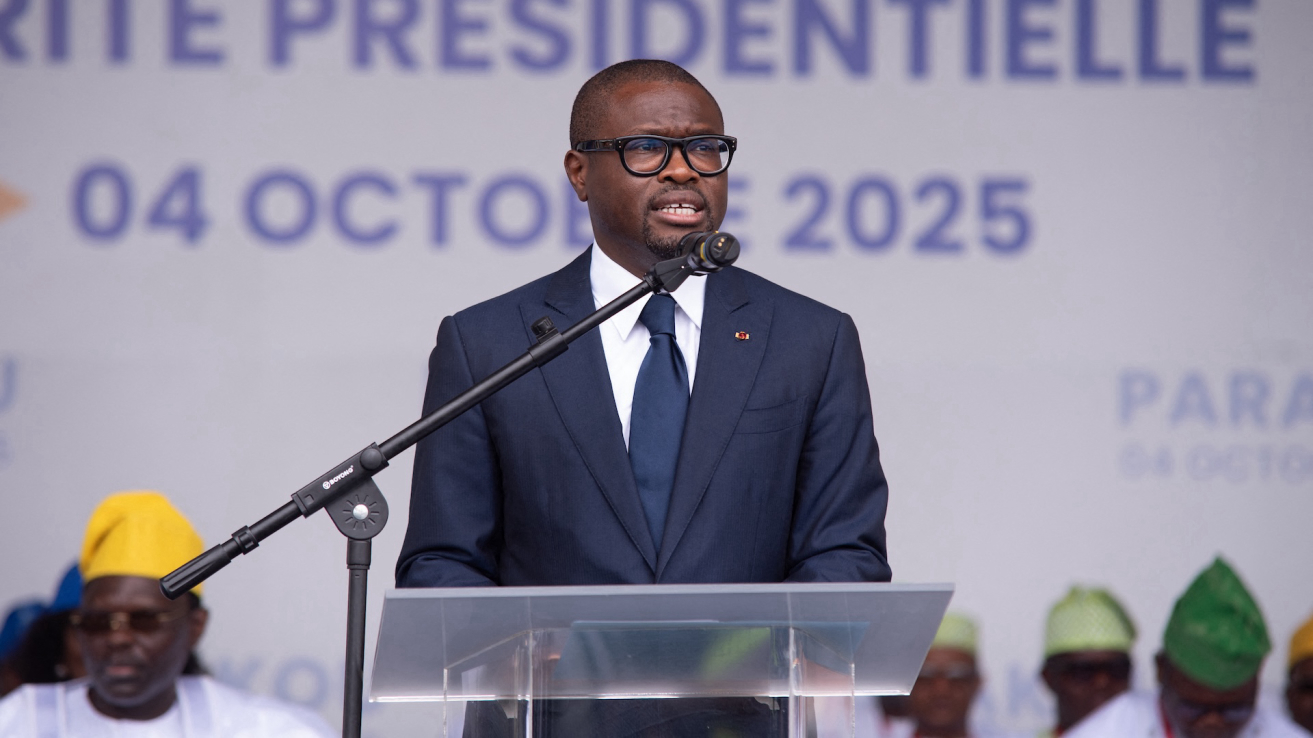
Romuald Wadagni has secured a decisive victory in Benin’s presidential election, winning 94.27% of the vote against his opponent Paul Hounkpè, who conceded defeat and urged national unity. The Constitutional Court confirmed a turnout of 63.57%, a significant increase from the 50.17% recorded in 2021, signaling heightened public engagement in the democratic process.
Democracy on trial: a fifth peaceful alternation
This election marks Benin’s fifth democratic transition since the historic 1990 National Conference, a rare feat in a region where presidential term extensions often spark instability. The outgoing president, Patrice Talon, voluntarily stepped down after two terms, adhering strictly to constitutional limits—a move that underscored Benin’s commitment to institutional stability. While the vote proceeded peacefully, isolated irregularities, including allegations of ballot stuffing, were reported. Electoral authorities and observer missions confirmed that these incidents did not compromise the election’s integrity. The Constitutional Court invalidated 34,596 votes nationwide due to procedural breaches.
Paul Hounkpè’s candidacy posed no real challenge to Wadagni, as his party, the Forces Cauris pour un Bénin émergent, had previously underperformed in legislative and local elections, as well as the 2021 presidential race, with vote shares of 4.78%, 6.65%, and 11.37% respectively.
Economic architect faces the poverty paradox
As Finance Minister for a decade, Wadagni played a pivotal role in driving Benin’s economic transformation. Under his leadership, annual GDP growth surged from 1.8% in 2015 to an estimated 8% in 2025. Yet, despite this robust expansion, poverty remains entrenched, with over 40% of Beninese citizens living below the poverty line. This stark disparity highlights the urgent need for inclusive growth—a cornerstone of Wadagni’s 2026-2033 agenda, which prioritizes equitable social welfare, economic diversification, and national cohesion.
His mandate also hinges on revitalizing regional diplomacy. Benin’s security landscape has grown increasingly precarious, with terrorist threats persisting in the north and strained relations with neighboring Burkina Faso and Niger. While cooperation with Nigeria has improved following its support during a recent coup attempt, the broader regional dynamic remains fragile. Wadagni has signaled his intent to rebuild partnerships, emphasizing that Benin cannot tackle multidimensional security threats in isolation. However, meaningful progress will require political will from Niamey and Ouagadougou as well.
The political landscape: dominance and disarray
Wadagni inherits a political environment dominated by pro-presidential legislators and local officials, following sweeping electoral reforms introduced in 2016 and refined in 2024. These changes, particularly the 15% sponsorship requirement for presidential candidates, have effectively marginalized the opposition. The Democrats, once Benin’s leading opposition party, have been sidelined, partly due to internal fractures after former President Boni Yayi’s departure in early 2026. Without reforms, the opposition may remain excluded from elections until 2040.
The 2025 Constitution introduced mechanisms such as the