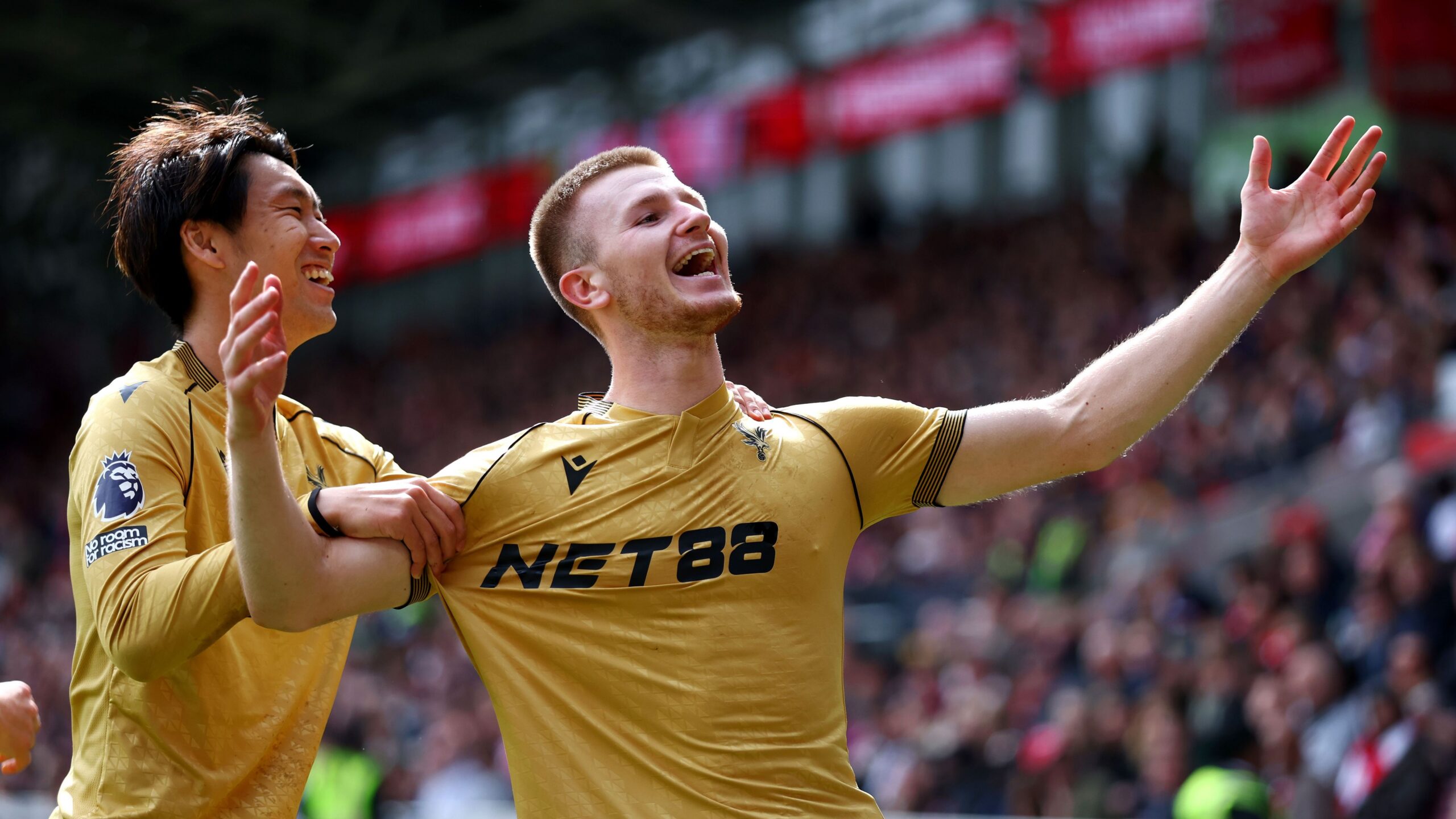
Tonight’s Europa Conference final at the Red Bull Arena between Crystal Palace and Rayo Vallecano is far from the typical showdown one might expect from Europe’s top club competitions. While neither side entered the season as favorites for continental glory, both stand at the precipice of making history. For Crystal Palace, it’s a chance to secure their first major trophy under Oliver Glasner’s leadership, following his triumph in the FA Cup last year. For Rayo Vallecano, the final represents an unexpected but well-earned reward for a club that has defied expectations under Iñigo Pérez.
The match is shaping up to be a tactical chess match, where the contrasting styles of both teams could produce a thrilling, unpredictable spectacle. Despite Palace’s reputation for physicality and structure, the underdog status of Rayo—a team that thrives in chaos—adds an extra layer of intrigue. The question isn’t just who will lift the trophy, but how the game will unfold when two philosophies collide.
Rayo Vallecano’s controlled chaos
Iñigo Pérez’s journey to the Europa Conference final is a testament to perseverance. After being blocked from joining a Premier League club due to work permit issues, Pérez returned to Rayo Vallecano, where he had previously served as an assistant under Andoni Iraola. While he retained Iraola’s aggressive, high-intensity football philosophy, Pérez has refined it, blending relentless pressing with improved ball control and tactical discipline.
The result is a team that remains unpredictable but more structured in possession. Their attacking approach is built on rapid transitions, with nearly 40% of their shots originating from counterattacks. The data reveals a clear pattern: Rayo prioritizes territorial pressure, focusing their attacks on central areas around the penalty box. However, their efficiency remains a work in progress. While they generate a high volume of shots, the quality of these attempts often leaves room for improvement, as evidenced by their average expected goals (xG) per shot.
Over the course of the season, Rayo’s attacking output has been relatively consistent, but their defensive vulnerabilities have frequently left matches open to dramatic swings. Despite these fluctuations, their overall xG difference remains positive, a statistic that Palace cannot afford to overlook.
Crystal Palace’s transitional precision
Oliver Glasner has already etched his name in Palace’s history books by delivering their first major trophy, the FA Cup, last season. That victory was built on resilience, tactical adaptability, and a knack for thriving in high-pressure situations. While injuries to key players like Eberechi Eze and Marc Guéhi tested the squad’s depth this season, Palace’s strong league position ensured their focus remained on the continental campaign—a familiar path for clubs like Tottenham Hotspur in recent years.
Glasner’s experience in knockout competitions, including his Europa League triumph with Eintracht Frankfurt, has prepared Palace well for this final. Their offensive approach contrasts sharply with Rayo’s: Palace favors precision over volume, with a higher xG per shot and a greater concentration of attempts in central zones near the penalty box. About 40% of their shots also come from transitions, but unlike Rayo, Palace’s counterattacks are more deliberate, converting vertical play into clear chances rather than overwhelming opponents with sheer quantity.
Their efficiency is further highlighted by their shot profiles, which show a preference for high-quality scoring opportunities over speculative long-range efforts. However, Palace’s consistency has been inconsistent. While they’ve produced standout performances, their offensive and defensive metrics fluctuate more than Rayo’s, making their form heading into the final a wildcard.
Adam Wharton: the engine of Palace’s attacks
At the heart of Palace’s transitional play is Adam Wharton, a midfielder whose style embodies the modern game’s demands for verticality and creativity. Often overlooked in discussions about England’s World Cup prospects, Wharton is a player who thrives under pressure, combining audacious dribbles, sudden changes of pace, and pinpoint passes to break defensive lines.
Wharton’s statistics paint the picture of a complete midfielder: elite assist numbers, progressive passing, and a major contributor to Palace’s xG creation. He excels in dictating transitions, knowing when to slow the game to maintain control and when to accelerate play to exploit gaps. His ability to read the game and deliver decisive passes in dangerous areas—particularly in the half-spaces and just outside the penalty box—makes him a constant threat.
Against a team like Rayo Vallecano, whose aggressive pressing can create moments of instability, Wharton’s role becomes even more crucial. He has the vision to disrupt defensive structures, turning moments of chaos into opportunities for Palace. With Glasner’s system built around quick transitions and vertical play, Wharton is the perfect conductor for an attack that balances creativity with efficiency.
Exploiting Palace’s set-piece vulnerabilities
If Rayo Vallecano is to upset the odds, they may find their best chance lies in exploiting Crystal Palace’s weaknesses on set pieces. Palace’s defensive record on corners and throw-ins has been a persistent concern, particularly in terms of the quality of chances conceded rather than the quantity. Their data reveals a troubling trend: opponents frequently create high-xG opportunities from Palace’s defensive set pieces, with a significant concentration of dangerous shots occurring in central areas around the penalty box and the six-yard box.
Whether from the left or right flank, Palace’s opponents have repeatedly found success by targeting central zones after second-ball situations. The statistics are stark: shots from Palace’s right-side defensive set pieces generate an average xG of over 0.31 per attempt—a figure that underscores just how vulnerable they are in these situations. The thermal maps confirm this pattern, showing that the most dangerous chances consistently arise from central areas, regardless of where the set piece originates.
For Rayo, the opportunity isn’t about executing complex routines but about creating chaos. By overloading central zones and pressuring Palace’s first touch, they can turn defensive set pieces into attacking opportunities. Given that Rayo’s strengths lie in their intensity and transitional play rather than set-piece mastery, this could be their most realistic path to scoring in a match where open-play domination may prove elusive against Palace’s physicality.
Final thoughts: a clash of philosophies
This final is more than just a David vs. Goliath narrative. It’s a collision of two distinct footballing philosophies: Crystal Palace’s structured, transitional efficiency versus Rayo Vallecano’s aggressive, chaotic intensity. Palace may boast superior individual talent and physicality, but Rayo’s ability to disrupt and dictate the flow of the game makes them a formidable opponent.
The unpredictability of the match will hinge on moments of transition—whether through Wharton’s incisive passing, a Palace counterattack, a Rayo pressing sequence, or a set-piece opportunity. In a one-off final, such moments often decide the outcome. While Palace’s consistency and tactical nous give them an edge, Rayo’s fearless approach could be the catalyst for an upset.
Regardless of the result, tonight’s final will be a showcase of two managers at pivotal points in their careers. Glasner and Pérez represent opposing visions of control in football, and the clash between their methods will determine who takes home the Europa Conference trophy.