Libreville, Saturday, June 13, 2026 – Amidst the ongoing geopolitical shifts across the African continent, Gabonese diplomacy is actively seeking to redefine its role and aspirations.
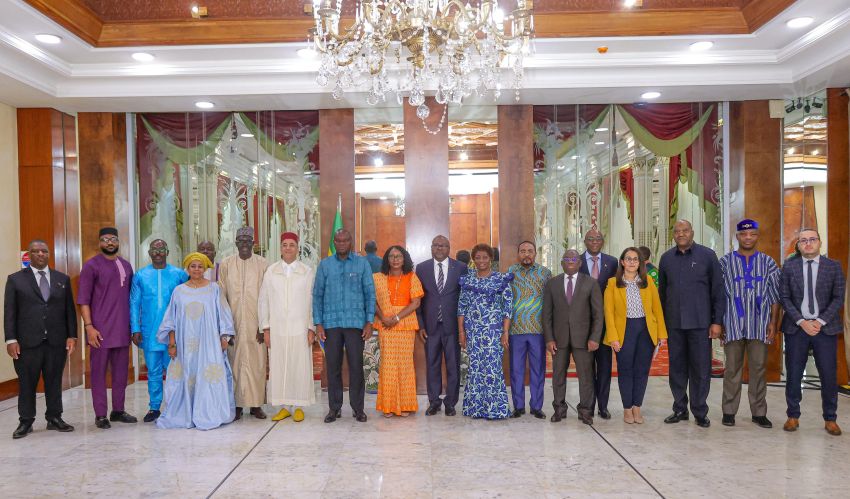
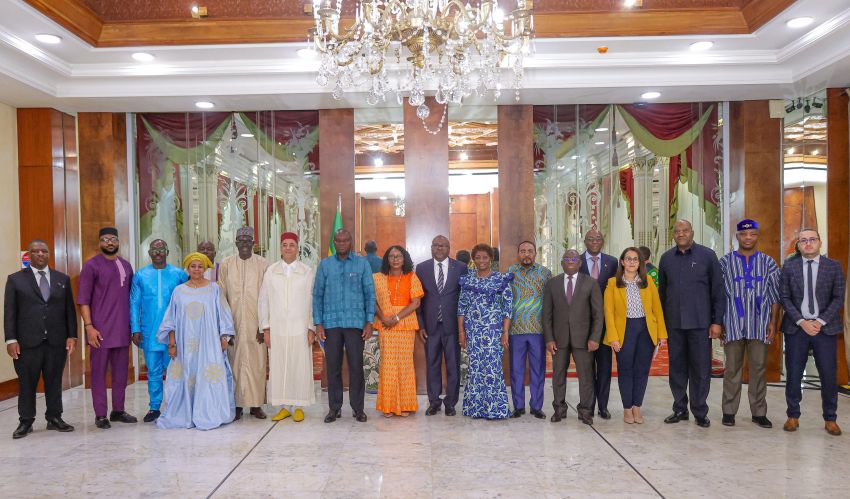
President Brice Clotaire Oligui Nguema recently convened his first collective meeting with all African ambassadors accredited to Libreville since assuming office. This was far more than a mere protocol exercise; it served as a platform for the President to articulate a comprehensive political vision aimed at repositioning Gabon within the crucial African debates of the coming decade.
Through this profoundly symbolic audience, the Head of State conveyed a clear message. Gabon intends to emerge as a key player in fostering stability, facilitating dialogue, and championing an African integration process driven primarily by the continent’s own nations. In an Africa grappling with security crises, competing influences, and evolving development paradigms, Libreville is determined to make its distinct voice heard.
A vision for an Africa built by Africans
At the core of the President’s address was a conviction resonating deeply across numerous African capitals today: the continent’s future can no longer solely rely on externally formulated solutions.
This declaration aligns with a broader trend observed over several years. From the Sahel region to Southern Africa, many leaders are asserting a greater demand for sovereignty in managing economic, security, and institutional challenges. Libreville is now poised to actively contribute to this vital continental discourse.
President Oligui Nguema structured his message around three primary objectives. The first emphasizes accelerating regional integration to boost intra-African trade, which remains among the lowest globally. The second focuses on strengthening South-South cooperation, viewed as a critical mechanism for sharing successful experiences and fostering economic complementarities. The third priority involves consolidating national capacities, empowering each state to effectively address its specific development hurdles.
This strategic direction reflects a commitment to move beyond traditional rhetoric on African unity, favoring a more pragmatic, results-oriented approach.
Gabon’s strategy: converting stability into influence
Discussions with the African diplomatic corps also offered insights into the external perception of Gabon’s transition. Several ambassadors commended the transformative progress achieved over the past nearly three years in areas such as infrastructure, urban planning, and public amenities.
Beyond diplomatic courtesies, these observations highlight a central goal for Libreville: the government aims to leverage its national advancements into significant regional influence.
The announced revival of several joint commissions with various African nations underscores this strategic objective. The goal is to evolve from a predominantly political diplomacy to a project-driven one, capable of forging tangible partnerships across sectors like energy, transport, agriculture, digital technology, and professional training.
In line with this ambition, Gabon is also intensifying efforts to enhance its international visibility. The country’s bid to host the ninth African Union-Regional Economic Communities (AU-RECs) semi-annual meeting in 2027 is part of this initiative. Similarly, the desire to organize the Francophonie Summit in 2030 illustrates Libreville’s aspiration to become a major diplomatic hub connecting Africa, the Francophone world, and the broader international community.
Balancing hospitality, firmness, and peace diplomacy
The meeting also addressed more practical matters concerning African nationals residing in Gabon. Ambassadors raised various administrative and consular concerns, to which the President responded by reaffirming Gabon’s commitment to international conventions and improving case processing.
This message was coupled with an important reminder: while Gabon remains dedicated to its historical openness towards African populations, this hospitality must be exercised within the bounds of national laws. This stance seeks to reconcile regional attractiveness with the imperative of good governance.
Ultimately, Brice Clotaire Oligui Nguema delivered a specific message to the Sahel countries, particularly those within the Alliance des États du Sahel. In a regional environment marked by political tensions and institutional fragilities, he advocated for dialogue, mutual understanding, and concerted action as the preferred tools for resolving disputes. This highlights Gabon’s commitment to West Africa Sahel stability.
This diplomatic posture is not insignificant. It signals Gabon’s determination to position itself as a mediation actor, capable of engaging with all African perspectives.
Following this inaugural collective encounter with the continent’s ambassadors, a clear reality emerges: Libreville no longer wishes to be perceived merely as a stable capital in Central Africa. Gabon now aims to play a more prominent role in African affairs, making cooperation, peace, and regional integration the cornerstones of its expanding influence. The challenge now lies in translating this diplomatic vision into tangible results, as modern Africa judges ambitions by the actions they produce.