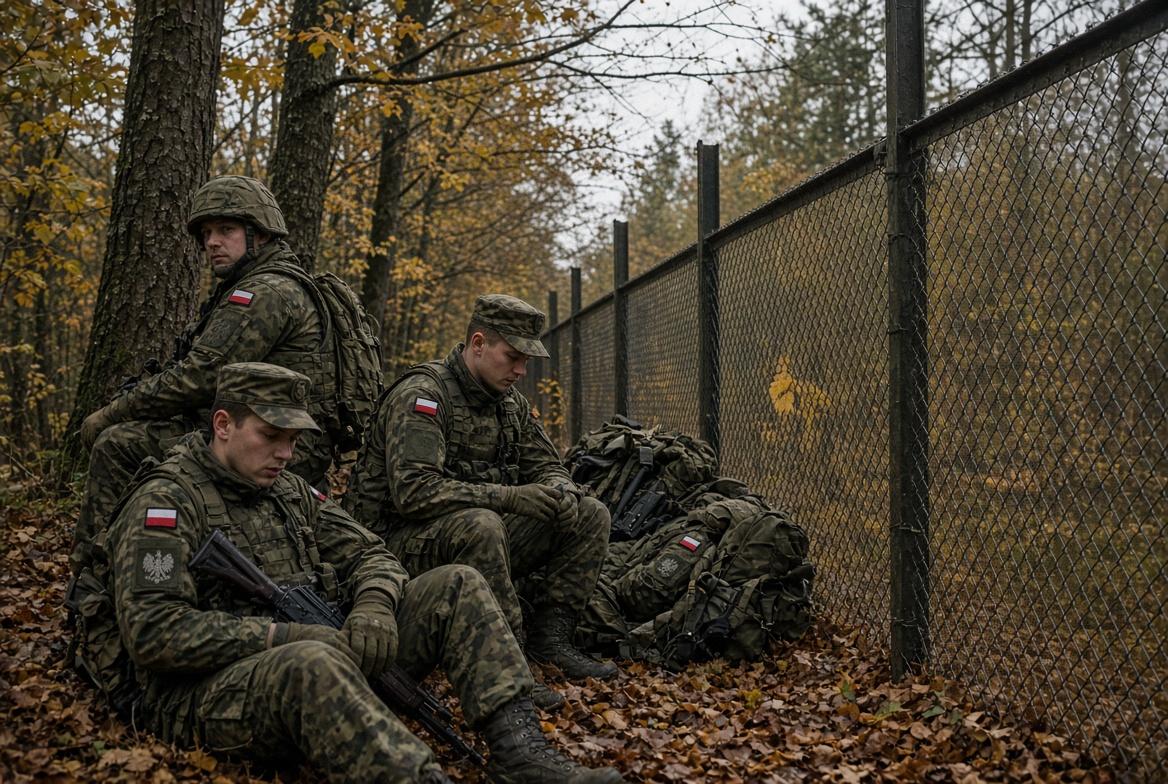
Under the cold, murky skies of northern Europe, a quiet but decisive battle is unfolding. The fragile balance between NATO’s eastern flank and Moscow’s expanding sphere of influence has reached a critical inflection point along the Baltic Sea. What began as sporadic provocations has evolved into a calculated campaign of infiltration, covert sabotage, and psychological warfare—orchestrated from the heavily militarized enclave of Kaliningrad. In response, Poland has launched an unprecedented security mobilization, redefining the rules of deterrence in Europe’s northern theater.
Unseen tensions heating the Baltic frontier
The air over the Baltic coastline is thick with more than just maritime mist. Escalating aerial provocations—unidentified drones, unauthorized overflights, and electronic disruption—have become daily realities. These are not isolated incidents, but part of a coordinated Russian hybrid warfare strategy, designed to probe defenses, sow division, and destabilize Eastern Europe. Poland’s northern border, once a relatively calm transit zone, now sits at the heart of a brewing confrontation.
Behind closed doors, intelligence assessments reveal a pattern of alarming behavior: smuggling networks linked to state actors, shadowy cyber campaigns targeting critical infrastructure, and persistent attempts to exploit migration flows as a tool of pressure. The stakes are no longer theoretical. Warsaw has concluded that the Kremlin will exploit any perceived weakness—especially in a region where NATO solidarity is tested by geographic proximity to Russia.
From patrol to fortress: Poland’s security surge decoded
A layered defense architecture
What was once a routine border monitoring system has been transformed into a multi-layered security fortress. The operation, codenamed Northern Shield, integrates military, police, and intelligence assets into a seamless surveillance net. Key components include:
- Military rapid-response battalions: Positioned within minutes of high-risk zones, ready to intercept infiltration attempts or sabotage teams.
- Hybrid threat units: Specialized teams trained to detect and neutralize electronic warfare, drone incursions, and cyber-physical attacks.
- Critical infrastructure patrols: Daily sweeps of energy pipelines, telecommunications hubs, and transport corridors—especially along the Baltic coast.
- Biometric and AI-enhanced screening: Automated identity verification at border crossings to screen for known operatives or suspicious travel patterns.
The role of NATO integration
Poland’s defense surge is not an isolated gambit. It is fully aligned with NATO’s Eastern Flank strategy, reinforcing collective security guarantees under Article 5. Warsaw’s actions send a clear signal: any aggression—whether kinetic, electronic, or psychological—will be met with a unified and immediate response. By enhancing interoperability with Baltic states and reinforcing the Suwałki Corridor, Poland is not just protecting its own soil; it is shoring up the entire northern NATO perimeter against Russian hybrid aggression.
Deterrence in the age of gray-zone warfare
This is not a traditional war—and Poland knows it. The Russian playbook leverages ambiguity, plausible deniability, and low-intensity tactics to avoid direct confrontation. Yet, the strategy is no less destructive for its subtlety. By blending espionage, disinformation, and sabotage, Moscow aims to destabilize, distract, and divide. Poland’s response is equally nuanced.
The government has adopted a doctrine of active deterrence: preemptive surveillance, calibrated responses, and public signaling of capabilities. Officials have repeatedly stated that any unauthorized incursion—whether by drone, sabotage unit, or cyber actor—will be met with proportional force. This approach underlines a key insight: in the gray zone of modern warfare, the greatest vulnerability is not military inferiority, but a lack of resolve.
The human cost: security against society
No fortress is without consequences. The intensified border regime has disrupted local trade, delayed cross-border travel, and strained community relations. Residents near the border report a climate of suspicion and surveillance fatigue. Civil liberties advocates warn that prolonged emergency protocols risk normalizing exceptional measures—even as intelligence agencies argue that the threat is real, immediate, and growing.
Yet, for the Polish government, the calculus is clear: the price of vigilance is far lower than the cost of strategic surprise. By erecting this invisible wall—not of concrete, but of resilience—the country is rewriting the playbook of 21st-century defense.
The long view: Eastern Europe’s new normal
The Baltic Sea is no longer a buffer zone. It has become a frontline in a continuous, low-intensity conflict—one where the weapons are drones and data, sabotage and social media, and where the battle lines shift by the hour. Poland’s bold response is not just about securing a border. It is about asserting sovereignty, reinforcing deterrence, and setting a precedent for Europe’s eastern defenses.
As the world watches the war in Ukraine, another front is being fought in the shadows. And Poland has chosen to meet it not with retreat, but with resolve.