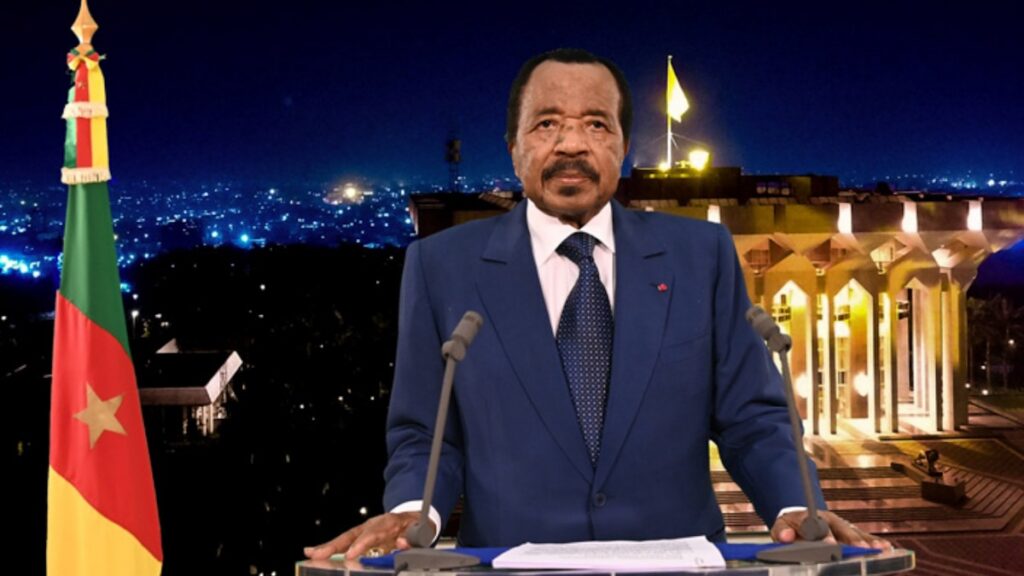
Since June 7, 2026, when President Paul Biya left Yaoundé for what was described as a brief private stay in Europe, Cameroon has been operating in uncharted waters. Over two months later, with no public appearance or official return date, the silence from the highest echelon of power has transcended mere political speculation. In a nation where governance remains tightly centralized around the presidency, this prolonged absence may be leaving tangible, measurable scars on both the economy and the social fabric.
Economic slowdown: markets hesitate and governance stalls
The concentration of power in Cameroon means the president’s signature often unlocks critical financial and institutional mechanisms. His absence appears to be triggering a domino effect of delays and uncertainties:
- Financial markets lose confidence: Recent financial assessments reveal Cameroon’s dollar-denominated bonds as among the worst performers on the continent. Rating agencies highlight the lack of clarity on succession and the perceived political instability, deterring international investors.
- Frozen infrastructure projects: Major public-private partnerships and infrastructure initiatives rely on high-level approvals. Without these, project files pile up in ministerial offices, delaying budget disbursements and execution.
- Administrative paralysis persists: Despite a constitutional reform in April 2026 introducing a vice-presidential position to mitigate leadership vacuums, the role remains vacant. A long-awaited cabinet reshuffle has also stalled, keeping the country in a state of administrative limbo.
Social strain: rising costs and growing frustration
For ordinary citizens, the effects of this institutional slowdown are immediate and harsh:
- Soaring living costs: Local markets continue to grapple with steep inflation in essential goods and fuel. Without responsive fiscal measures or budget adjustments, household purchasing power continues to decline.
- Distrust and anxiety spread: The absence of official updates fuels wild speculation across social media. This information vacuum has fostered a sense of disregard among the population, particularly the youth, deepening social tensions.
- Critical issues sidelined: Key challenges such as the crisis in the North-West and South-West regions, youth unemployment, and crumbling electricity and road networks lack the political momentum needed for sustainable solutions.
Reflecting deeper systemic flaws
Paul Biya’s prolonged absence is exposing the vulnerabilities of Cameroon’s governance model. It underscores how an over-reliance on a single leader can destabilize the entire socio-economic machinery when that leader is absent.
For Cameroon to restore investor confidence and maintain social stability, clarifying the chain of command and reigniting routine governance must become an immediate priority.
You may also like
Senegal’s December 2, 2026: will Diomaye Faye dissolve parliament or play the long game?
Senegal’s 2026 budget revision: can Dakar still rescue its growth and investment agenda?
Senegal’s 2026 revised budget: a trap vote for Pastef or a necessary evil?
Burkina Faso’s armored vehicles: can Faso Armored’s 300-unit claim survive the scrutiny?
Can Senegal and Azerbaijan turn a New York memorandum into a lasting political partnership?