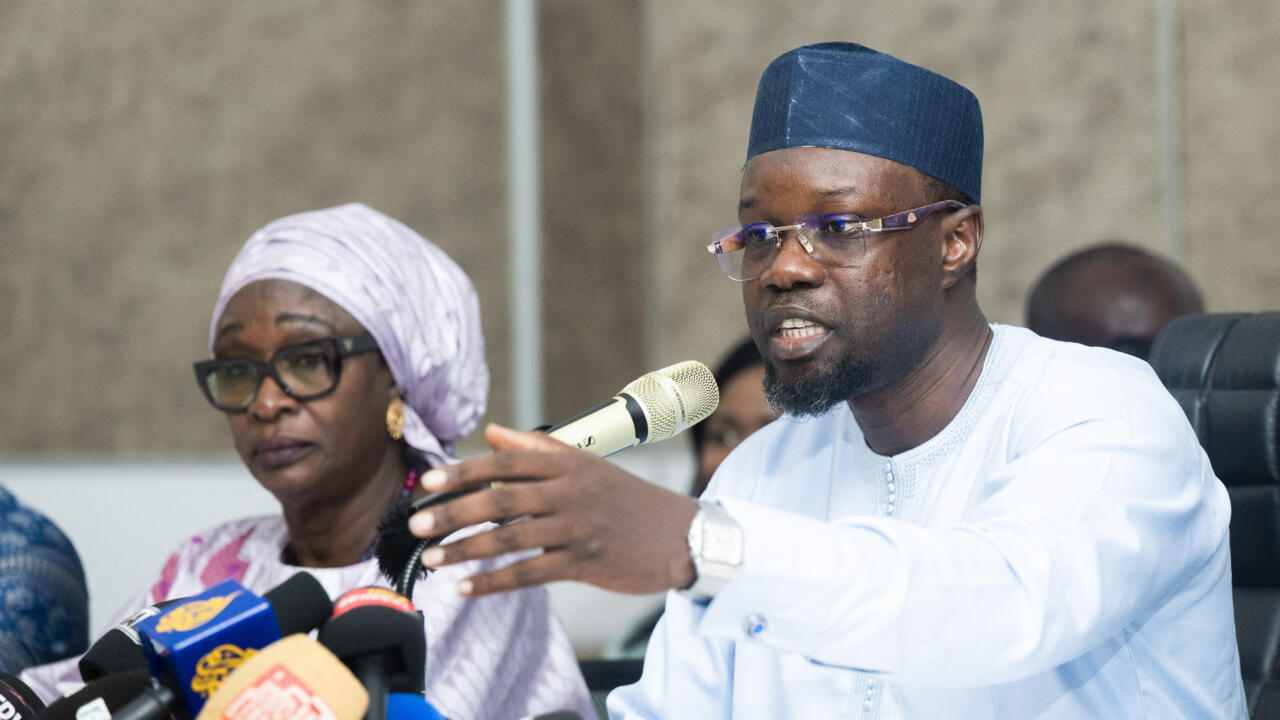
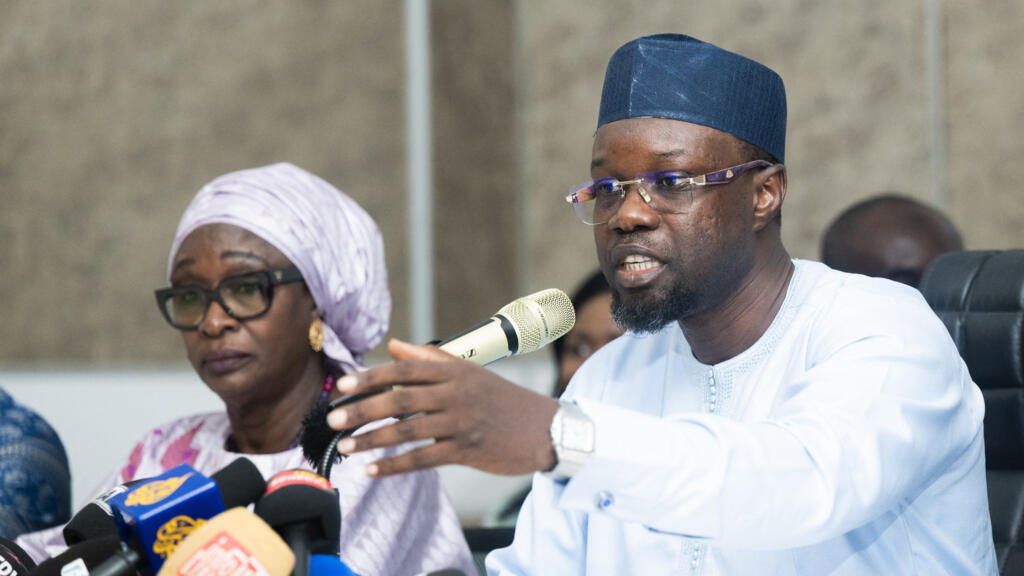
Just one week after being removed from his position by President Bassirou Diomaye Faye, Ousmane Sonko has signaled the start of a major political confrontation. The former Prime Minister and leader of Pastef delivered a sharp critique of the current administration, making it clear that while he does not intend to undermine the country’s institutions, his party possesses the parliamentary weight necessary to dissolve the government through a motion of censure. Sonko described the current state of affairs as a unique brand of political cohabitation, claiming he had warned the President about this potential friction months ago to no avail.
During his recent public address, Ousmane Sonko spared no criticism for the cabinet assembled by Prime Minister Al Amine Lô. The Pastef leader argued that the current executive team suffers from a fundamental lack of political legitimacy. He dismissed the presidency’s claims of a representative coalition as hollow, asserting that the label of a “government of technocrats” is merely a mask for political isolation. Sonko insisted that Pastef remains the primary political power in Sénégal, backed by the will of the voters, and suggested that any attempt to rule without the party is a betrayal of popular sovereignty.
A significant hurdle for the presidency
The Sénégalese executive branch now finds itself in a vulnerable position. The exclusion of Pastef from the government creates a substantial political barrier for Bassirou Diomaye Faye. As the dominant force in the National Assembly, the party’s cooperation is essential for any legislative success. This setup has created an internal cohabitation where the President’s ability to implement his agenda and drive promised reforms depends heavily on maintaining a fragile alliance with Pastef deputies.
Beyond the mere cabinet structure, the broader issue of national stability is now at the forefront. Observers are questioning how the executive branch will successfully pass laws without the direct involvement of the majority party in government management. It appears that Bassirou Diomaye Faye has moved away from the very foundations that facilitated his rise to power, leaving his administration legally legitimate but politically detached from its original narrative.
At the National Assembly, Ousmane Sonko remains a formidable figure with 130 deputies behind him. He stands not as a typical opponent, but as the protector of the movement’s core identity, ready to remind the administration of its roots at any moment.
Internal rupture rather than traditional cohabitation
The current political climate in Sénégal is without historical precedent. This is not a standard cohabitation between a president and an opposing party, but a far more complex and risky split within the same political movement. A Head of State now faces a party that holds 130 out of 165 parliamentary seats and has formally declined to participate in the government.
The central question remains: how can a government of technocrats, lacking its own parliamentary base, effectively govern when Pastef holds an absolute majority and continues to mobilize millions of supporters across the country? This power struggle is set to play out in the coming weeks within the halls of the Palace, the chambers of Parliament, and the streets of Sénégal.