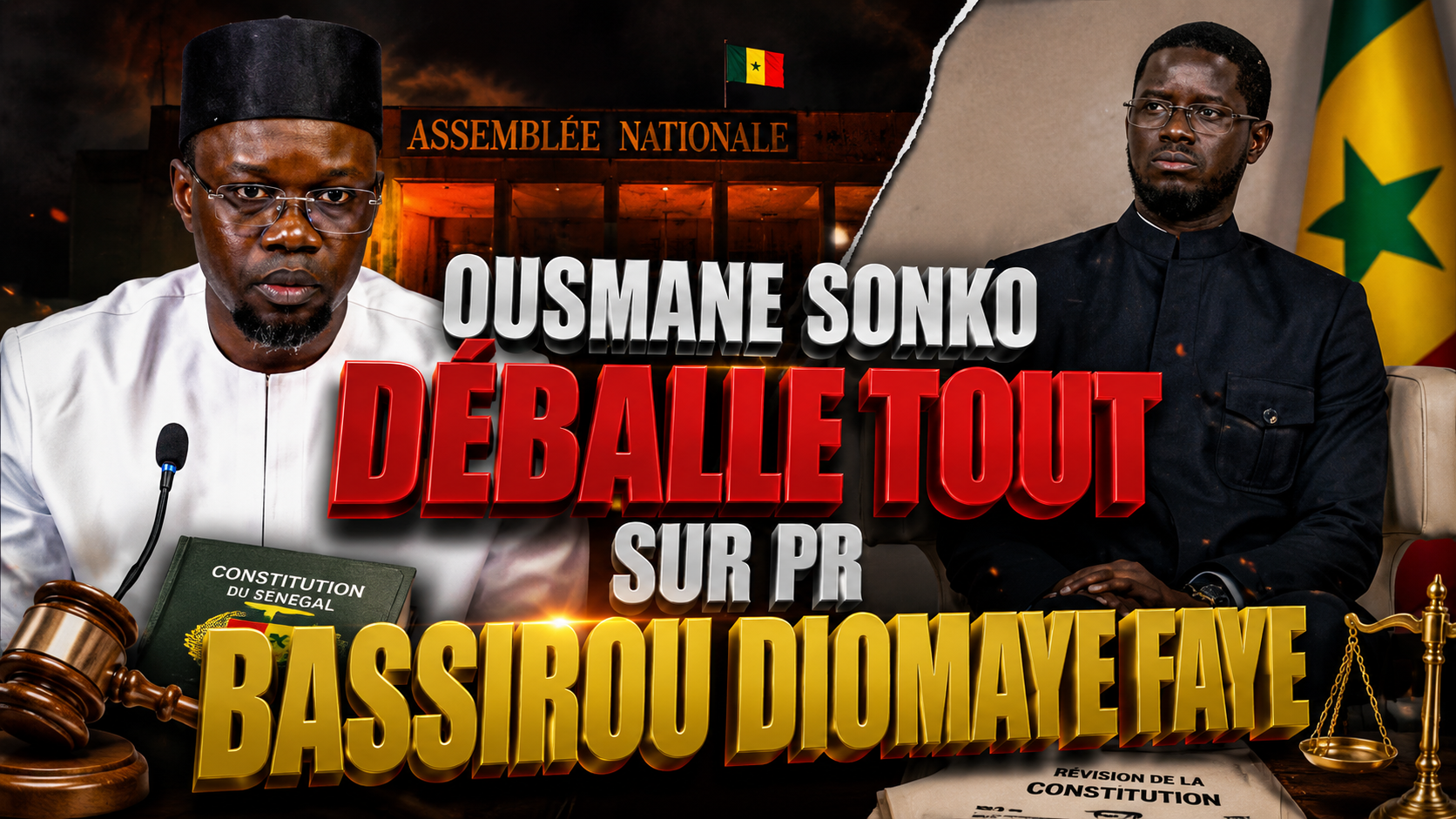
Following the National Assembly’s endorsement of the proposed constitutional revision, Ousmane Sonko meticulously detailed the entire trajectory leading to this significant reform. He then unequivocally attributed blame to the head of state for the controversies that have enveloped the text. “Should there have been any manipulation, it originated from the President of the Republic,” Sonko asserted. “He scrutinized the document, selecting what suited him and discarding what did not. The Constitution does not belong to Bassirou Diomaye Faye,” he declared with conviction.
The Speaker of the National Assembly further elaborated on his argument by highlighting specific provisions he accused the head of state of excluding. Among these, he specifically mentioned the requirement for a declaration of assets at the conclusion of a presidential term and the prohibition against the President of the Republic concurrently leading a political party. Sonko then questioned the very legitimacy of such an approach: “By what authority can a single individual arbitrarily choose between provisions that suit them and those that do not? This is unacceptable,” he firmly stated.
In his address, Ousmane Sonko was keen to underscore the hierarchical structure of constitutional powers, explicitly denying the President of the Republic the status of a constituent power. “The President is not a constituent power,” he clarified. “The derived constituent power resides with the National Assembly, while the original constituent power is the people, when convened through a referendum.”