
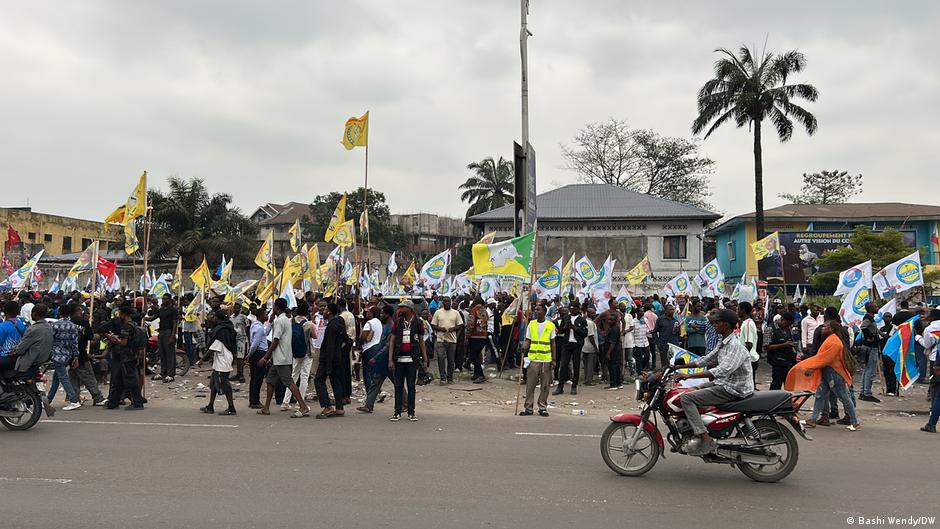
opposition protests looming in democratic republic of Congo after constitutional ruling
The Constitutional Court’s endorsement of the referendum framework legislation has reignited fierce political debate in the Democratic Republic of the Congo, with opposition groups vowing to intensify their resistance.
The ruling, which greenlights the referendum process, has drawn sharp criticism from the Article 64 coalition, a prominent opposition alliance. They argue that this move paves the way for constitutional amendments they strongly oppose. Prince Epenge, a coalition spokesperson, has vowed to rally citizens against what he describes as an unconstitutional agenda.
“We will not back down. We will channel all our efforts to ensure this law never becomes operational in our nation,” he declared, adding that “the people are outraged and must stand firm against a third term and any attempt to destabilize the country.”
Kinshasa residents voice growing unease
As coalition leaders gathered in Kinshasa on Wednesday evening to strategize their next moves, residents expressed deep concerns over the potential escalation of political tensions. Many fear that renewed protests could disrupt daily life and spiral into violence.
“Will their protests remain peaceful?” questioned one resident, emphasizing the need to “avoid any loss of life.”
Another resident lamented, “The political climate here could deteriorate further following this decision.”
A third interviewee accused “those in power of sowing discord, often deploying individuals to disrupt opposition marches.”
Others expressed worries that “it is the ordinary citizens who will bear the brunt when protests erupt.”
Political dialogue at risk
Timo Roujean, an analyst with the Konrad Adenauer Foundation, warned that the swift enactment of this law could harden the political climate. He cautioned that President Félix Tshisekedi’s rapid approval of the legislation might undermine ongoing dialogue efforts and embolden factions advocating confrontation.
“If the law is signed before August 15, the dialogue process risks collapsing,” he stated, noting that “in an increasingly tense environment where talk of a constitutional coup is growing, this court ruling could fuel the narrative that armed resistance is the only way to oppose the government.”
The Constitutional Court’s decision has only deepened the divide. With the presidential camp now armed with a legal framework and the opposition adamant in blocking any constitutional changes, the coming weeks will be pivotal in shaping the trajectory of the DRC’s political crisis.
You may also like
-
Congo constitutional referendum sparks opposition protests
-
Congo democratic republic opposition protests may resume after constitutional ruling
-
Congo democratic republic constitution row sparks fresh opposition protests
-
Cameroun : quels moyens numériques sécurisés pour permettre au président Paul Biya de travailler à distance ?
-
Cameroun : quels moyens numériques sécurisés pour permettre au président Paul Biya de travailler à distance ?