
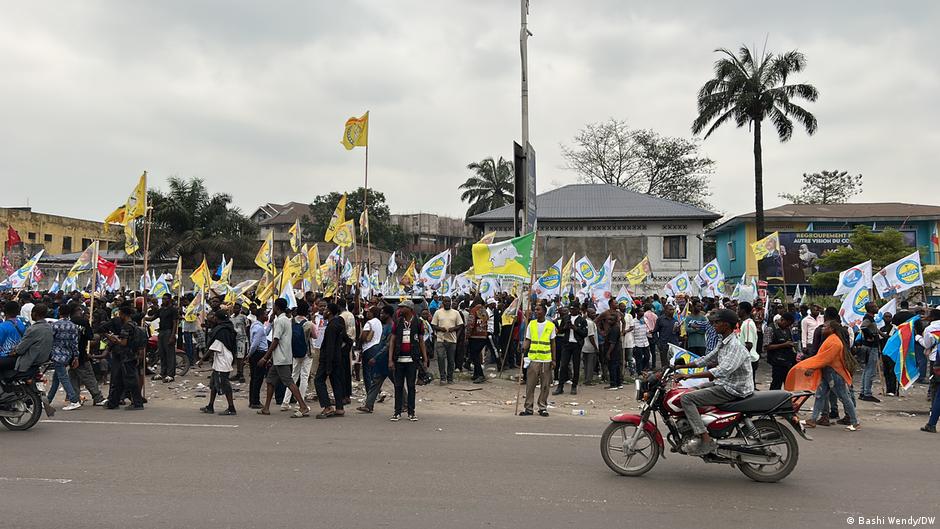
The recent constitutional court ruling that approved the referendum law has reignited fierce debates across the Democratic Republic of the Congo, with opposition groups vowing to escalate protests. Legal validation has emboldened the government, while critics warn of a dangerous constitutional overhaul that could destabilize the nation.
The coalition Article 64 has condemned the court’s decision, calling it a deliberate attempt to circumvent democratic norms. Prince Epenge, a prominent spokesperson, declared the group would “not back down”, vowing to “mobilize every resource to block this law from taking effect.”
Epenge emphasized the urgency of public resistance, urging citizens to “stand firm, remain mobilized, and reject any attempts at a third presidential term or the fragmentation of the country.”
Kinshasa residents voice growing unease
As opposition leaders convened to strategize, residents in the capital expressed deep concerns over the escalating political tensions. Many fear that renewed demonstrations could spiral into violence, disrupting daily life and public order.
One resident questioned whether opposition protests would remain peaceful, stressing the need to “avoid bloodshed.”
Another warned that the court’s decision could “push the political climate in the DRC toward further instability.”
A third resident accused the government of “actively sowing discord”, alleging that authorities have repeatedly deployed agents to disrupt opposition marches.
Others expressed worry for ordinary citizens, stating that “the real victims will be the people when protests erupt.”
Risks to political dialogue loom large
Analyst Timo Roujean of the Konrad Adenauer Foundation cautioned that swift presidential approval of the law could derail ongoing political dialogue. He warned that signing the referendum framework before August 15 would “undermine reconciliation efforts” and risk empowering factions advocating for armed resistance.
Roujean highlighted the rising rhetoric of “constitutional coup” and cautioned that the court’s ruling could validate hardline narratives, pushing the country toward confrontation rather than negotiation.
The decision leaves the DRC at a crossroads. While the government now has a legal framework to proceed with constitutional reforms, a determined opposition is refusing to yield. The coming weeks will be critical in determining whether the crisis escalates or finds a peaceful resolution.
You may also like
-
Congo constitutional referendum sparks opposition protests
-
Congo democratic republic opposition protests may resume after constitutional ruling
-
Opposition protests looming in democratic republic of Congo after constitutional ruling
-
Cameroun : quels moyens numériques sécurisés pour permettre au président Paul Biya de travailler à distance ?
-
Cameroun : quels moyens numériques sécurisés pour permettre au président Paul Biya de travailler à distance ?