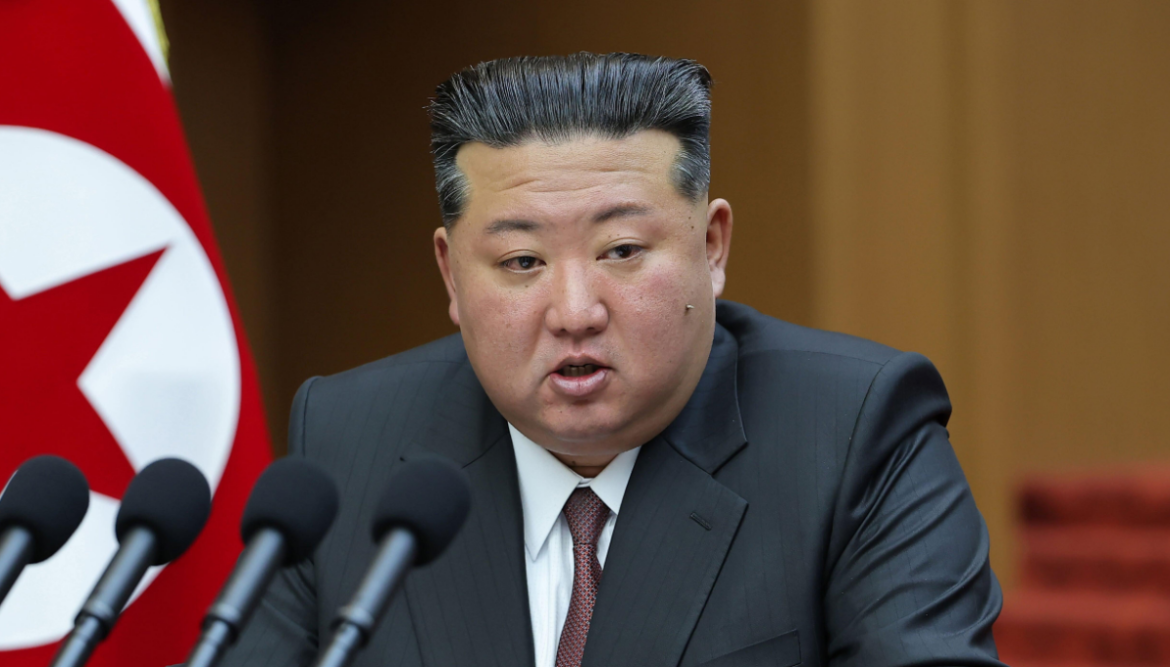
Behind the tightly controlled facade of Pyongyang’s propaganda, a storm of speculation has erupted over the health of Kim Jong-un, with unverified reports suggesting a severe cerebral hemorrhage followed by an emergency evacuation to China for treatment. While these claims have gained traction in international media, the lack of official confirmation—combined with North Korea’s long-standing policy of secrecy around its leadership—has only deepened the mystery surrounding the North Korean leader’s condition.
The origins of the rumors and their rapid spread
The narrative began circulating on social media platforms, where unverified claims about Kim Jong-un’s health were amplified by a Chinese dissident based in the United States. According to these accounts, the North Korean leader suffered a critical stroke, rendering him unconscious and necessitating his transfer to Beijing’s Peking Union Medical College Hospital, a facility known for its advanced neurological care. The alleged reason for this emergency evacuation? The perceived inadequacy of medical resources in Pyongyang to handle such a severe health crisis.
Despite the swift dissemination of these claims, no independent verification has been made public. The absence of concrete evidence—such as official statements from North Korean or Chinese authorities—leaves the international community grappling with uncertainty. The rapid spread of these rumors underscores how quickly unverified information can escalate when it involves a reclusive and globally influential figure like Kim Jong-un.
Why Pyongyang’s silence fuels the fire of speculation
North Korea’s opaque political system is designed to shield its leadership from scrutiny, particularly when it comes to matters of health or personal conduct. The regime’s strict control over information means that even minor deviations from routine—such as an absence from a public event—can spark intense speculation about the stability of the government. In Kim Jong-un’s case, the lack of transparency has created a vacuum that outside observers are eager to fill with their own interpretations.
This dynamic is not new. Historically, any prolonged absence of the North Korean leader has triggered a cascade of theories, from health concerns to internal power struggles. Yet, without tangible proof, these narratives remain speculative at best. The recent release of state-media photographs showing Kim Jong-un visiting an exhibition with his daughter, Ju-ae, has done little to quell the rumors. While the images offer a rare glimpse into his public activities, they fail to provide definitive insight into his medical condition or whereabouts in the days preceding the alleged incident.
The weight of precedent: health concerns and succession whispers
The international community’s fascination with Kim Jong-un’s health is not unfounded. Since assuming power in 2011, his physical appearance, weight fluctuations, and lifestyle habits have been scrutinized by global observers. Intelligence assessments from South Korea have previously flagged concerns about his cardiovascular risks, though these reports do not confirm a recent stroke or coma.
The shadow of his father, Kim Jong-il—who suffered a prolonged illness before his death in 2011—and his grandfather, Kim Il-sung, who passed away in 1994, further amplifies the intrigue. These historical precedents have led to persistent questions about the long-term viability of the regime should Kim Jong-un become incapacitated. Yet, without concrete evidence, such concerns remain in the realm of conjecture.
What a leadership vacuum could mean for North Korea’s future
Should Kim Jong-un’s rumored health crisis prove to be more than just speculation, the implications for North Korea’s political landscape could be profound. The regime’s power structure is deeply centralized, with authority concentrated in a small circle of elites. In the event of a leadership vacuum, the question of succession would dominate discussions both domestically and internationally.
Kim Yo-jong, Kim Jong-un’s sister, has emerged as a prominent figure within the regime, while his daughter, Ju-ae, has increasingly appeared alongside him in official events. These developments have fueled speculation about a potential succession plan, though the specifics remain unclear. Regional powers, including South Korea, China, the United States, and Japan, would closely monitor any transition, given the stakes tied to North Korea’s nuclear program and regional security.
For now, the distinction between rumor and reality remains stark. Until verified information emerges, the international community must treat claims of a cerebral hemorrhage, coma, or medical evacuation as unverified assertions rather than established facts. In a system where truth is often a carefully curated commodity, discerning reality from fiction requires a measured and cautious approach.