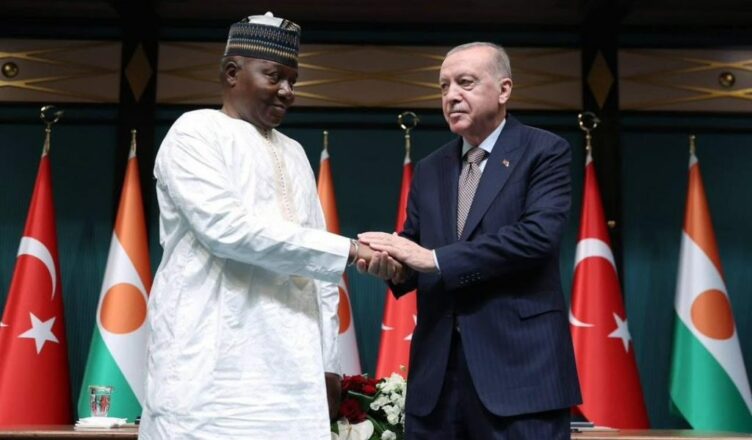
The diplomatic relationship between Niger and Turkey has reached a significant milestone during an official visit by Niger’s President, General Abdourahamane Tiani, to Ankara. This marks the first overseas trip by the Nigerien leader since assuming office, underscoring the growing importance of bilateral ties.
During the talks at the presidential palace, President Recep Tayyip Erdogan and General Tiani finalized multiple cooperation agreements spanning security, economic development, healthcare, education, and diplomatic collaboration. Among the key documents signed were a higher education protocol for 2026-2030, the establishment of a Joint Economic and Trade Commission (JETCO), an agreement on managing the Niger-Turkey Friendship Hospital, and a memorandum of diplomatic cooperation.
The Turkish leader highlighted the shared ambition to expand collaboration across vital sectors such as defense, energy, mining, agriculture, trade, and investment. He also announced the creation of a new mechanism designed to foster business opportunities between Ankara and Niamey.
President Erdogan reaffirmed Turkey’s commitment to supporting African nations facing security challenges, particularly in the Sahel region. He emphasized plans to enhance military training and intelligence-sharing initiatives while stressing that Ankara’s African policy is built on mutual respect, equal partnerships, and shared benefits.
He also highlighted key Turkish contributions in Niger, including the operation of the Niger-Turkey Friendship Hospital, irrigation and rural development projects, and educational initiatives led by the Maarif Foundation. Currently, nearly 500 Nigerien students are pursuing higher education in Turkey.
For his part, President Tiani described the partnership as strategic for Niger, noting that bilateral relations have flourished since Erdogan’s historic visit to Niamey in 2013. He praised Turkey’s support in combating armed groups in the Sahel, crediting this cooperation with strengthening Niger’s security capabilities and regional stability.