The first light of dawn had yet to touch the horizon over Aourir, a quiet coastal village just north of Agadir, when a fleet of armored vehicles and elite units rolled into the sleeping town. Their mission: intercept a radicalized extremist linked to the Islamic State terror network. Acting on intelligence from the General Directorate for Territorial Surveillance (DGST), the Special Forces launched a flawless operation. Within seconds, the suspect was neutralized.
The subsequent search by the Central Bureau of Judicial Investigations (BCIJ)—a DGST affiliate—revealed the immediacy of the threat. The individual was no longer a mere ideologue; he possessed combat gear and bladed weapons. By daybreak, residents of Aourir awoke to a heavy security presence, oscillating between shock at the proximity of terror and relief that the danger had been averted.
A clandestine workshop of death
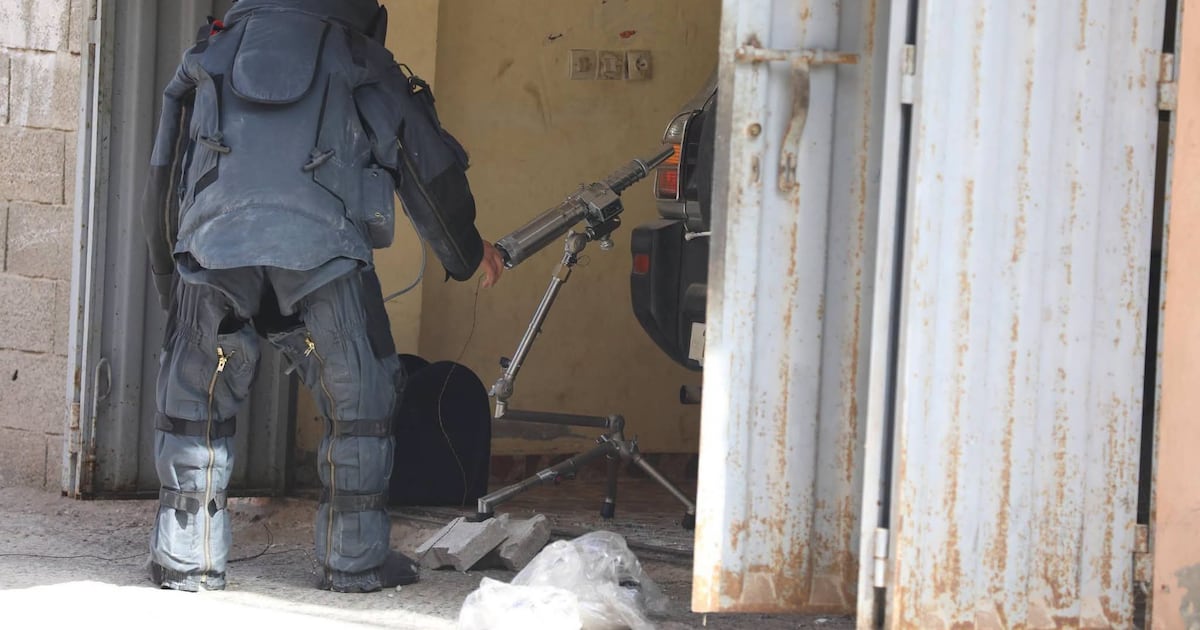
Just kilometers away in the industrial zone of Inezgane, the investigation took a darker turn. Inside a hidden warehouse in the Traast El Jorf district, investigators uncovered a chilling secret: a makeshift bomb-making facility. At its center stood a 4×4 vehicle, its fuel system clandestinely altered to run on butane gas—a deliberate modification designed to amplify thermal impact and blast radius in potential suicide or vehicle-ramming attacks against critical national infrastructure.
Confronted with the risk of an imminent explosion, the BCIJ activated an emergency protocol. Residents in the vicinity were evacuated immediately, bomb disposal experts from the National Security Directorate (DGSN) deployed, and robotic systems with advanced sensors were used to inspect the vehicle’s interior without human risk.
Once the area was secured, the inventory of the warehouse sent shockwaves through the investigation team: gas canisters, pressure cookers repurposed as shrapnel-filled bombs, electrical wiring, detonators, welding equipment, and significant quantities of solid and liquid chemicals.
A synchronized national crackdown
The operational nerve center of this cell lay in the Souss region, but its tentacles stretched across the entire kingdom. To prevent the arrest in Aourir from triggering premature alerts, the DGST’s Special Forces launched simultaneous raids in seven cities: Agadir, Taroudant, Casablanca, El Hajeb, Tétouan, Fquih Ben Salah, and Safi.
Among those detained, the profiles raised serious concerns. A 17-year-old minor was among the suspects, highlighting the cynical recruitment of youth by extremist networks. Also in custody was a former inmate previously convicted under anti-terrorism laws, underscoring the persistent challenge of recidivism among radicalized individuals.
Searches conducted across multiple residences—assisted by bomb-sniffing dogs—uncovered a hidden arsenal: military uniforms, detailed handwritten guides on assembling improvised explosives, and digital storage devices containing two critical videos. One showed a formal oath of allegiance to Daesh’s self-proclaimed caliph, while the other contained explicit threats to carry out large-scale sabotage attacks within Morocco.
Sahel connections uncovered
Preliminary investigations exposed a disturbing shift in regional terror tactics. Cell members received direct orders and logistical support from Daesh operatives in the Sahel. The directive was clear: forgo crossing into sub-Saharan insurgent camps and instead carry out attacks from within Morocco itself.
The cell operated under a highly compartmentalized military structure. A reconnaissance team scouted and validated high-value targets, a logistics unit quietly procured chemical components and welding tools, and a technical team based in Inezgane modified vehicles and assembled explosives. The DGST and BCIJ’s swift and coordinated response prevented what could have been a catastrophic event.
As calm returned to Aourir and Inezgane, BCIJ engineers and analysts began decrypting seized phones and hard drives. Their goal: map encrypted communication lines with the Sahel and ensure no dormant threats remained unaddressed.