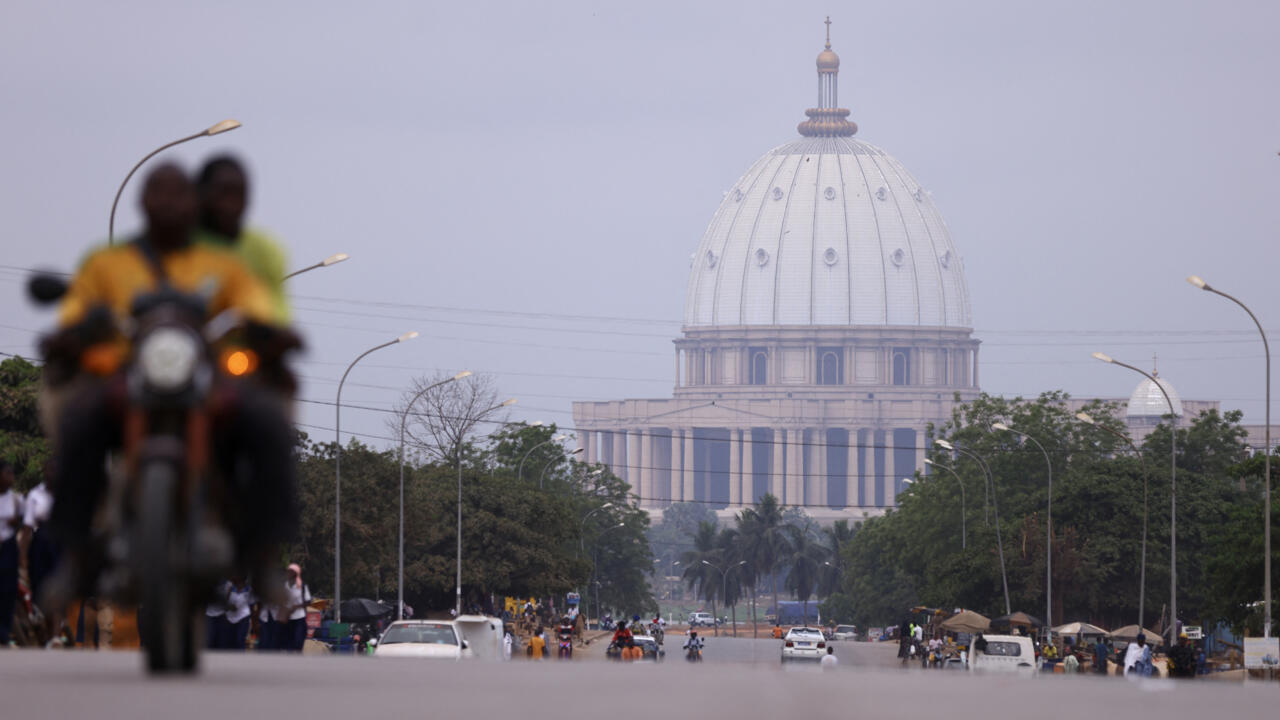
In Yamoussoukro, land values are skyrocketing and construction sites are popping up everywhere. The political capital of Côte d’Ivoire is rapidly emerging as one of the country’s new hubs for real estate investment. This land rush is reshaping surrounding villages and raising concerns about the future of agricultural land.
With his drone, real estate agent Francis Djaha showcases parcels he markets to potential buyers. From this vantage point, the view encompasses the basilica, one of the country’s most iconic monuments. Aerial footage reveals dozens of demarcated lots. Depending on location and size, these plots fetch between 15 and 40 million West African CFA francs. Djaha, who has been in the real estate business for five years, notes the growing interest in Yamoussoukro: “We’re seeing individuals wanting to build residential housing, industrialists, commercial investors seeking office lots, agricultural buyers, and even those looking for move-in ready homes.”
Construction projects are mushrooming across several neighborhoods as investors flock to the area. Yamoussoukro’s appeal stems primarily from the availability of land, but that’s not the only factor. “The roads are exceptionally wide, making navigation effortless between points. The city exudes tranquility. The infrastructure President Houphouët-Boigny built here sets Yamoussoukro apart from other cities. And crucially, from Yamoussoukro, you can easily reach anywhere,” Djaha elaborates.
Arable land under pressure
These advantages are drawing an increasing number of buyers, including those from Abidjan, interior regions, and the diaspora. They’re attracted by relatively affordable prices and the capital’s development prospects. One entrepreneur, who prefers to remain anonymous, exemplifies this trend. Drawn by the city’s expansion, he recently acquired a plot and is already planning his next move: “Our goal is to develop a residential project we’d like to offer to the population.”
However, this land rush is transforming the villages surrounding Yamoussoukro. Once dedicated to cocoa, yam, and cassava cultivation, these lands are gradually giving way to housing developments. This shift fuels development hopes but also stirs concerns about the future of local communities’ land heritage. Michel N’Goran, advisor to the village chief in Séman Sanhourikro—a few kilometers from the political capital—observes these changes with apprehension: “With these housing developments, we can no longer cultivate the land. In 30 or 50 years, I believe what happened to the Ebriés in Abidjan will befall the Akouès and Nanafouès of Yamoussoukro—we’ll have no arable land left.”
The five-year National Development Plan includes a project to connect Abidjan to Yamoussoukro in just 45 minutes via high-speed rail. This initiative is set to further enhance the Ivorian political capital’s appeal.