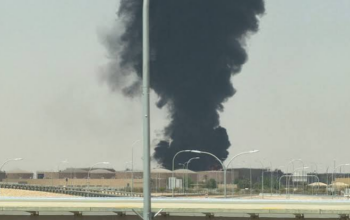
Mali’s security situation has worsened significantly in recent months, with coordinated attacks striking multiple cities in late April 2026. These assaults resulted in the tragic deaths of Defense Minister Sadio Camara and several Mali soldiers, intensifying an already volatile environment.
The surge in violence against state forces and institutions reflects a troubling trend that has unfolded over recent years. Our extensive research on insecurity and political dynamics in West Africa and the Sahel, spanning more than a decade, indicates that the latest attacks are deeply rooted in unresolved grievances voiced by the Tuareg people—grievances that the current military regime has failed to address.
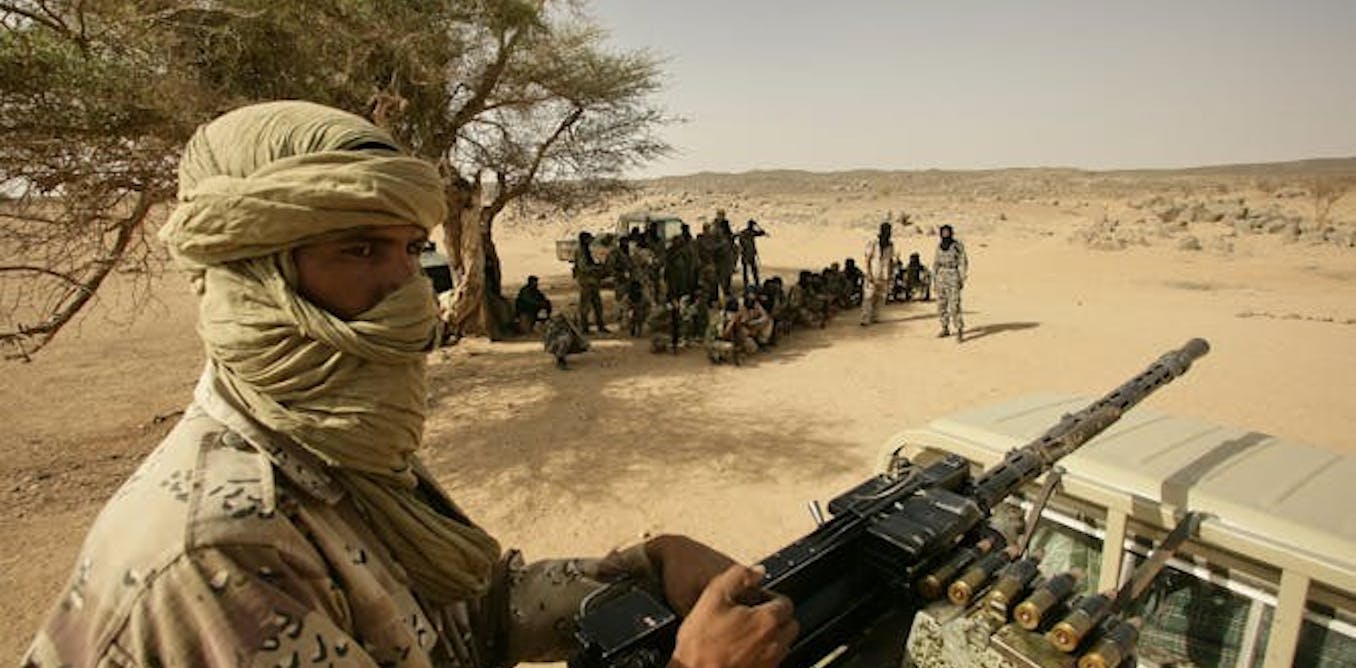
The Tuareg are a Berber nomadic community inhabiting northern Mali, where long-standing issues have fueled frustration and unrest. Their demands center on political autonomy, cultural recognition, equitable resource distribution, improved security, and meaningful state engagement—concerns that have repeatedly been neglected.
Root causes of the conflict
Three interlinked factors have contributed to the escalation of violence:
Unaddressed grievances of the Tuareg people: Political marginalization, lack of autonomy, and neglect of cultural identity have created deep-seated resentment toward the Malian state.
Militarized responses and collateral damage: The Malian military’s heavy-handed approach in northern regions, marked by indiscriminate force, has alienated local communities and fueled recruitment by militant groups.
Unequal resource distribution: Rich mineral deposits, salt mines, grazing lands, and strategic trade routes in northern Mali remain under the control of southern-based authorities, leaving the north economically disadvantaged.
Tackling these systemic issues could reduce Tuareg frustrations, rebuild trust in the state, and shift the conflict from armed rebellion toward political inclusion and sustainable peace.
escalation: alliances and historical parallels
In April 2026, the Group for the Support of Islam and Muslims (JNIM) joined forces with Tuareg rebels from the Azawad Liberation Front (FLA) to launch coordinated attacks across Mali. This mirrors a similar offensive in 2012, when Tuareg rebels and Al-Qaeda-affiliated militants staged a major assault, resulting in the brief secession of the Azawad region.
The National Movement for the Liberation of Azawad (MNLA), dominated by Tuareg fighters, emerged as a leading separatist force in 2011. Initially numbering around 10,000 combatants, the MNLA briefly seized control of cities like Gao, Tombouctou, and Kidal in 2012. However, lacking sufficient military strength to hold territory, they formed alliances with Islamist groups such as Ansar Dine, Al-Qaeda in the Islamic Maghreb (AQIM), and the Movement for Oneness and Jihad in West Africa (MUJAO).
These alliances quickly collapsed as the Islamist factions, better armed and funded, pushed out the secular separatists. A French military intervention in 2013 helped Malian forces regain control of most lost territories. AQIM and its allies retreated into remote desert and mountain strongholds, adopting guerrilla tactics including suicide bombings and landmines.
The withdrawal of French forces in 2022 removed a key counterterrorism deterrent, creating a security vacuum that allowed Islamist groups to regain influence, expand operations, and recruit locally.
missed opportunities and systemic failures
The military regime led by Assimi Goïta has yet to address the core demands of the Tuareg community. Since Mali’s independence in 1960, Tuareg leaders have argued that the state’s centralized structure fails to reflect their political identity, economic interests, or traditional governance systems. Demands for autonomy or self-rule have consistently been met with repression.
Environmental challenges such as drought, desertification, and climate variability have further devastated Tuareg livelihoods, exacerbating existing tensions. Meanwhile, counterterrorism operations in northern and central Mali have caused significant civilian harm—through forced displacements, arbitrary arrests, and collective punishments—creating fertile ground for Islamist recruitment and territorial control.
These failures are not solely the fault of Mali’s government. Criticism has also been directed at past French military interventions, widely viewed as postcolonial impositions that failed to deliver lasting stability.
A third major driver of conflict is the unequal distribution of resources. Since independence, public investment, infrastructure, and social services have overwhelmingly favored southern regions, leaving the north economically marginalized. Previous peace agreements promised decentralization and financial support for northern elites and former combatants, but implementation has been slow or nonexistent.
can Mali achieve lasting peace?
To reduce tensions, the Malian government must address the Tuareg question through structural reforms. While Tuareg groups have twice aligned with jihadist factions—mistakes that cannot be overlooked—the underlying injustices driving their demands remain unaddressed.
The government could look to Niger’s experience under former President Mahamadou Issoufou, who successfully integrated Tuareg leaders and former rebels into state institutions. His administration:
decentralized authority by devolving administrative and budgetary control to regional levels
implemented disarmament, demobilization, and reintegration programs
invested in pastoralist infrastructure, education, and livelihood support, including water access and road safety in arid zones
By addressing Tuareg grievances through dialogue, equitable development, and genuine political inclusion, Mali could pave the way for long-term peace and stability in the region.