The current situation in Senegal, defined by a redefinition of Parliament’s role, raises profound questions about our democracy. Is this a period of institutional crisis or the dawn of a democratic renaissance? The stakes extend far beyond political frameworks, prompting a fundamental reassessment of how power operates within the state.
For decades, public debate in Senegal has been dominated by alarmist interpretations of institutional dynamics. Some perceive a looming crisis, others a power struggle, while a few warn of concerning deviations. Yet one truth remains constant: what we are witnessing transcends individuals and circumstances. It represents a fundamental recalibration of Senegal’s democratic machinery in real time.
A recent analysis by experts underscores a critical reality: since 1963, Senegal’s political system has operated with an overpowering Executive branch, serving as the sole center of gravity for public decision-making. This extreme centralization has, over the years, generated recurring tensions whenever duality or rivalry emerged at the state’s highest levels.
While this assessment holds merit, it overlooks a pivotal development: for the first time in over two decades, Senegal’s Parliament is no longer subordinated to the President. During the presidencies of Abdoulaye Wade and Macky Sall, the Legislative branch was systematically reduced to a mere rubber-stamp institution. This subjugation led to deep institutional dysfunction, where the Constitution was repeatedly manipulated, amended, or interpreted to serve executive interests. Successive revisions, opportunistic adjustments, and circumstantial interpretations eroded the country’s normative stability.
Senegal functioned within a system where the apex controlled everything, making any alternation or cohabitation potentially volatile. It is precisely this context that frames the current moment not merely as a crisis, but as a democratic rebirth—a juncture where Parliament finally sheds its subordination and begins exercising its constitutional mandate. This is not a malfunction; it is the healthy pulse of a maturing democracy. Established democracies thrive under such conditions.
Consider France’s example: its National Assembly has frequently rejected presidential bills, cohabitation periods are common, and tensions between executive leaders are viewed as normal. These dynamics are not crises; they are essential systems of checks and balances that prevent power concentration.
What some now label a “crisis” in Senegal could instead signify the emergence of a culture of counter-powers, where the Executive is no longer hegemonic and the Legislative reclaims its rightful place. This marks a historic turning point. For the first time, Senegal’s democracy is testing its institutions not through submission, but through equilibrium. The nation is not collapsing—it is recalibrating, stabilizing, and normalizing.
It is discovering what advanced democracies have long embraced: perpetual negotiation, de facto cohabitation, legislative oversight of the executive, and shared responsibility. Far from signaling chaos, this moment presents an unprecedented opportunity.
Strengthening democratic foundations
This evolution compels Senegal to rethink its institutional model, fortify parliamentary culture, stabilize constitutional rules, encourage civic participation, and consolidate counter-powers. These are the pillars of resilient democracies.
Countries like Cape Verde, Ghana, Botswana, and South Africa (where President Cyril Ramaphosa faces renewed impeachment proceedings following a constitutional court ruling on the Farmgate scandal) have earned their reputations as African democratic exemplars—not by avoiding tensions, but by institutionalizing mechanisms to absorb, regulate, and transform them into sustainable balance.
Senegal now stands at a crossroads. We must acknowledge this progress, support it, and reinforce it. A strong democracy is not defined by the absence of conflict, but by the strength of its counter-powers, the maturity of its institutions, and Parliament’s ability to fulfill its constitutional duties. This is not a crisis—it is a renaissance. It may well be the most significant institutional milestone Senegal has achieved in twenty years.
Key takeaways
- Parliamentary empowerment: For the first time in decades, Senegal’s Parliament is asserting independence from the Executive, marking a shift toward institutional balance.
- Constitutional stability: The current dynamics encourage the stabilization of constitutional norms, reducing the risk of arbitrary amendments for political convenience.
- Democratic maturity: The ability to manage tensions through institutional mechanisms rather than suppression signals growing democratic resilience.
- Regional leadership: By embracing this model, Senegal could join Cape Verde, Ghana, and Botswana as a regional democratic benchmark.
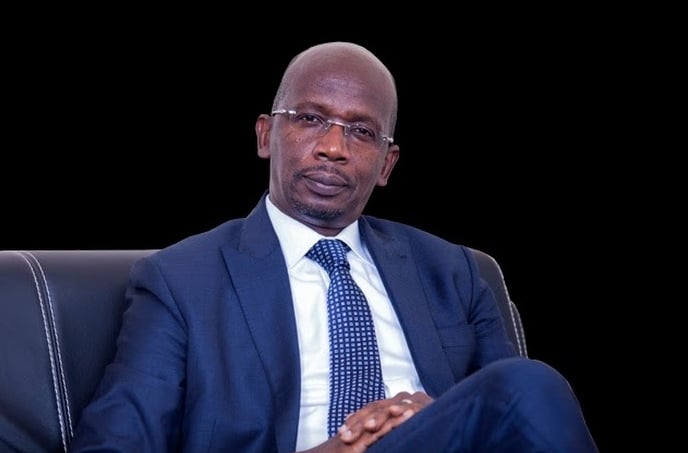
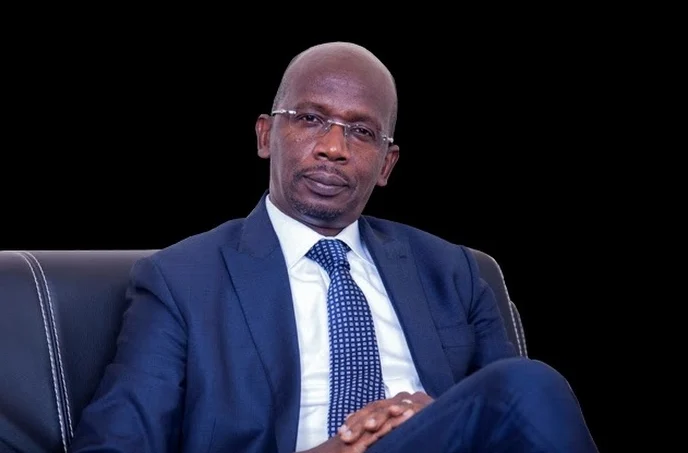
Lansana Gagny Sakho
President, Cercle des Administrateurs Publics