Northern Mali Faces Unprecedented Security Collapse
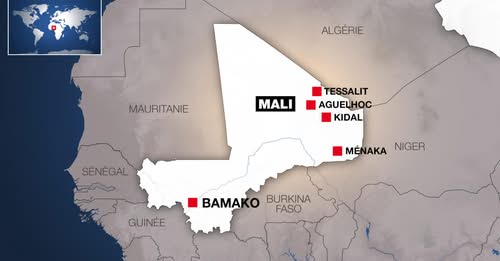
The northern region of Mali is gripped by mounting insecurity as a swift offensive by the Jama’at Nusrat al-Islam wal Muslimeen (JNIM) and the Azawad Liberation Front (FLA) has shattered the nation’s fragile stability. The fall of Kidal marked the beginning of a dramatic shift, with militant groups consolidating control over critical military installations, including Tessalit and Aguelhoc camps. This strategic setback follows the withdrawal of Malian Armed Forces (FAMa) and their Russian partners, Africa Corps, who reportedly retreated without resistance.
A stark image, verified by multiple sources, captures the humiliation: Seidane Ag Hitta, a prominent JNIM commander, is seen triumphantly displaying the keys to Tessalit camp. This scene echoes the 2012 crisis, five years after the departure of the French Barkhane force. Since April 25, additional towns—Ber, Tessit, Hombori, and Gourma Rharous—have fallen, leaving residents of Gao and Timbuktu in a state of heightened anxiety.
Bamako’s Resilience Amidst Jihadist Siege
The Malian transitional government, headquartered in Koulouba Palace, has vowed to maintain its course despite overwhelming pressures. General Assimi Goïta, the nation’s leader, has issued a rallying cry for a “national awakening,” emphasizing that no level of “intimidation” will deter Mali from its path.
Military efforts are now concentrated on two critical fronts:
- Air and Ground Operations: The Malian army has intensified precision strikes on Kidal, targeting rebel command centers and supply depots. While the FLA disputes casualty figures, Bamako claims to have neutralized several militants.
- Logistical Resilience: As jihadist blockades choke vital supply routes to the capital, a massive convoy of 800 fuel tankers successfully broke through this week, protected by air support and ground troops.
Moscow has reaffirmed its unwavering backing for Mali’s transitional authorities, with Kremlin spokesperson Dmitri Peskov dismissing speculation of a Russian withdrawal following the losses at Kidal.
JNIM’s Strategic Shift: From Warfare to Political Manipulation
The most alarming development lies in the JNIM’s transformation of its rhetoric. In a midnight communiqué dated April 30, the group abandoned its usual bellicose language in favor of a politically charged discourse, mirroring that of its adversaries.
The group is now appealing to “the nation’s vital forces,” including political parties and religious leaders, to forge a “united front” aimed at establishing a “peaceful transition” and ending the “junta’s dictatorship.” By invoking terms such as “sovereignty” and “dignity,” the JNIM seeks to exploit the fatigue of a war-weary populace, all while reasserting its ultimate objective: the imposition of Sharia law.
“In the face of the worst, we must seek the least of evils,” confides a former opposition minister, underscoring the moral dilemma now confronting Mali’s political elite: should they engage in dialogue with their erstwhile enemies to stem the bleeding?
Internal Strife Deepens the Crisis
Pressure within Mali’s transitional government is intensifying. The Bamako prosecutor’s office has announced the arrest of several Malian soldiers, accused of colluding with last weekend’s attacks.
As rebel forces advance, the JNIM’s ambiguous political overtures further complicate the situation, and the economic stranglehold of blockades tightens its grip. Mali’s transitional regime now faces its most profound crisis, where the battle for the nation’s future is waged not only on the sands of the North but also in the halls of political legitimacy in Bamako.