The flames of Siby: a bold strike at Bamako’s doorstep
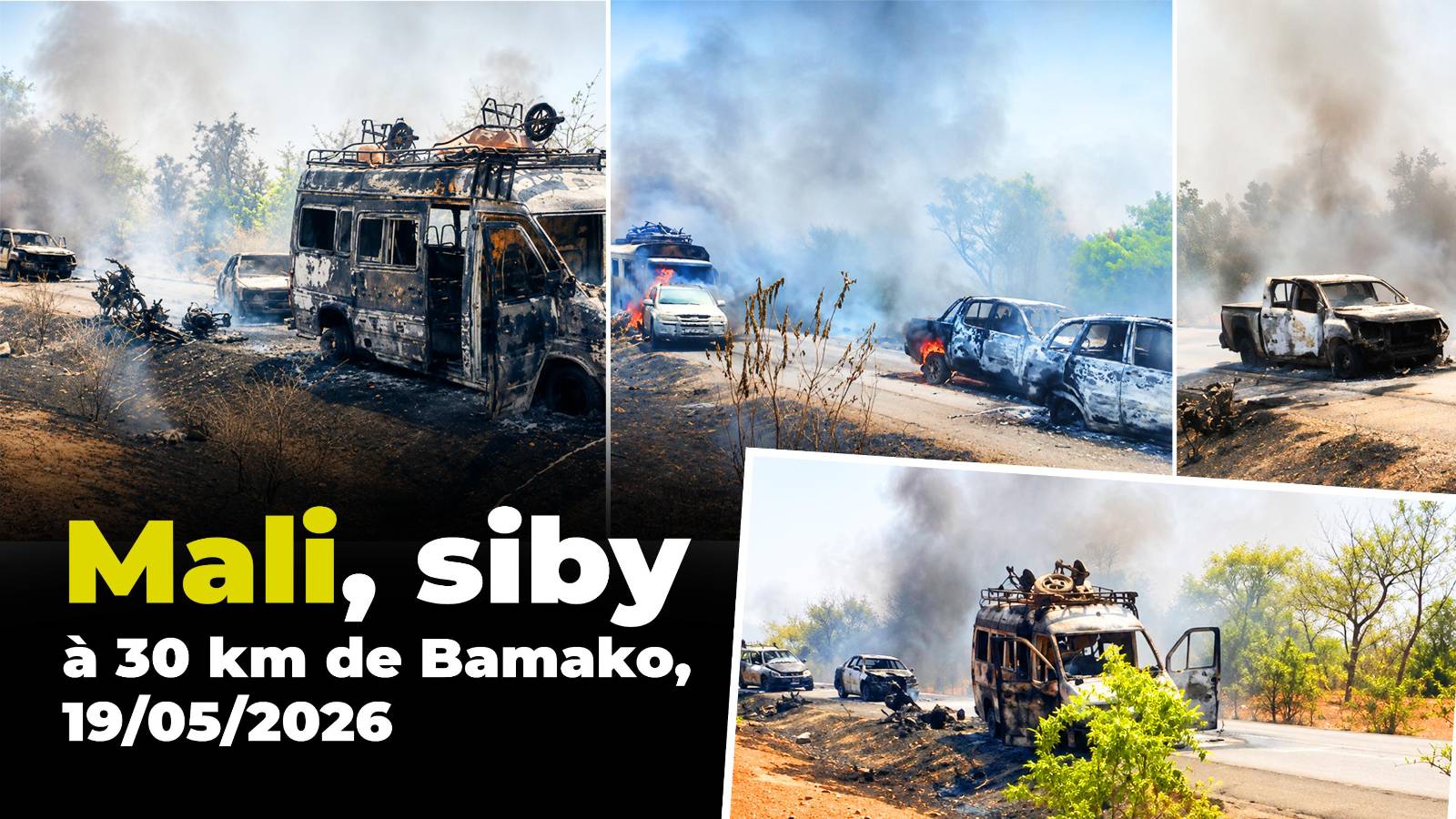
The once unthinkable has become undeniable—Bamako is no longer safe. On a Tuesday in May 2026, the rural district of Siby, just 30 kilometers from the capital, became a battleground. Dozens of freight trucks, public transit minibuses, and Toyota Hilux vehicles were deliberately torched by fighters from the Group for the Support of Islam and Muslims (JNIM). This brazen assault exposes a truth the government has long downplayed: Bamako is under siege, and the military junta’s strategy, backed by Russian paramilitaries, is crumbling.
A ring of fire around the capital
That afternoon, the highway leading to Guinea turned into a wall of flames. Survivors and drivers reported armed gunmen on motorcycles swarming the national road near Siby. With little resistance, they seized control of convoys, torching everything in sight. The thick black smoke billowed for miles, sending panic through Bamako’s outskirts. The damage goes beyond lost cargo—it’s a psychological blow. By striking Siby, a cultural jewel steeped in the legacy of the Kouroukan Fouga charter, the jihadists have shattered the illusion of any untouchable zone in Mali.
The JNIM blockade: a calculated suffocation
Siby wasn’t an isolated strike. It’s the latest move in a months-long campaign by JNIM to strangle Bamako’s lifelines. The group has effectively cut off nearly every major supply route into the capital. Whether it’s the road to Ségou, the route west toward Senegal, or the southern path to Guinea and Ivory Coast, travel has become a gamble. JNIM militants set up mobile checkpoints, extort drivers, and burn cargo of those who defy their orders. By choking off Bamako’s supply chains, they aim to cripple the economy and spark unrest—exactly what’s happening. Prices for basic goods have skyrocketed in the markets, fueling public anger that the transitional government struggles to quell.
Junta and Russian allies fail to protect the city
In the face of such bold attacks, the official narrative of Mali’s armed forces gaining ground clashes harshly with reality. Since international forces withdrew, the military junta has staked its legitimacy on its partnership with Russian paramilitaries known as Africa Corps. But the facts speak for themselves: this alliance has failed to protect Malians. The Russian mercenaries, bankrolled by Malian taxpayers, proved unable to anticipate or repel a major assault just half an hour from the presidential palace in Koulouba. Their approach—brute force, punitive raids, and securing mining sites—offers no real solution to the insurgents’ guerrilla tactics. Joint patrols by Malian forces and the Russians lack foresight and territorial coverage, leaving critical routes at the mercy of JNIM. Heavy reliance on digital propaganda can’t mask the collapse of security on the ground.
Bamako faces a reckoning
The fire in Siby is a final warning. Denial is no longer a defense strategy. By allowing JNIM to tighten its grip around Bamako and strike at its edges, the junta and its Russian partners have revealed their strategic flaws. For Malian citizens, the dream of regained sovereignty and total security is fading in the smoke of burning vehicles and severed roads. If Bamako is to avoid total collapse, a fundamental reevaluation of military choices and alliances is no longer optional—it’s a matter of national survival.