Tchad’s cotton sector gets major 22.5 million USD boost from France
The Sahel nation’s cotton industry, vital for rural livelihoods, receives substantial French funding to revitalize production and stabilize supply.
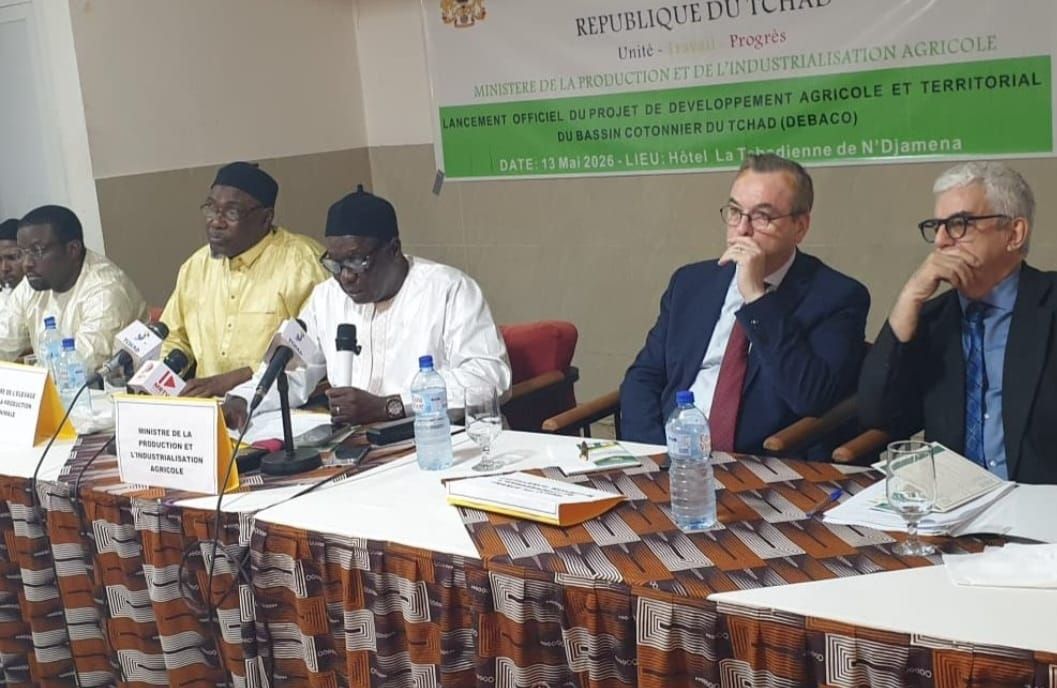
N’Djamena’s agricultural authorities have launched a five-year initiative to revive the nation’s second-largest cotton-producing sector in Central Africa. The Projet de Développement agricole et territorial du bassin cotonnier du Tchad (DEBACO) targets both cotton production and rural development through a 19.35 million EUR (22.5 million USD) investment from France’s development agency.
This strategic funding arrives at a critical juncture as Chad’s cotton output has fluctuated dramatically in recent years. After peaking at 111,262 tonnes in 2023-2024, production plummeted to just 57,774 tonnes the following season—a nearly 50% decline. Initial projections for 2025-2026 suggest a modest recovery to 75,000 tonnes, though experts warn this remains far below potential.
Comprehensive support for agricultural transformation
The DEBACO project represents France’s renewed commitment to Chad’s agricultural backbone, combining direct cotton sector investment with broader rural development strategies. While cotton remains the primary focus, the initiative extends crucial support to staple food crops including sorghum, maize, cowpeas, and groundnuts—all vital for national food security.
Targeted regional impact
Implementation will concentrate on Chad’s Mayo-Kebbi Ouest and Moyen-Chari provinces, which account for approximately one-quarter of the nation’s annual cotton harvest. The project incorporates multiple dimensions of agricultural planning:
- Land use optimization: Implementing sustainable agricultural practices to maximize productivity
- Transhumance corridor security: Establishing protected pathways for pastoral movements to reduce crop-livestock conflicts
- Conflict prevention mechanisms: Creating local dialogue platforms to address disputes between farmers and herders
- Stakeholder coordination: Fostering collaboration between producers, processors, and government agencies
Ministry officials emphasize that DEBACO’s integrated approach addresses both immediate production challenges and long-term structural issues in Chad’s agricultural sector. By combining financial investment with institutional strengthening, the project aims to create a more resilient cotton value chain capable of withstanding market volatility and climate pressures.
The timing of this intervention couldn’t be more strategic. With cotton representing one of Chad’s few significant export commodities, the sector’s performance directly impacts national revenue and rural employment. The French-funded initiative arrives as policymakers seek to reverse years of declining output and restore the sector’s former prominence in Central Africa’s agricultural landscape.