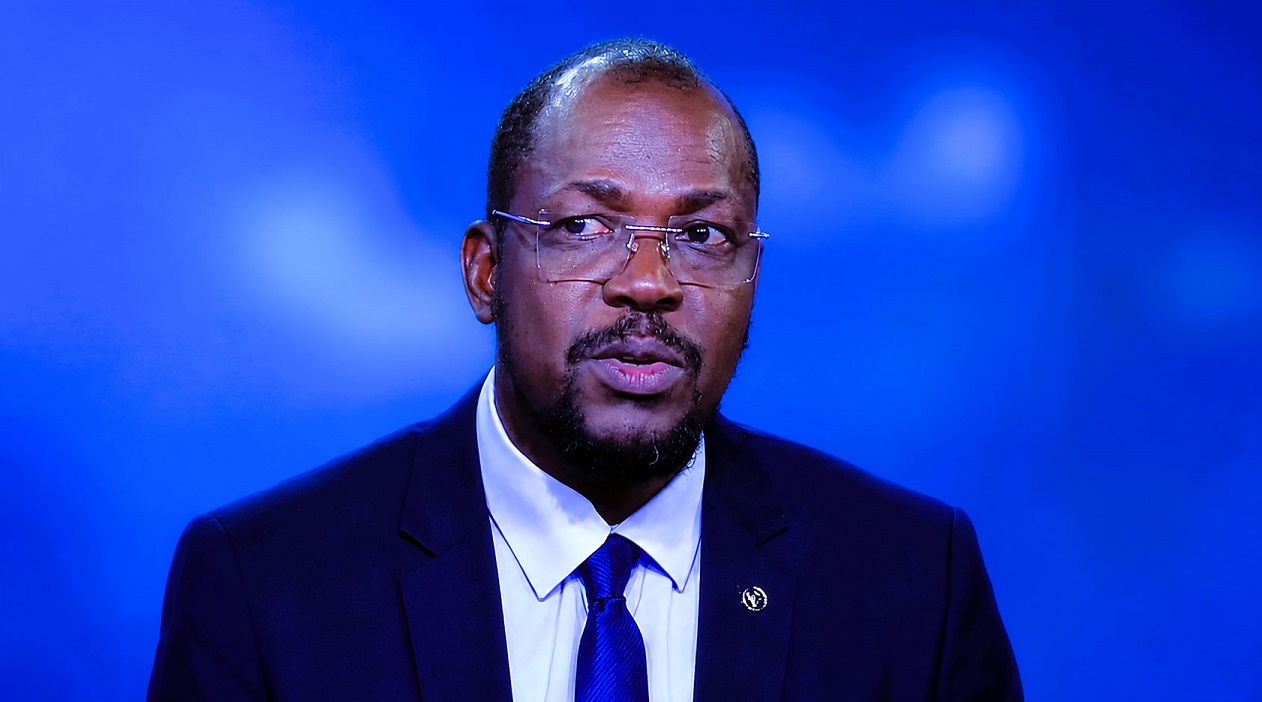
Is dialogue with armed groups a threat to Mali’s sovereignty? Can engagement with the Group to Support Islam and Muslims (JNIM) coexist with national cohesion? In an exclusive interview, Étienne Fabaka Sissoko, spokesperson for the Coalition of Forces for the Republic (CFR), outlines his vision for resolving Mali’s crisis—defining red lines, rejecting alliances with armed factions, and advocating for a political transition rooted in republican values.
Security paralysis in Bamako: the human cost of blockades
How would you assess the current security situation in Mali, particularly in Bamako? Is the blockade strategy effective?
Labeling the blockade as an “effective strategy” would normalize a tactic that starves civilians, disrupts daily life, and weaponizes humanitarian access. In Bamako, families face soaring prices, supply shortages, and mounting anxiety. As a landlocked nation, Mali’s control over its supply corridors is a matter of sovereignty. The CFR opposes this approach because it inflicts suffering on the very people it claims to protect.
Worse still, the blockade exposes the limitations of a purely military response. A lasting solution demands political action—one that secures corridors, shields civilians, and restores the foundations for sustainable peace.
Mali’s thirst for peace: a new coalition’s rising influence
Launched in late 2025, the CFR has rapidly gained traction. What has been the public response to your movement?
The CFR is still young, but it fills a critical void. Malians are exhausted by prolonged conflict and yearn for a credible alternative. Unlike traditional parties, we position ourselves as a national safeguard platform—not a political vehicle with rigid structures. Public demand spans local communities, civil society, and international observers for a responsible, unified Malian voice. Our goal? To break the cycle of military rule and national stagnation by offering a third path.
Dialogue ≠ alliance: clarifying the CFR’s stance on armed groups
Some speculate that the CFR maintains close ties with the Azawad Liberation Front (FLA). Are these claims accurate?
The CFR is neither the political wing of the FLA nor the FLA a military extension of our movement. We engage with all crisis actors—but engagement does not imply coordination or allegiance. The CFR is a civilian force that refrains entirely from military operations.
Our principles are non-negotiable: Mali’s territorial integrity must remain intact. However, governance and territorial challenges require political—not military—solutions. We advocate for transparent, constitutional dialogue, prioritizing negotiation over armed confrontation.
Transition blueprint: restoring democracy without surrendering to militias
If a coup had toppled the government in April’s coordinated attacks, was the CFR prepared to assume leadership?
Responsible movements prepare for crisis scenarios—but not on the back of state collapse or militia victory. The April 25 offensive underscored Mali’s perilous political moment. Yet this does not grant armed groups automatic legitimacy to dictate the nation’s future.
The CFR has drafted a civil safeguard transition plan: restore public freedoms, secure populations, launch a national dialogue, draft a new constitution, and hold elections. The presidential vote must mark the end of this process—not its starting point. Without security or consensus, history will repeat itself.
Could Imam Mahmoud Dicko play a role in such a transition?
Imam Dicko should not be framed as a political successor. His potential contribution lies in moral authority—mediating tensions, fostering dialogue, and rebuilding societal trust. Executive power, however, must remain with legitimate civilian institutions. Political legitimacy flows from the ballot box, not the pulpit.
Red lines in peace talks: rejecting jihadist agendas
How far are you willing to go in negotiating with the JNIM? What conditions are unacceptable?
Our pursuit of dialogue is not capitulation or reward—it is a tool to end war and protect civilians. The JNIM’s ties to Al-Qaeda are incompatible with a national peace process. Our red lines are absolute: preserve Mali’s territorial unity, uphold the republic, protect fundamental freedoms, sever transnational armed agendas, halt attacks on civilians, and ensure accountability for grave crimes.
Regarding Iyad Ag Ghali, we do not base strategy on unproven intentions. The CFR demands verifiable actions: cease attacks, protect civilians, allow humanitarian access, cut ties with Al-Qaeda, and accept Mali’s unity. Neighboring countries’ struggles with spillover violence prove this is not a Malian-only issue. Any break from transnational agendas must be demonstrated—not declared.
We do not negotiate away the Malian state. We discuss conditions to exit war without abandoning the Republic.
Beyond the sharia debate: rethinking decentralization
Your proposals include deep decentralization. Critics argue this could lead to sharia law in certain regions. Is this concern justified?
Such critiques oversimplify the issue. The real problem is a collapsing state at the local level—missing administrations, inaccessible courts, and failed public services. When the government disappears, communities turn to available authorities: traditional leaders, religious figures, or local mediators. The CFR does not advocate for sharia. We advocate for a Malian republic that integrates local mediation within a strict constitutional framework—ensuring equality, protecting women and children, and preserving access to national justice.
The decentralization debate must focus on governance and state efficiency—not caricatures.
Federalism redefined: power, resources, and accountability
Does federalism primarily mean redistributing power, resources, and revenue between Bamako and regional authorities? What is your vision?
Exactly. Federalism here is about competence, resources, and democratic control—not separatism. The CFR supports a united, sovereign Mali, but one reorganized to empower regions. Local authorities need greater responsibilities and funding, while the state retains its core functions. Concentrating everything in Bamako is inefficient. The state must guarantee national unity; territories must manage proximity. In a country the size of Mali, this balance is essential. 
State restoration: priorities for Mali’s rebirth
Critics highlight failures of the current government. Do you have a structured political program? What are your concrete proposals for education, justice, security, and economic recovery?
The CFR’s transition program centers on restoring a functional state. Key priorities include reopening schools, strengthening justice, protecting civilians, and reviving the economy. We champion judicial independence, support teachers, bolster security forces, and secure economic corridors. The crisis is also humanitarian. Reopening schools, ensuring justice, restoring security, energy, and food access are prerequisites for national reconstruction.
How does the Alliance of Sahel Democrats (ADS) fit into this vision?
The ADS is a civic convergence among Malians, Burkinabè, and Nigeriens who share a common observation: the Sahel crisis is institutional and democratic. It is not a military alliance or a unified political command. The CFR remains a Malian initiative addressing Mali’s specific crisis. The ADS coordinates advocacy, defends public freedoms, and fosters solidarity among Sahelian democrats facing shrinking political spaces.
The CFR rejects revenge, partition, theocracy, or a return to past systems. We champion a civilian-led transition, structured national dialogue, territorial refoundation, a republican army, and the restoration of popular sovereignty. Mali will not be saved by a strongman—but by a strong national pact.