The Malian government has escalated its counterterrorism efforts by introducing a financial incentive program aimed at dismantling two of the country’s most formidable armed groups. On national television, Bamako unveiled a public bounty scheme rewarding individuals who provide actionable intelligence leading to the capture or elimination of key figures within the Group for the Support of Islam and Muslims (Jnim, an Al-Qaeda affiliate) and the Front for the Liberation of Azawad (FLA). This unprecedented move underscores the transitional authorities’ urgent bid to enlist civilian support in a conflict where military operations alone have fallen short.
Targeting jihadist and separatist leadership
The initiative zeroes in on two factions that Bamako views as existential threats to Mali’s territorial integrity. The Jnim, led by Iyad Ag Ghaly and operating across the Central Sahel, has intensified attacks on military outposts and supply routes in recent years. Meanwhile, the FLA, rooted in historic Tuareg separatist movements, continues to challenge state authority in the northern regions of Kidal, Gao, and Tombouctou.
By adopting this reward-based approach, Malian authorities are tapping into a familiar counterterrorism tactic used globally, though one rarely seen in West Africa. The strategy signals a shift toward leveraging grassroots intelligence—a necessity in a conflict where conventional military operations face persistent setbacks.
Admitting the limits of conventional warfare
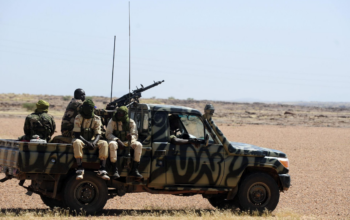
The announcement arrives amid a worsening security landscape. After the United Nations Multidimensional Integrated Stabilization Mission in Mali (MINUSMA) withdrew in late 2023 and French forces departed, the Malian Armed Forces (Fama) have relied on Russian-backed support, primarily through the Africa Corps, which succeeded the Wagner Group. Despite retaking Kidal in November 2023, jihadist attacks have surged in 2024 and 2025, striking both central and peripheral areas of the capital.
This financial incentive reflects tactical pragmatism. Decapitating armed organizations by targeting their leadership requires granular intelligence networks, a resource most effectively provided by local populations. However, the plan carries inherent risks. Informants risk violent retaliation, and the lack of transparency around reward amounts or disbursement processes may undermine public trust. Officials have yet to disclose payment details or verification procedures.
Regional implications and funding challenges
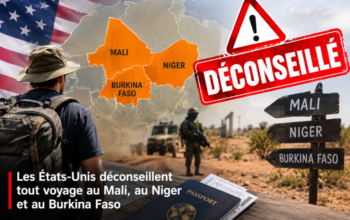
The Malian initiative aligns with the Confederation of Sahel States (AES), a 2024 alliance uniting Mali, Burkina Faso, and Niger. The three nations share a unified stance on regional security threats and are progressively aligning their military strategies. Expanding this reward system across the confederation could enhance cross-border intelligence sharing—a critical need, given how armed groups exploit porous borders for safe haven and resupply.
Yet funding remains a pressing concern. With external aid suspended and economic sanctions imposed by the Economic Community of West African States (ECOWAS), Bamako must either mobilize domestic resources or secure new partnerships to fulfill its financial commitments. While Russia has emerged as Mali’s primary military ally, no official statements confirm a co-financing role.
The announcement also serves a broader political agenda. By directly engaging citizens through state media, the transitional government aims to rally public support for its counterinsurgency efforts and bolster its legitimacy. This comes as the post-coup transition, initiated after the 2020 and 2021 takeovers, continues to delay elections. The program’s success will hinge on the Fama‘s ability to deliver tangible results against the designated jihadist and separatist leaders in the coming months.