Mali places bounty on Iyad Ag Ghaly and jihadist allies after deadly coordinated attacks
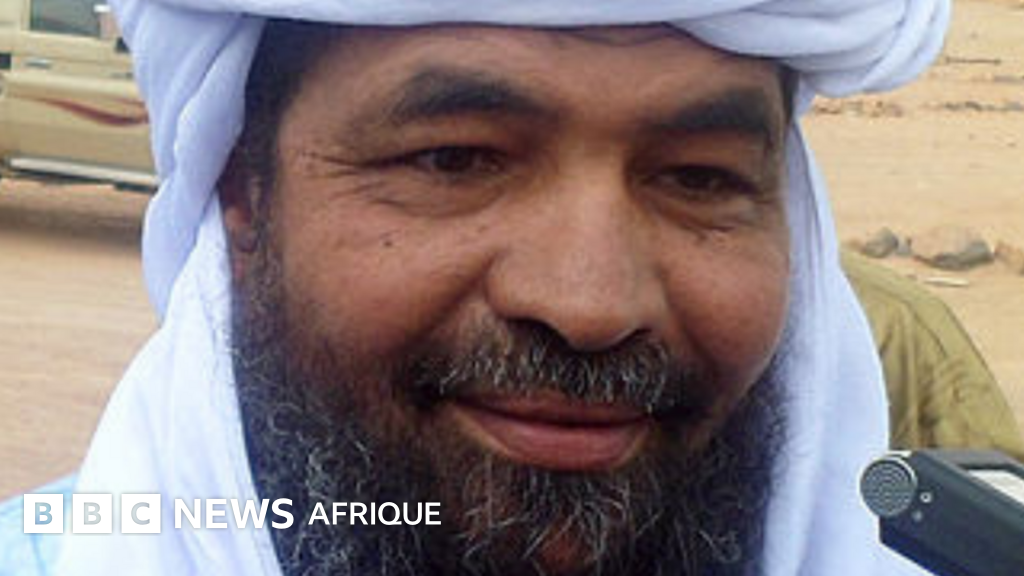
The Malian government has announced a 2 billion FCFA reward for the capture of Iyad Ag Ghaly, the notorious leader of the Jama’at Nusrat al-Islam wal-Muslimin (JNIM), along with several key associates. The move follows a coordinated assault on Kidal and Kati in late April, which claimed the life of Defense Minister Sadio Camara and exposed critical vulnerabilities in national security.
In an official statement broadcast on state television, the Ministry of Security and Civil Protection called on citizens to assist military and security forces in tracking down seven individuals deemed threats to Mali’s stability. The announcement underscores the government’s intensified crackdown on armed groups operating in the Sahel region.
Government unveils bounty details and targets
The government’s communiqué outlined bounties for the following individuals:
- Iyad Ag Ghaly (JNIM leader): 2 billion FCFA
- Amadou Koufa (Macina Katiba leader): 1.5 billion FCFA
- Abdoulaye Mohamed (Habib) (Macina Katiba): 1.5 billion FCFA
- Algabas Ag Intallah (Azawad Liberation Front): 1 billion FCFA
- Ghita, Bilal Chérif, Abderrahmane Al Banna (Azawad Liberation Front): 500 million FCFA each
The rewards are part of a broader strategy to dismantle armed factions operating across Mali, where jihadist groups like JNIM continue to destabilize security. The attacks in Kidal and Kati, jointly carried out by JNIM fighters and separatists from the Front de Libération de l’Azawad (FLA), marked a significant escalation in violence that prompted the government’s decisive response.
Profile: The rise of Iyad Ag Ghaly
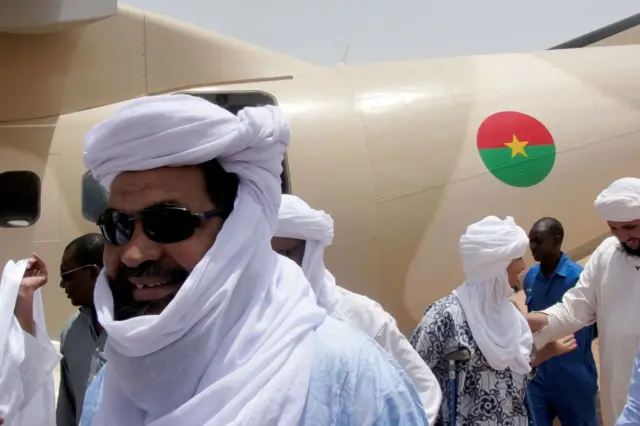
Born in 1958 in Boghassa, near Kidal, Iyad Ag Ghaly is a Malian Tuareg warlord and jihadist leader whose influence spans decades. His trajectory reflects Mali’s turbulent history, from early rebellions to his alignment with global jihadist networks.
In the 1970s, he fled to Libya, joining Muammar Gaddafi’s forces—a common path for Tuareg fighters of his generation—before returning to Mali in the early 1990s. There, he founded the Mouvement populaire pour la libération de l’Azawad (MPLA) and launched a rebellion against the Malian state.
By the late 1990s, his ambitions shifted toward Islamist ideology. He co-founded the Mouvement populaire de l’Azawad (MPA) and later forged ties with the Groupe salafiste pour la prédication et le combat (GSPC), an Al-Qaeda affiliate that evolved into AQMI.
In 2012, Ghaly established Ansar Dine, merging with AQMI to impose Sharia law in northern Mali. Five years later, he consolidated power by founding the Groupe de soutien à l’islam et aux musulmans (GSIM), or JNIM, uniting several Malian jihadist factions under Al-Qaeda’s banner.
Analysts describe Ghaly as “the most wanted man in the Sahel”, a figure whose tactics have evolved from direct combat to economic strangulation. Recent reports suggest his forces target critical infrastructure—roads, power lines—to cripple Mali’s economy and erode public confidence in the government.
The International Criminal Court (ICC) issued a warrant for Ghaly’s arrest years ago, charging him with crimes against humanity and war crimes from 2012–2013. His JNIM group remains one of the most active jihadist organizations in the Sahel, operating across Mali, Niger, and Burkina Faso.