Sabcé under siege: a dawn of terror
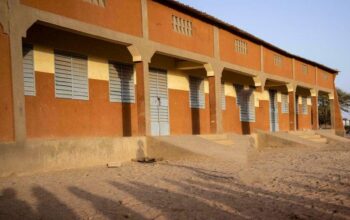
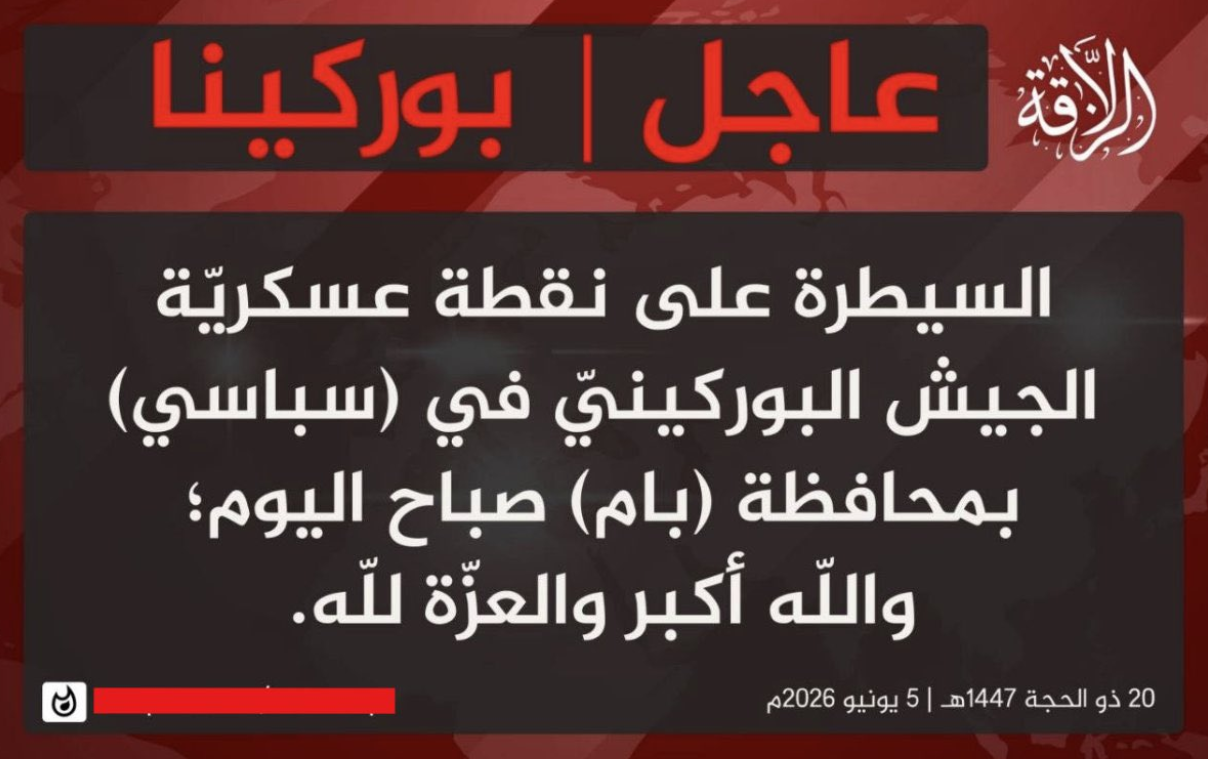
In the heart of Burkina Faso’s Centre-Nord region, a new security crisis unfolded on Friday, June 5, 2026. The military outpost in Sabcé, Bam Province, became the target of a coordinated assault by fighters from the Group for the Support of Islam and Muslims (JNIM). The attack, launched at daybreak, caught local forces off guard as heavily armed assailants converged on the strategic site, their movements masked by the early morning mist.
The battle that followed was fierce. Soldiers from Burkina Faso’s Defence and Security Forces (FDS), alongside civilian Volunteers for the Defence of the Homeland (VDP), engaged in intense exchanges with the attackers. Despite their valiant resistance, the sheer numerical advantage of the JNIM fighters allowed them to overrun the post temporarily. Local witnesses described scenes of chaos as the militants looted equipment and supplies before hastily retreating in the face of aerial reinforcements dispatched by the army. While official casualty figures remain undisclosed, the incident underscores the persistent vulnerabilities along critical supply routes linking the Centre-Nord to the rest of the country.
Security flaws exposed: the limits of Burkina Faso’s strategy
The assault on Sabcé has laid bare the shortcomings of Burkina Faso’s current security framework. Despite bolstering troop numbers, upgrading military hardware, and mobilizing civilian defence groups like the VDP, the country’s armed forces continue to grapple with an adversary that adapts with alarming agility. Analysts point to glaring deficiencies in the nation’s security architecture, particularly the failure to anticipate tactical movements by the JNIM and sluggish response times for ground reinforcements.
The static nature of the country’s defence strategy has proven inadequate against an enemy that thrives on mobility and transnational operations. Terrorist factions have repeatedly demonstrated their ability to isolate military detachments, sever communication lines, and strike high-value targets with impunity. For Ouagadougou, the time has come to rethink its approach and address the systemic gaps that allow insurgents to exploit weaknesses with such ease.
Regional solidarity: Benin’s call for a united front
Amidst this backdrop of shared vulnerability, the recent diplomatic efforts by Benin’s President Romuald Wadagni have gained renewed significance. His maiden voyage to Niamey and Ouagadougou was not merely a symbolic gesture; it signalled a bold commitment to forging stronger military and intelligence-sharing partnerships across West Africa.
Speaking before regional leaders, Wadagni stressed the imperative of collective action, declaring, “In the face of an enemy that knows no borders, our armies cannot afford the luxury of isolation.” His proposal for a synergistic security framework—one that transcends national silos—has resonated with analysts and policymakers alike. The Sabcé attack serves as a stark reminder of the wisdom behind his vision: Burkina Faso cannot secure its future in isolation, nor can its neighbours remain passive observers.
Breaking borders: the path to a coordinated response
Transforming Wadagni’s vision into reality demands more than lofty declarations. It requires a fundamental shift in how regional militaries operate. Key priorities include real-time sharing of satellite intelligence, joint cross-border operations, and the establishment of mutual pursuit rights to deny insurgents safe havens.
The shared ecological challenges in the W National Park region—straddling Benin, Burkina Faso, and Niger—highlight the interconnected nature of the threat. By extending a hand to Ouagadougou and Niamey, Wadagni is fostering the groundwork for a unified front capable of choking off the logistical networks that sustain terrorist groups. The question now is whether other regional leaders will heed the call before the next Sabcé-like crisis strikes.
A moment of reckoning for West African security
The attack on Sabcé is not an isolated incident but a clarion call for urgent action. Burkina Faso’s security apparatus, though resilient, is stretched to its limits. To reverse the tide, Ouagadougou must embrace bold reforms, but more critically, it must seize the opportunity presented by Benin’s proactive stance. The security of Burkina Faso may hinge on the outcome at Sabcé, but its long-term survival depends on the region’s ability to unite against a common foe.
The hour is late, and the stakes could not be higher. The choice is clear: isolated strategies or collective resolve. The time for action is now.