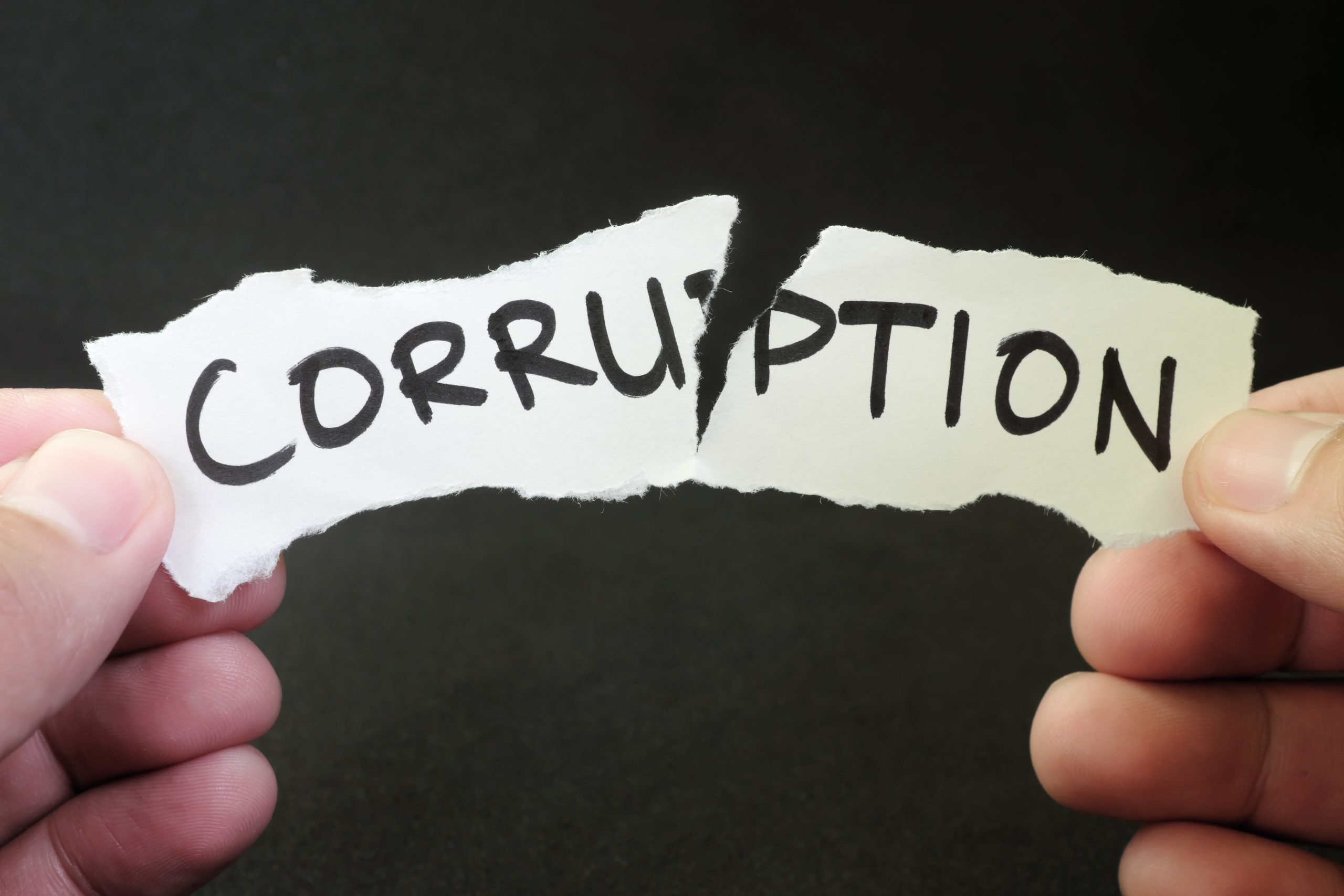
The Malian society is deeply acquainted with the language of corruption. Terms like « bonya » (respect), « woro songo » (cola price), or « buru songo » (bread price) are commonly used in national languages to describe the « small gifts » that grease the wheels of daily interactions. While these practices may seem trivial at first glance, they represent a silent crisis that erodes trust, distorts justice, and deepens social inequalities.
Understanding the roots of petty corruption in Mali
Transparency International defines corruption as « the abuse of entrusted power for private gain ». In Mali, this definition resonates strongly. From public services to private transactions, petty corruption manifests in various forms—bribes, favoritism, or undue influence—all of which have become normalized over time.
Take the case of Myriam (a pseudonym), a commercial director in a Bamako-based communication agency. She shares a harrowing experience: « Every time I secure a contract, the contracting agents demand a percentage of the deal as their cut. It’s take it or leave it. » Myriam admits she feels trapped in this cycle, questioning whether she can sustain such demands much longer. Her story reflects a harsh reality: petty corruption is no longer an exception—it’s an expectation.
Petty corruption also rears its head in mundane situations: bribing officials to expedite administrative processes, offering gifts to pass exams, or leveraging personal connections over merit. These acts, once frowned upon, are now perceived as « normal » across many sectors. Omar Keita, an entrepreneur, recounts spending an entire day in line at a fuel station during a nationwide fuel shortage, only to be told he’d need to pay an additional 10,000 FCFA to the attendant just to be served. Though deeply uncomfortable, he complied—because everyone else did.
The cultural and structural drivers of corruption
Why has corruption taken such a firm hold in Malian society? Experts point to a combination of cultural normalization and structural weaknesses.
Sibiri Diarra, a retired international civil servant, recalls that even in institutions like the United Nations, gift-giving is strictly regulated to prevent corruption. Yet, in Mali, such safeguards are largely absent. Mohamed Abdellahi Elkhalil, a sociologist specializing in Sahel security issues, argues that corruption has « infiltrated the fabric of Malian society », posing existential threats to democracy and economic stability. He attributes this to a sociological normalization rather than a cultural one, driven by the desire to live beyond one’s means.
Oumar Korkosse, a member of the Réseau des communicateurs traditionnels pour le développement au Mali (Recotrade), highlights another critical factor: poverty and unemployment. « When salaries are low or irregular, petty corruption becomes a survival mechanism. Even those who wish to act ethically often have no choice but to participate. »
The societal cost: a nation trapped in a cycle of decay
The consequences of petty corruption are far-reaching. According to Afrobarometer’s 2024 survey, Malian citizens perceive judges, businesspeople, civil servants, tax officials, and law enforcement officers as the most corrupt groups. Shockingly, many admit to paying bribes just to access basic public services.
The statistics paint a grim picture. Mali scored a mere 27 out of 100 in Transparency International’s 2024 Corruption Perceptions Index, ranking 135th out of 180 countries. The World Bank’s Worldwide Governance Indicators for 2023 further underscores the crisis, giving Mali a –0.86 score for corruption control—far below the global average of –0.04. This indicates a systemic failure to curb corrupt practices.
Me. Soumaré Boubacar, a Bamako-based lawyer, offers a chilling perspective: « When institutions lose credibility, corruption becomes a survival strategy. If everyone is doing it, why shouldn’t I? »
Breaking the cycle: is there hope for change?
Combating petty corruption requires more than just legal reforms—it demands a cultural and moral awakening. The Association Malienne de Lutte contre la Corruption et la Délinquance Financière (AMLCDF) emphasizes the need to foster a citizen consciousness rooted in ethics, responsibility, and respect for the common good. Initiatives like civic education programs, religious teachings, and grassroots awareness campaigns could play a pivotal role in shifting perceptions.
For Mali to reclaim its integrity, it must confront the normalization of petty corruption head-on. The question is no longer whether the practice is widespread—it’s how a society can unite to reject it. The cost of inaction is too high: a nation where trust erodes, justice falters, and progress stagnates.