Mali cracks down on 125cc motorcycles to curb jihadist threat
Authorities in Mali have taken decisive action to combat rising insecurity by banning the use of motorcycles with engines of 125cc or more outside major urban centers. The sweeping measure, which also prohibits the import and sale of such vehicles, comes as the country faces an unprecedented surge in jihadist violence and a crippling blockade on key roads leading to the capital.
Mali has imposed a nationwide ban on motorcycles with engines of 125cc or larger, restricting their use exclusively to Bamako and other major cities. The emergency decree, announced via national television on June 3, targets the primary mode of transport favored by jihadist groups operating across the country. The move follows a sharp escalation in violence, with coordinated attacks on April 25 and 26 by the Group for the Support of Islam and Muslims (JNIM), an Al-Qaeda affiliate, and the predominantly Tuareg Azawad Liberation Front (FLA). Since April 30, jihadists have maintained a brutal blockade on multiple highways leading to Bamako, cutting off vital supply routes.
According to the interministerial order, “the circulation of motorcycles with engine displacements of 125cc and above is suspended outside major urban centers across the entire national territory.” However, the ban does not apply to Bamako’s district or to regional, district, and arrondissement capitals. In a separate announcement, authorities also suspended “the import, transit, sale, distribution, and even free gifting of motorcycles with engine displacements of 125cc and above, along with their accessories.”
Jihadist insurgency and economic strangulation
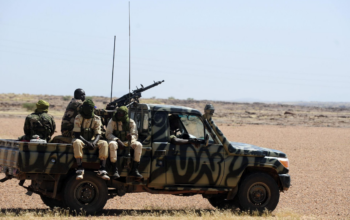
The timing of the ban underscores the severity of Mali’s security crisis. Jihadist factions have increasingly relied on motorcycles for mobility, using them to execute hit-and-run attacks and transport weapons. The blockade has exacerbated food and fuel shortages in Bamako, where residents are struggling under severe economic strain.
With no clear end to the violence in sight, the Malian government is attempting to disrupt the operational capabilities of armed groups while trying to restore some semblance of normalcy in the hardest-hit regions.