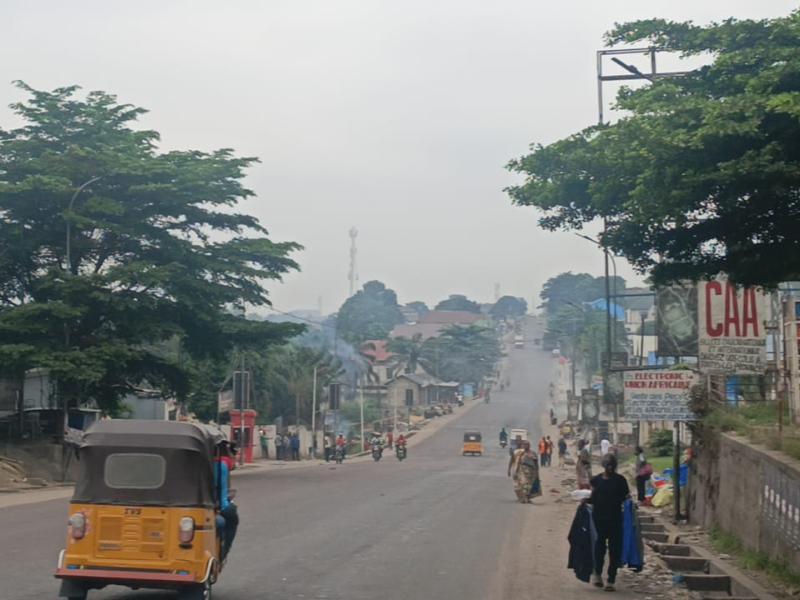
Kinshasa, the Democratic Republic of the Congo’s bustling capital, experienced an unusual calm this Wednesday morning as opposition groups called for a citywide strike to protest the government’s proposed constitutional amendments. The demonstration, dubbed a « dead city » action, aimed to reject changes that would allow President Félix Tshisekedi to extend his term in office.
Unprecedented quiet grips the capital
The city, typically alive with activity by 3:00 AM, saw a sharp decline in movement. Fewer taxis roamed the streets, schoolchildren were absent from classrooms, most shops remained shuttered, and the usual crowds causing gridlock were nowhere to be found. In the Mont-Amba district, the University of Kinshasa’s Intendance Road—normally packed with students by 7:50 AM—was eerily empty. Only a handful of police officers patrolled the area, while public transport stops stood vacant. Some gas stations, including Salongo, hesitated to open for business.
Military vehicles patrolled the Bypass Avenue, and the normally congested Ngaba roundabout remained nearly deserted until 8:00 AM. In Limete, another high-traffic area, the streets were unusually quiet. Only one bus operated until 7:00 AM, connecting the city center to the district of Tshangu, according to a local resident. Many vehicle owners chose to keep their cars off the roads to avoid potential unrest. Police jeeps crisscrossed the area, while security forces maintained a strong presence at key locations, particularly along the first street of Limete.
Security measures tighten across key districts
Heavy police and military deployments were reported in Tshangu, where authorities anticipated potential unrest. The strike’s organizers had urged citizens to stay indoors, and security forces appeared to be enforcing this call rigorously. The atmosphere remained tense as residents weighed the risks of venturing out against the backdrop of political tensions.
Public reaction mixed amid uncertainty
While some residents supported the opposition’s stance, others expressed concern over the strike’s impact on daily life. Business owners, in particular, feared financial losses, while parents worried about their children’s safety and education. The government, meanwhile, remained firm in its position, dismissing the strike as an attempt to destabilize the country.