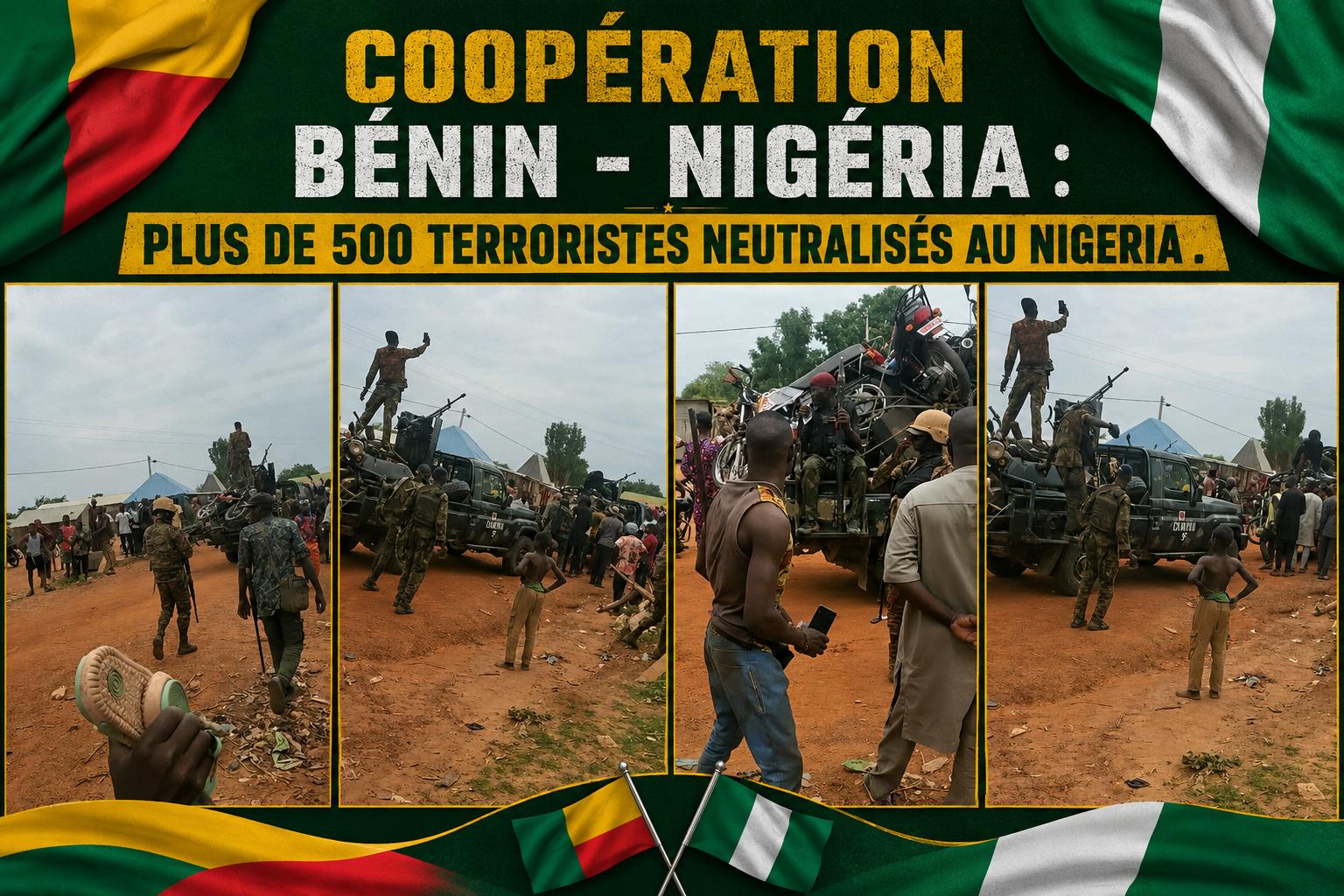
In a landmark joint military operation, Nigerian and Beninese forces, supported by local vigilance committees, have neutralized over 500 terrorists in the volatile Babanna region of Niger State, Nigeria. The five-day offensive, which unfolded from Tuesday to Sunday, showcased the power of cross-border collaboration in combating insurgency along the Benin-Nigeria frontier.
The operation targeted a critical axis stretching from Dekara to Rafin Korama, including Gidan Zana, where insurgents had long exploited the dense forests of the Kainji National Park for cross-border attacks. The park, once a safe haven for militants, became a death trap as coordinated strikes by the combined forces systematically dismantled their networks.
a decisive blow to terror networks
The scale of the operation’s success is evident in its staggering figures: over 500 terrorists eliminated, more than 200 motorcycles—primary tools of terror mobility—seized, and numerous vehicles destroyed. The victory has sparked spontaneous celebrations in Babanna, where residents of all ages took to the streets to honor the troops for restoring a sense of security.
the human cost of victory
Yet the triumph came at a tragic price. The community mourns the loss of a beloved leader, Bature OC, the commander of local vigilance committees, who fell in fierce combat. His sacrifice underscores the indispensable role of civilian defenders who stand alongside regular forces in the fight against extremism.
« May Allah grant the martyr the highest place in Jannah, and may He continue to guide our soldiers and volunteers in their sacred mission, » shared a resident of Borgu, reflecting the deep gratitude and solemnity felt across the region.
regional security at a crossroads
While the operation in Babanna serves as a beacon of hope, it also exposes the vulnerabilities plaguing West Africa’s security landscape. The mission’s success hinged on seamless intelligence-sharing and operational coordination between Abuja and Cotonou—a stark contrast to the isolationist tendencies of some neighboring states.
Terrorism thrives in ungoverned spaces, and unilateral approaches only widen the cracks through which extremist groups slip. The Borgu example proves that a unified, multi-pronged strategy is the only effective response to the region’s asymmetric threats. Without sustained cooperation, isolated pockets of security will remain prime targets for militant exploitation.
As celebrations continue in Babanna, the onus now lies on regional leaders to institutionalize this collaborative model. A permanent framework for joint operations, intelligence exchange, and resource pooling could turn tactical wins like Babanna into a lasting shield against terror.