Burkina Faso’s military regime faces financial collapse
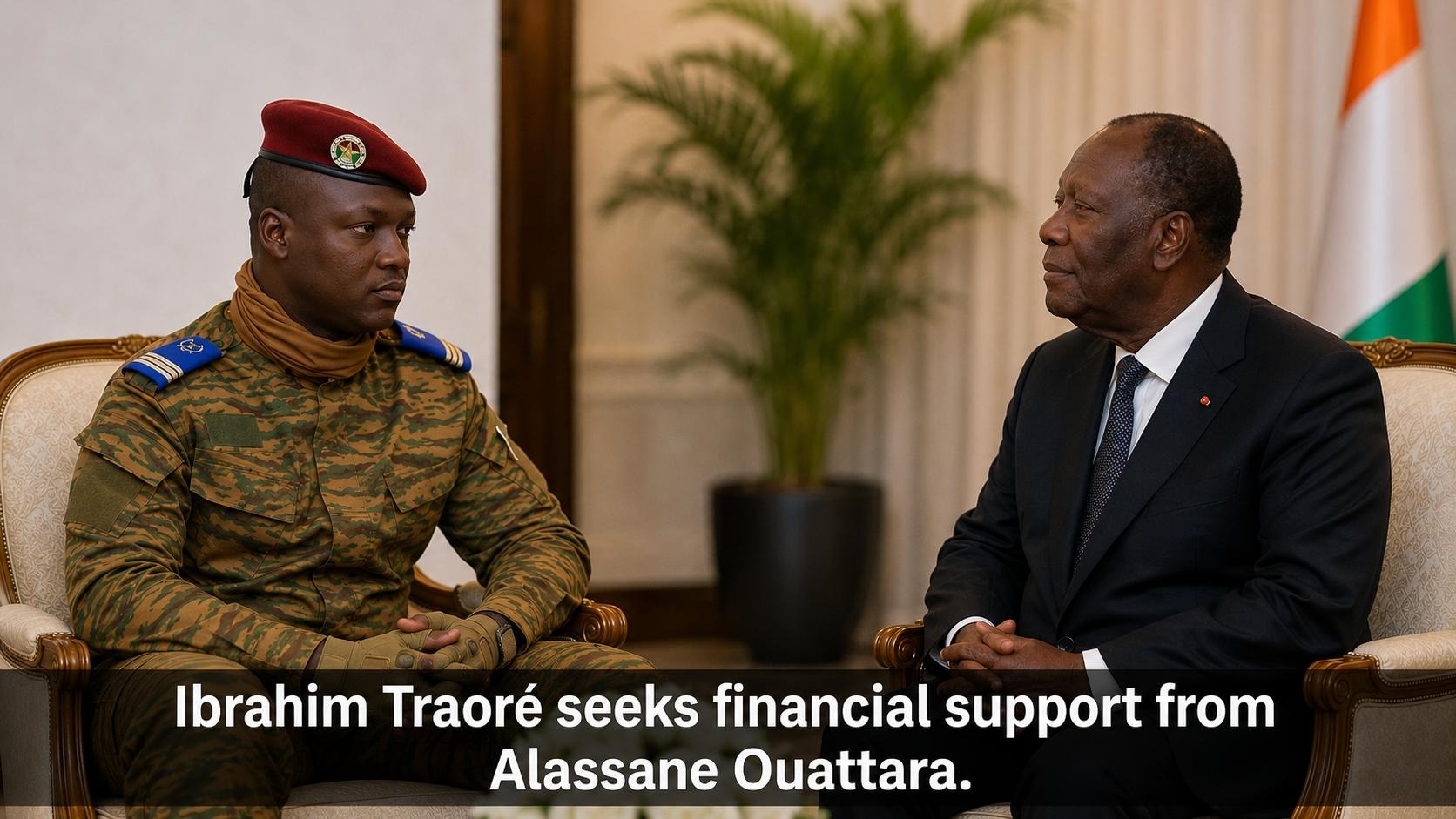
The Burkina Faso transitional government led by Captain Ibrahim Traoré is confronting an unmistakable economic reckoning. Despite bold declarations of sovereignty and regional autonomy, insider reports confirm a clandestine financial appeal to Côte d’Ivoire’s leadership in Abidjan. This unprecedented move exposes the severe budgetary strain gripping Ouagadougou’s military administration.
From sovereign rhetoric to financial desperation
Captain Ibrahim Traoré’s administration has long championed self-reliance, positioning itself as a vocal opponent of regional dependency. Yet recent developments reveal a stark contradiction. The dispatch of a high-level delegation to Abidjan to request emergency financial assistance underscores a critical admission: Burkina Faso’s treasury is nearly exhausted. Massive military expenditures and diplomatic isolation have drained state coffers, forcing Traoré’s government to abandon its rigid stance in favor of pragmatic concessions.
A stark contradiction in policy
The request for aid from Côte d’Ivoire places Captain Traoré in an awkward position. Just months ago, his administration publicly criticized Abidjan’s role in regional destabilization. Now, Burkina Faso’s transitional leadership is compelled to seek financial lifelines from a government it once condemned—a move that risks undermining its own credibility.
Ideology vs. economic survival
The once-defiant rhetoric of the Alliance of Sahel States (AES) now collides with fiscal reality. Traoré’s reliance on emergency funds exposes the fragility of his economic strategy, which hinged on patriotic contributions and extraordinary levies. Publicly circulated videos and reports of financial distress confirm a system stretched to its limits. The delegation’s mission to Abidjan signals a turning point: Burkina Faso’s sovereignty, as championed by Traoré, is now contingent on external aid—a fact that challenges the very foundation of his leadership.
The limits of political posturing
This financial appeal to Côte d’Ivoire is more than a pragmatic shift—it is a tacit acknowledgment that ideology alone cannot sustain a nation. Captain Ibrahim Traoré must now confront the consequences of his policies: a growing gap between revolutionary rhetoric and the harsh demands of economic survival. The message to the Burkinabè people is clear: national independence requires more than declarations—it demands resources, and today, those resources are being sought from a neighboring state once deemed adversarial.