A $50 million ransom paid in late 2025 to secure the release of foreign hostages in Mali has become a critical funding source for Al-Qaïda’s Sahel branch, according to a confidential United Nations report reviewed by local security analysts.
The 10 August report, prepared by UN sanctions monitors, confirms that funds from this transaction were channeled directly to the Jama’at Nusrat al-Islam wal-Muslimin (JNIM)—the dominant Al-Qaïda affiliate operating across the Sahel. Multiple regional intelligence sources indicate that the payment was made by intermediaries acting on behalf of the United Arab Emirates, though Abu Dhabi has not publicly confirmed involvement. Three foreign nationals—a citizen of the UAE, a Pakistani, and an Iranian—were reportedly freed in exchange for the funds.
Financial flows and operational impact
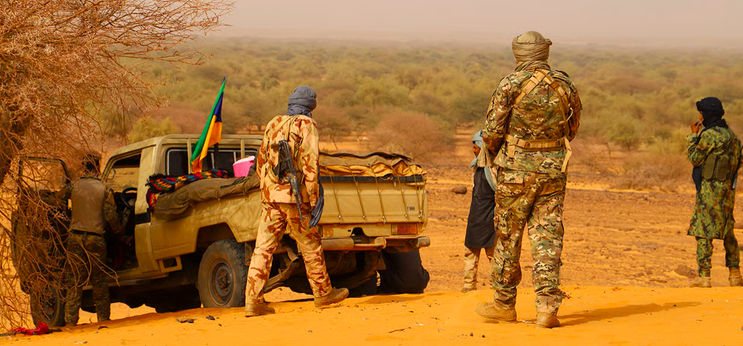
Analysis of the transaction reveals that a significant portion of the ransom was distributed among JNIM’s operational units in Burkina Faso, Niger, and Mali, where the group maintains its largest presence. The document states that these resources have been instrumental in financing large-scale offensives, including a high-profile assault on Bamako in April 2026, during which the Malian Defense Minister was killed. Intelligence sources suggest that the group’s combatants in the region now number between 7,000 and 8,000, with half based in Mali alone.
The report also highlights a secondary funding pathway: a fraction of the ransom was transferred from Al-Qaïda in the Islamic Maghreb (AQIM) to the organization’s central command and its Yemeni affiliate, reinforcing the transnational reach of Sahel-based extremists.
Economic warfare: kidnapping as a revenue stream
Security experts warn that the JNIM has increasingly relied on hostage-taking not only as a propaganda tool but as a lucrative financial strategy. While traditional ransom demands for foreign captives typically range between $4 million and $6 million, the scale of the 2025 payment underscores a dangerous shift in the group’s capabilities. UN analysts describe kidnapping as a dual-purpose tactic: it generates substantial income and simultaneously erodes public trust in state security institutions across the West African Sahel.
This financial windfall arrives at a time when regional governments are struggling to curb militant expansion, raising concerns over the long-term implications for regional stability and counterterrorism efforts.
You may also like
Burkina Faso: what does Ibrahim Traoré’s four-year record truly mean for the displaced and the silenced?
Thali oil permit: can Prime Global Energies’ $15 million rescue finally unlock Cameroon’s stalled Njom-3 well?
Can West Africa’s peace hold without the Entente Council and UNOWAS pact?
Can Lomé’s quiet diplomacy finally deliver peace to eastern DRC?
Can Nigeria’s security forces ever shut down the kidnapping economy in the north?