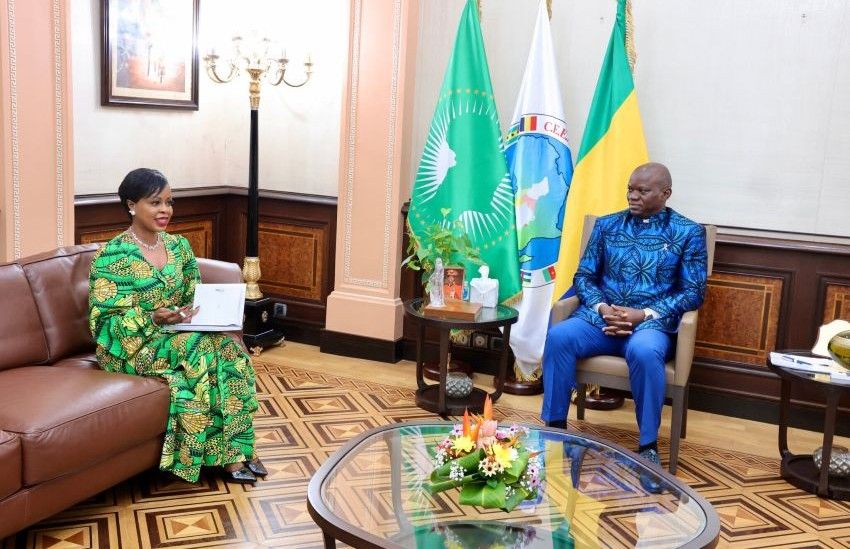
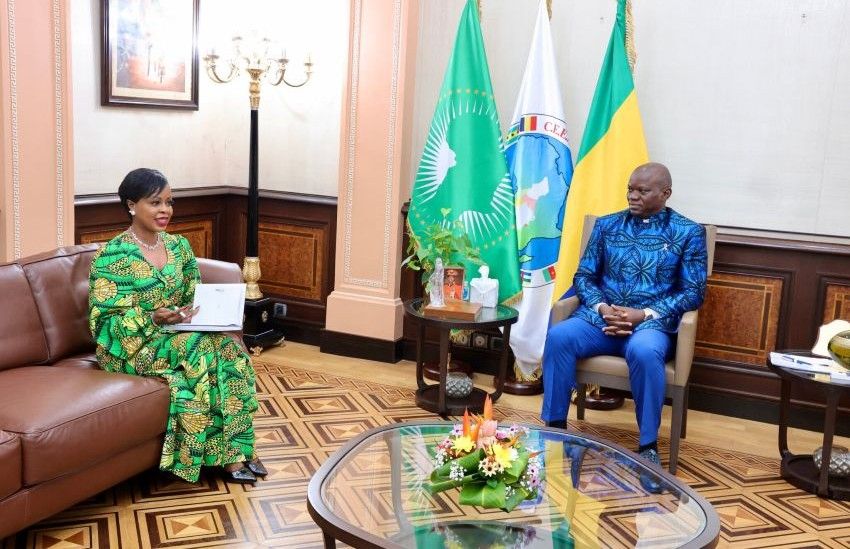
Libreville, October 2026 — Gabon is betting on an unconventional engine of economic growth: the skills of its people. In a strategic shift that goes beyond traditional infrastructure, President Brice Clotaire Oligui Nguema recently met with Minister of Trade, SMEs, and SMIs Zenaba Gninga Chaning to unveil a new skill development initiative. The centerpiece? Training 400 youth in Libreville, with plans to expand across all nine provinces by next year.
The announcement comes as Gabon pursues a critical objective: diversifying its economy and reducing reliance on foreign expertise. But the real question runs deeper. Can Gabon build a productive, self-sustaining economy without first cultivating the technicians, entrepreneurs, and professionals needed to drive it?
From training to economic transformation: why skills matter more than diplomas
This initiative isn’t just about issuing certificates. It’s about closing the gap between education and employment. The 400 trainees won’t just learn a trade — they’ll receive hands-on preparation to secure jobs, launch businesses, or join existing companies. The program links training directly to economic outcomes: entry-level employment, income generation, and value creation.
Government officials emphasize a holistic model: train, support, finance. Beyond classroom instruction, participants get mentorship, access to financing, and project follow-up. The goal? Prevent the common trap where skilled youth fail to transition from competence to viable livelihoods.
The hidden cost of relying on foreign skills
Gabon’s long-term economic health depends on its ability to rely less on imported expertise. Sectors like oil, energy, mining, and digital services all demand local talent — not just capital. Without a skilled workforce, infrastructure projects stall, industrial plants underperform, and local businesses struggle to compete.
This is why recent visits to oil and gas training centers have focused on building domestic pipelines of technical talent. The message is clear: economic sovereignty isn’t just about controlling resources — it’s about controlling the people who transform those resources into national wealth.
A pilot program with nationwide ambitions
The first cohort of 400 young Gabonese is more than a training batch — it’s a proof of concept. Libreville will serve as the testing ground, but the real test lies in rolling out these programs to rural and regional hubs. Each province has distinct economic realities: oil fields in the west, agricultural belts in the north, mining zones in the south. A one-size-fits-all approach won’t work.
Success will be measured not by how many people are trained, but by how many go on to work, start businesses, and contribute to local value chains. How many PMEs and PMI grow because they can now hire qualified Gabonese workers? How many imports of technical services can now be replaced by local expertise?
The shift: human capital as national infrastructure
Gabon is quietly building an invisible but essential infrastructure: a skilled workforce. Roads enable trade. Power plants drive industry. Ports expand trade networks. But it’s the people behind these systems — engineers, technicians, managers — who keep them running, innovate, and scale.
The government is making a long-term bet: that investing in human capacity today will yield dividends in jobs, enterprise, and economic resilience tomorrow. This isn’t just workforce development. It’s economic nation-building.