Gabon activism: balancing free speech and responsible discourse
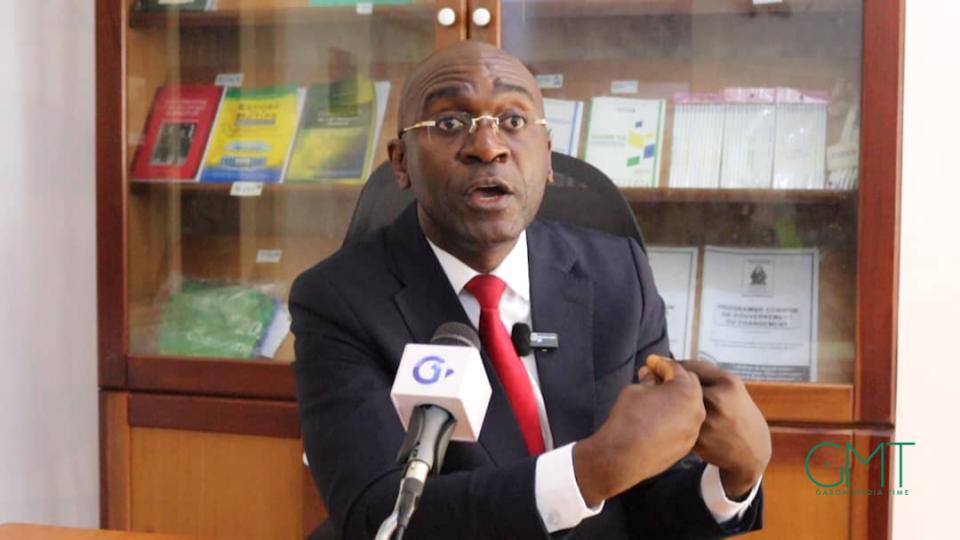
As inflammatory remarks attributed to certain Gabonese activists abroad escalate, civil society leader Geoffroy Foumboula Libeka Makosso is drawing a clear line between legitimate free expression and verbal abuse. Speaking at a press conference in Libreville, he condemned recent attacks targeting President Brice Clotaire Oligui Nguema, his spouse, and his mother while urging authorities to address the issue through legal channels rather than mere public outrage.
The public debate can be intense without crossing into insults, Foumboula emphasized. Reacting to statements made by an activist known as Lanlaire, he stressed that political dissent must not devolve into personal attacks against state leaders or their families.
Freedom of expression does not justify abuse
For Foumboula, civic engagement must never be conflated with insults. Recounting his own journey, he highlighted that his activism has always been rooted in reasoned advocacy, public statements, and when necessary, legal action. “Disagreement does not imply insulting one’s opponent,” he asserted. He argued that while criticism of governance is essential in a democracy, it must never cross into defamation, insults, or other criminal acts.
He underscored that the restoration of constitutional order requires strict adherence to the rule of law. While the transition period may have encouraged reconciliation with some expatriates, this spirit of openness should not be misconstrued as a license for unchecked verbal aggression. “Insults, defamation, and outrage are crimes, not expressions of free speech,” he insisted. Foumboula condemned in the strongest terms the remarks attributed to Lanlaire against the President, First Lady, and the President’s mother.
Questioning ties between power and radical activists
Foumboula did not limit his criticism to activists alone. He also questioned the apparent closeness between authorities and certain diaspora figures whose notoriety stems from virulent attacks on the government. He cited instances of invitations to Gabon, appearances on state media, and alleged efforts to engage these activists during presidential visits. While these claims may require further verification, they raise legitimate concerns about perceived favoritism.
He also recounted an unverified claim by an activist who alleged receiving €150,000 (about 100 million FCFA) from a presidential delegation member to publicly target the Head of State. At this stage, the accusation remains unproven in a court of law.
Ending undue proximity to inflammatory figures
The civil society leader called for a clear stance from the Presidency and state institutions. “The President and his team must put an end to their excessive proximity to activists whose only contribution is outrage and insults,” he declared. Such ties, he argued, risk reinforcing a perception of impunity among these figures and may even encourage others to adopt similar tactics for visibility or access to power.
For Foumboula, failing to take legal action against proven abuses not only normalizes such behavior but also distorts public perception, making it seem as though certain individuals are shielded from accountability.
Pursuing justice over normalizing insults
Foumboula urged administrative and judicial authorities to initiate legal proceedings against those responsible for inflammatory remarks. Without such action, he warned, the public may begin to believe that some activists operate under a form of protection.
He also addressed internet users directly, encouraging them to refrain from amplifying abusive content by unsubscribing from offending accounts, avoiding shares, and reporting such material through available platforms.
Beyond the immediate controversy, Foumboula’s stance raises a broader question about the quality of public debate in Gabon. While free speech remains a cornerstone of democracy, he insists that political disagreement must never descend into personal humiliation. Criticism is part of democratic discourse; legal consequences, when warranted, belong to the courts.
You may also like
Tchad: when public mismanagement mocks divine justice
Richard Bona blames Cameroon’s youth for corruption crisis
Zeifman criticizes nke’s clownish antics at zogo trial
Village de Bamboula : L’histoire oubliée d’un scandale colonial ravivée par le Capitaine Ibrahim Traoré
Jean pierre bekolo warns of chaos ahead without paul biya