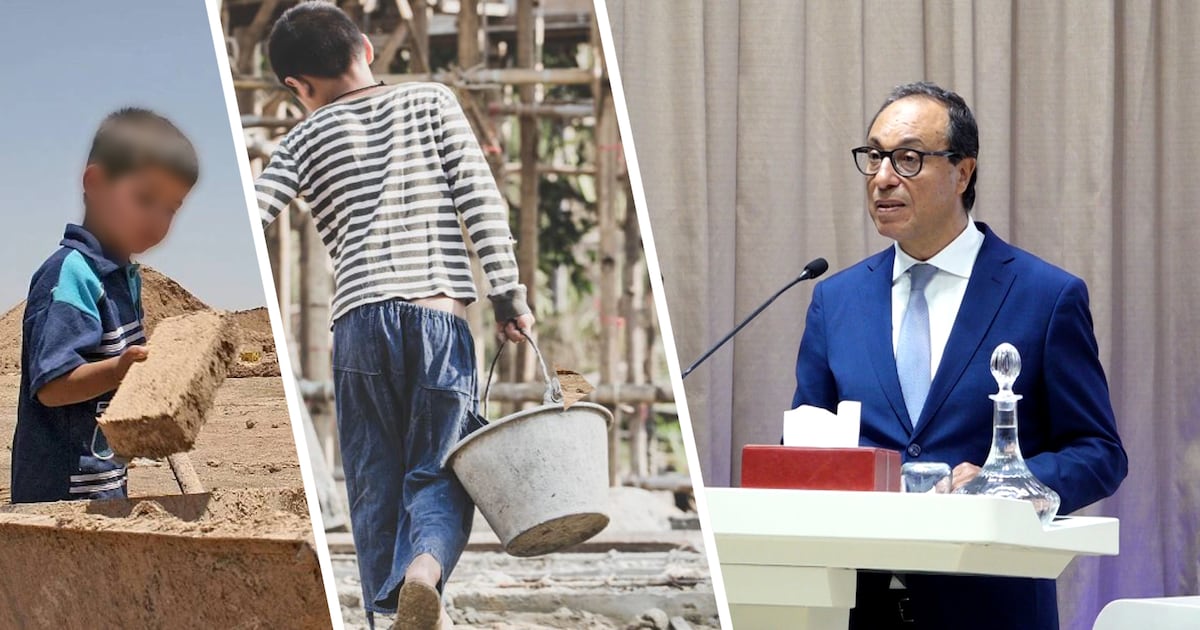
Despite significant strides over the past twenty years, Morocco continues to grapple with the persistence of child labor. While the number of minors in the workforce has plummeted by more than 80% since 1999, the issue remains visible, particularly in unregulated sectors and hazardous environments. On Tuesday, July 1st, in Rabat, the Economic, Social, and Environmental Council (CESE) unveiled a series of strategic recommendations aimed at permanently eliminating this practice.
Public perception and current challenges
During the presentation of the report titled “For an effective public policy to eradicate child labor in Morocco,” CESE President Abdelkader Amara highlighted the results of a public consultation. Out of 1,540 participants, 78% believe that the employment of children remains a prevalent issue across the country. This public perception has pushed the council to evaluate current policies and propose more robust interventions.
Abdelkader Amara acknowledged the progress already achieved by the Kingdom, including the ban on labor for those under 15 and the gradual removal of minors aged 16 to 18 from high-risk occupations. Official statistics reflect these efforts: the number of working children between ages 7 and 17 dropped from 517,000 in 1999 to approximately 101,000 in 2024.
Significant progress but more work remains
“In 1999, over half a million children were working. By 2024, that figure has fallen to about 100,000,” Amara noted, praising the significant progress. However, the CESE report warns that while these gains are undeniable, they are not yet sufficient to achieve total eradication. Structural factors like the informal economy, poverty, and family instability continue to drive the phenomenon. Amara emphasized that a child’s rightful place is in the classroom and educational environments.
The council head reiterated that labor stunts a child’s physical, mental, and educational growth. He argued that ending this practice is essential for social equality and the nation’s overall development. Public feedback indicated that 27% of respondents see children working in public spaces—doing things like street vending, heavy lifting, or car washing. More alarmingly, 22% mentioned organized begging, sexual exploitation, or involvement in drug trafficking.
Proposed reforms and legal updates
The CESE found that nearly 60% of working children are engaged in hazardous tasks, necessitating more urgent prevention and oversight. To address this, the institution suggests revising the Labor Code and updating the 2010 decree regarding prohibited dangerous jobs for minors. A key proposal is raising the minimum legal working age to 16 to align with the end of compulsory schooling, ensuring better harmony between educational and social policies.
Finally, Abdelkader Amara mentioned a new framework agreement between the CESE and the National Observatory for Children’s Rights (ONDE), led by Princess Lalla Meryem. This collaboration aims to synchronize efforts to protect children and prevent exploitation. Amara concluded that child labor is incompatible with Morocco’s current trajectory of progress and its achievements in numerous other fields.