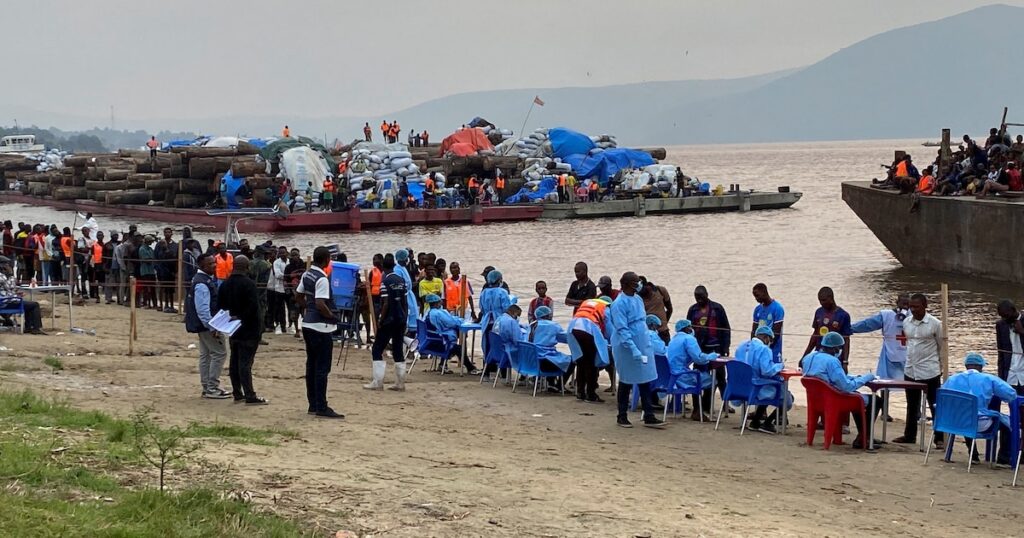
The Ebola virus continues its relentless march across the eastern regions of the Democratic Republic of Congo (DRC), defying containment efforts. Recent assessments confirm the outbreak shows no signs of slowing, with figures rising sharply since the declaration of the epidemic on May 15. Health authorities now report over 1,850 fatalities among nearly 4,000 confirmed cases, pushing the fatality rate past 40%. The Bundibugyo strain, responsible for this crisis, has already claimed more lives than any previous outbreak of the same variant within an equivalent timeframe.
Violence and instability hamper epidemic response
The eastern DRC remains a crucible of insecurity, where armed groups and militia factions disrupt every aspect of the medical response. The Ituri province, ground zero for the outbreak, suffers frequent attacks by the Allied Democratic Forces (ADF) from Uganda, while the North-Kivu province faces similar turmoil. Large segments of North-Kivu have been under the control of the M23 rebel group—allegedly backed by neighboring Rwanda—since clashes with Congolese forces intensified over a year ago. These conflicts have displaced millions, forcing families into overcrowded camps where sanitation is nearly nonexistent.
Compounding the crisis, surveillance systems and diagnostic capabilities were severely under-resourced at the outbreak’s onset. Health teams struggled to trace contacts efficiently, with only 59% of exposed individuals in Ituri being monitored. In urban centers like Bunia, nearly 90% of admitted patients had no documented contact history. The Africa CDC estimates that over 134,000 contacts should be tracked, yet only 17,500 are currently under surveillance. Worse still, 60% of fatalities occurred in communities rather than healthcare facilities, signaling a breakdown in isolation protocols.
Scientific progress meets logistical hurdles
Despite these challenges, researchers are advancing potential solutions. A clinical trial for a Bundibugyo-specific vaccine launched this month at the University of Oxford, with initial doses administered to volunteers. Additionally, the Coalition for Epidemic Preparedness Innovations (CEPI) is funding a separate vaccine candidate developed by Hilleman Laboratories in Singapore, aiming for rapid deployment and testing in affected regions.
In the interim, health officials are repurposing existing tools. The Africa CDC announced plans to distribute the Zaïre Ebola vaccine—designed for a different strain—after observing its effectiveness in reducing symptoms and mortality among recipients. Early clinical trials are also underway for a combination therapy involving 40 patients, while discussions continue about expanding the use of remdesivir, an antiviral drug credited with lowering fatality rates in neighboring Uganda.
Global aid arrives late as crisis deepens
The delayed international response has further exacerbated the situation. Earlier in 2025, cuts to USAID funding—once a cornerstone of DRC’s health infrastructure—left critical programs in disarray. It wasn’t until August 5 that the U.S. State Department pledged $242 million in new aid, bringing total American contributions to $512 million. While this infusion provides much-needed resources for the WHO and CDC’s six-month response plan, critics argue the amount falls short of previous humanitarian investments. The United States remains the largest contributor to the Ebola response, outpacing contributions from the European Union.
You may also like
Can Ibrahim Traoré’s 300 armored vehicles claim survive scrutiny? Inside Faso Armored’s made-in-Burkina Faso gamble
Can Washington force third-country deportations? Ivory Coast’s refusal raises the stakes
Will Benin’s AEO exporters finally crack the Chinese market?
Northern Niger’s unanswered question: can Tiani’s government deliver water and power where it matters most?
Can Air Sénégal survive the Interpol smuggling probe? The stakes for crew, passengers and the airline’s future