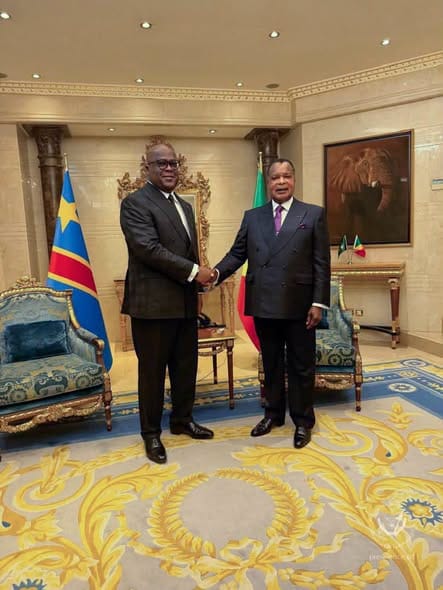
The rapid-fire diplomatic exchange between Kinshasa and Brazzaville following the Makotipoko border incident reveals much more than surface-level diplomacy. Behind the public statements of unity and compensation lies a strategic calculation by both presidents to prevent a localized clash from spiraling into a full-blown crisis that could destabilize regional trade and cross-border communities.
Why the Makotipoko incident became a turning point
The confrontation in Makotipoko, a Congolese village straddling the Congo River near Yumbi, wasn’t just another skirmish between DRC and Congo-Brazzaville forces. It exposed deep-seated tensions over natural resource access, unregulated migration, and weak border enforcement—issues both governments had long chosen to downplay. When cross-border gunfire erupted on October 1, 2026, it forced Kinshasa and Brazzaville into a high-stakes negotiation, one that would either restore fragile trust or fracture it permanently.
The timing was critical: the incident occurred during a fragile agricultural season when river trade is both lifeline and flashpoint for thousands of fishermen and traders. Disruptions here ripple through Kinshasa’s markets and Brazzaville’s supply chains, threatening food security and economic stability in both capitals.
Tshisekedi’s behind-the-scenes strategy: from blame to accountability
Rather than assign fault publicly, Félix Tshisekedi took an uncommon diplomatic route: he brought his interior and defense ministers to Brazzaville to conduct a joint assessment of the border post. This move signaled a shift from reactive rhetoric to proactive crisis management, ensuring military and civilian leaders on both sides would face the same real-time evidence of how quickly tensions escalate.
During a closed-door session, Tshisekedi framed the dispute not as a Congo-Congo conflict but as a regional irritant that demands collective remedies. « We are one people, » he emphasized, underscoring a shared history rooted in the Congo Basin’s pre-colonial kingdoms and colonial-era borders that often ignore ethnic and economic realities. By invoking cultural unity, he reframed the crisis as a shared challenge rather than a national affront.
Sassou Nguesso’s balancing act: placating domestic and regional pressures
Denis Sassou Nguesso faced dual pressures: appease hardline military factions who favored a firm response and calm public anger over perceived Congolese encroachment into sovereign Congolese territory. His decision to accept compensation for victims—without admitting fault—was a calculated compromise. It allowed him to demonstrate responsiveness to local grievances while avoiding the political risk of appearing weak against Kinshasa.
Sources close to the negotiations suggest Sassou Nguesso also leveraged the crisis to push for joint border patrols, a long-standing Congolese demand. By linking compensation to future cooperation, he turned a liability into leverage, securing commitments from Tshisekedi to fund training and equipment for cross-border security forces.
What the silence in the agreement really means
The joint communiqué issued after the meeting was notably silent on two key issues: the cause of the initial confrontation and a timeline for compensation. Analysts interpret this omission as intentional—allowing both presidents to claim progress without triggering fresh disputes over accountability. It also reflects a mutual understanding that finger-pointing would only reignite tensions they’ve worked hard to quell.
At the same time, the absence of a formal investigation mechanism leaves a dangerous gap. Without third-party oversight, incidents like Makotipoko could recur, especially as climate pressures increase migration and resource competition along the Congo River.
Key takeaways for communities and policymakers
- River communities bear the immediate cost: The Makotipoko incident disrupted daily life for fishermen, traders, and ferry operators who rely on the Congo River for income. Even the promise of compensation offers little comfort when livelihoods depend on uninterrupted trade.
- Military-to-military cooperation is fragile: The joint border assessment is a positive step, but without a binding protocol or external mediation, similar clashes remain possible.
- Economic interdependence is a double-edged sword: While Congo River trade binds Kinshasa and Brazzaville, it also creates flashpoints. Both governments now face the challenge of managing cooperation without stifling economic activity.
- Compensation as a confidence-building tool: The indemnification pledge—though unquantified—signals both presidents’ recognition that trust must be rebuilt incrementally, starting with tangible gestures for affected populations.
What happens next? Three scenarios for Congo River relations
The Makotipoko crisis didn’t just highlight tensions—it set a precedent. The path forward depends on which of these scenarios unfolds:
Scenario 1: Institutional deepening
Kinshasa and Brazzaville could establish a joint border commission with representatives from both militaries, local governments, and civil society. This body would oversee routine patrols, dispute mediation, and rapid-response protocols for future incidents. Such an institution would institutionalize crisis prevention, but it requires sustained political will and funding—neither of which are guaranteed.
Scenario 2: Status quo with episodic flare-ups
Without enforceable agreements or third-party mediation, Makotipoko becomes a cautionary tale. Future incidents may trigger swift, if temporary, de-escalations, but the structural causes—unregulated migration, resource disputes, and weak governance—will persist. Communities will continue to bear the brunt of recurring instability.
Scenario 3: Erosion of trust and escalation
The most dangerous outcome. If compensation is delayed or compensation amounts are perceived as inadequate, local resentment could radicalize border communities. Fringe groups might exploit grievances to launch attacks, dragging both governments into renewed confrontation. The fragile peace could collapse under pressure from hardliners in both capitals.
Lessons from Makotipoko for Africa’s riverine diplomacy
The Congo River crisis offers three critical insights for African leaders managing shared waterways and porous borders:
- Silence is strategic, but dangerous: Avoiding public accountability allows leaders to negotiate, but it also leaves grievances unaddressed. Over time, unaddressed injustices ferment resentment that can erupt unpredictably.
- Local voices must shape solutions: Compensation and border patrols are top-down remedies. True resilience requires involving riverine communities in designing prevention and response mechanisms—especially women and youth, who are often most affected by cross-border trade disruptions.
- Climate change intensifies water-based conflicts: As droughts and floods alter river flows and migration patterns, shared waterways will become even more contested. Proactive climate-adaptive diplomacy is no longer optional—it’s essential.