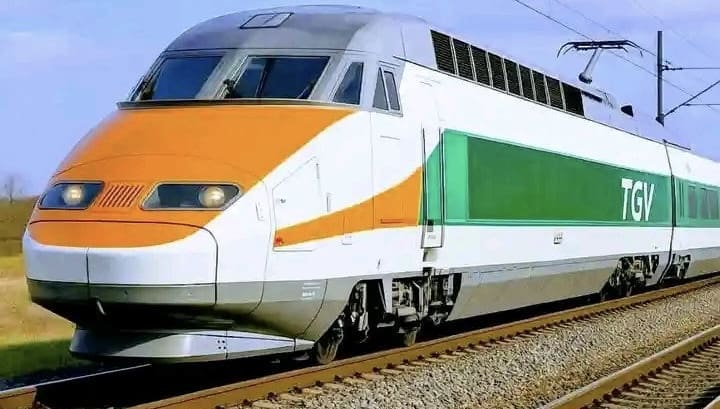
The Republic of Côte d’Ivoire is on the brink of a historic leap forward in infrastructure development. As part of its ambitious National Development Plan (NDP) for 2026-2030, the government is set to construct a high-speed rail line connecting the economic capital of Abidjan to key northern cities. This flagship project is designed to serve as a cornerstone of the country’s broader economic transformation, positioning Côte d’Ivoire as a pivotal player in West Africa’s growth story.

A 640-kilometer high-speed rail corridor will link Abidjan to Ferkessédougou, passing through major urban centers such as Yamoussoukro, Bouaké, and Korhogo. This initiative is more than a technical milestone—it represents a transformative force for national integration, dramatically reducing travel times between Côte d’Ivoire’s most important economic hubs.
The future rail system is expected to redefine connectivity across the country, fostering greater economic cohesion and opening new opportunities for businesses and communities alike.
Minister of Planning and Development Souleymane Diarrassouba highlighted that the journey from Abidjan to Yamoussoukro will be completed in just 45 minutes—a breakthrough that could reshape daily life and work patterns. This rapid transit option may encourage more professionals to live in the political capital while commuting to the economic hub, fostering balanced regional development.
Expanding mobility: metro, airports, and roads
The high-speed rail initiative is part of a sweeping national effort to modernize the country’s transport network. Alongside this, the government has committed to launching the Abidjan Metro, a 37-kilometer urban rail system, by 2029. The expansion also includes two new international airports—one in San-Pedro in the southwest and another in Bondoukou in the east—designed to enhance both national and regional connectivity.
The NDP 2026-2030: a roadmap for structural change
At the heart of this transformation lies the National Development Plan, a comprehensive strategy aimed at accelerating Côte d’Ivoire’s economic growth. The plan prioritizes the development of regional economic hubs, rapid industrialization, and the promotion of locally produced goods and services.
Central to this vision is the government’s role in steering development, ensuring that national resources are mobilized effectively to support sustainable progress and social cohesion.
The ultimate goal is to elevate Côte d’Ivoire to the status of an upper-middle-income country by 2030, while reinforcing its reputation as a stable and cohesive nation.
Financing the future: a 114 trillion FCFA investment
To bring this vision to life, the government estimates total financing needs at 114.8 trillion FCFA over the 2026-2030 period. The funding strategy emphasizes a balanced partnership between public and private sectors, with the former contributing 30% and the latter 70% of the total investment.
The government will host a High-Level Consultative Group meeting in Abidjan on July 8-9, 2026, to engage international financial partners. This event, supported by the World Bank, the European Union, the African Development Bank, and the United Nations system, will showcase Côte d’Ivoire’s development vision and seek to secure the necessary funding for its realization.
Strategic positioning in West Africa
With this ambitious infrastructure agenda, Côte d’Ivoire is positioning itself as a future leader in West Africa’s logistics, industrial, and economic landscape. From high-speed rail and metro systems to upgraded airports and road networks, the country is laying the groundwork for sustained growth and enhanced regional influence.