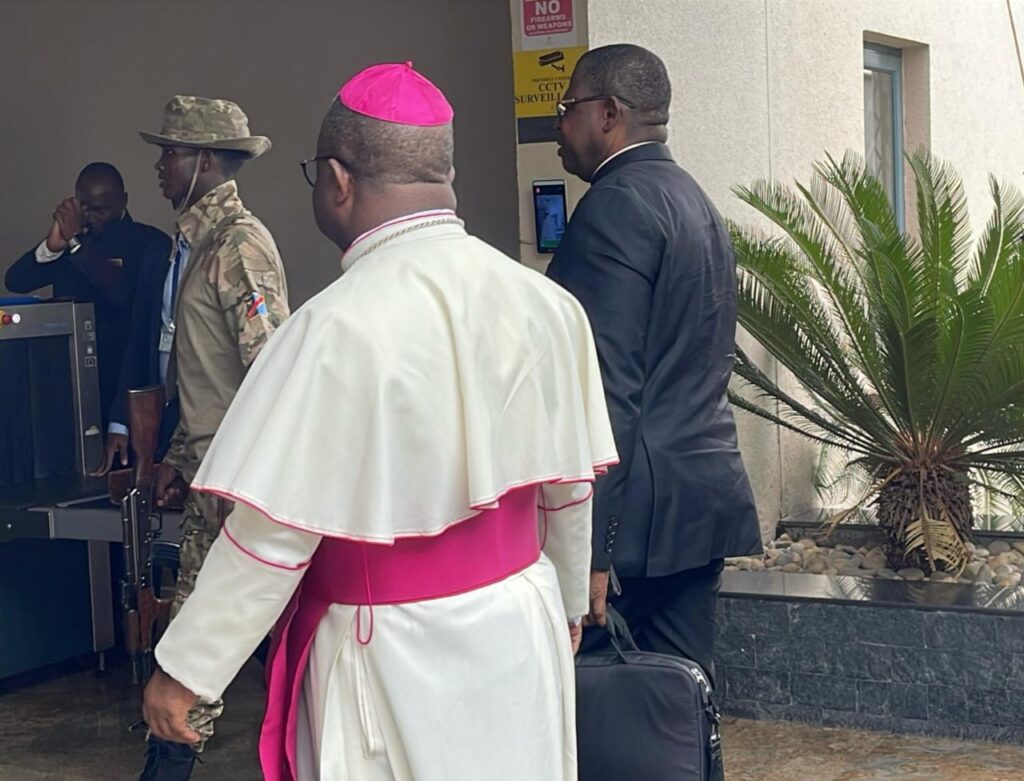
A significant warning has emerged from the Democratic Republic of Congo, where the National Episcopal Conference of Congo (CENCO) has unequivocally cautioned against any political maneuver that could pave the way for President Félix Tshisekedi to seek a third term.
During their extraordinary plenary assembly, held in Goma from June 18 to 20, the nation’s Catholic bishops released a potent declaration. In it, they firmly reiterated their unwavering commitment to the strict observance of the 2006 Constitution. The prelates specifically warned that any effort to alter the constitutional provisions governing presidential term limits risks severely undermining the country’s institutional stability.
In a message delivered by Donatien Nshole, the Secretary General of CENCO, the religious leaders underscored that the political stability of the Democratic Republic of Congo is intrinsically linked to upholding the constitutional order and the solemn commitments made to the Nation. They emphatically urged the Head of State to «honor the oath sworn before God and the people» at the time of his inauguration.
CENCO’s position is clear: any action challenging the existing constitutional provisions would represent a fundamental breach of the republican pact, a pact painstakingly forged in the aftermath of the various political crises that have historically afflicted the nation.
This decisive stance from the bishops emerges amid a reinvigorated political discourse, particularly spurred by the Parliament’s recent adoption of legislation governing the organization of referendums. The bishops voiced concerns that this new text could potentially pave the way for a popular consultation that might impact provisions deemed immutable, specifically those concerning the length and number of presidential terms.
Leaders of the Catholic Church further asserted that the intentions of certain political figures are becoming increasingly evident, with numerous voices within the political class openly discussing the prospect of a new governance cycle favoring the incumbent president.
Conversely, the presidential majority has dismissed these interpretations. They maintain that the referendum law’s sole purpose is to strengthen the institutional framework and empower the sovereign people to express themselves on crucial national issues.
The broader debate was reignited following several public statements made by President Félix Tshisekedi himself. Last May, during a press conference in Kinshasa, the Head of State declared he had not sought a third term, yet he added that he would comply with popular will should it demand such a move. This particular statement immediately fueled widespread speculation regarding his political intentions leading up to 2028.
In light of this evolving situation, CENCO has urged the Congolese population to remain vigilant and to peacefully and legally resist any attempts to modify the constitutional provisions that the Conference considers to be fundamental and entrenched.
The Constitution of the Democratic Republic of Congo explicitly limits the presidential term to five years, renewable only once consecutively, thus setting a maximum of two terms. President Félix Tshisekedi, who assumed office in 2019, is currently serving his second mandate.
The next presidential elections in the Democratic Republic of Congo are slated for December 2028, adhering to the current electoral calendar, barring any institutional alterations or unforeseen circumstances.
This latest declaration further solidifies the pivotal role of the Catholic Church in the Democratic Republic of Congo’s political discourse, as the contentious issue of a potential third term for Félix Tshisekedi increasingly emerges as one of the nation’s foremost political challenges.
You may also like
Will the AES ever launch its own currency? The question Traoré keeps leaving unanswered
Can Ibrahim Traoré’s 300 armored vehicles claim survive scrutiny? Inside Faso Armored’s made-in-Burkina Faso gamble
Can Washington force third-country deportations? Ivory Coast’s refusal raises the stakes
Will Benin’s AEO exporters finally crack the Chinese market?
Northern Niger’s unanswered question: can Tiani’s government deliver water and power where it matters most?