Congo Senator Slams Constitutional Coups as Africa’s New Threat
- Politics
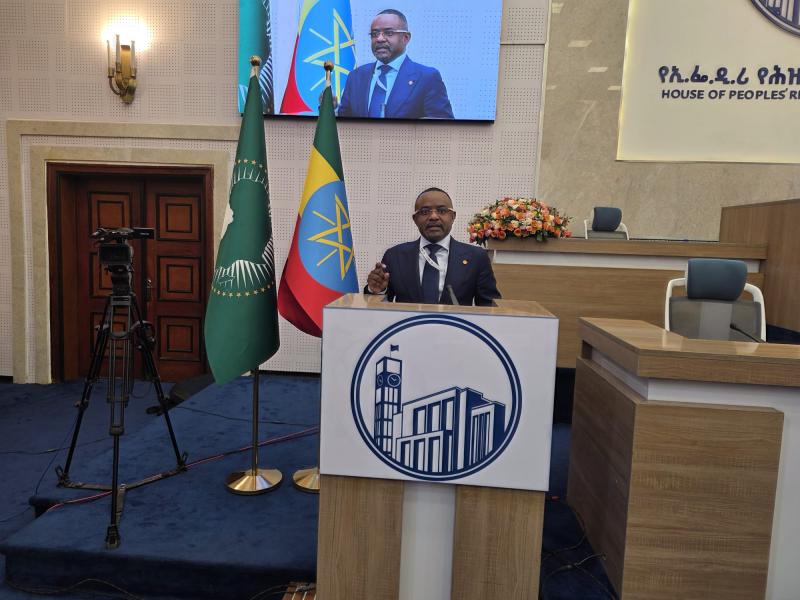
Senator Salomon Kalonda Idi Della of the Democratic Republic of the Congo delivered a sharp rebuke to African leaders this Friday during a high-profile address at the Ethiopian Parliament’s Intelligence and Security Forum in Addis Ababa. His remarks, centered on electoral integrity and democratic governance across the continent, singled out the DRC as a case study in what he termed “constitutional coups”—a phenomenon he argues is becoming the new face of undemocratic power grabs in Africa.
Democracy Under Fire: The Rise of Constitutional Coups
Speaking before African parliamentarians, Kalonda condemned attempts to circumvent term limits through legalistic maneuvers rather than military force. “The difference between a military coup and a constitutional coup is only in the method,” he stated. “One uses guns, the other uses judges and referendums.”
He drew a direct parallel to the DRC, where he claimed a constitutional reform process is being exploited to allow the current president a third term—a move he described as a blatant violation of the country’s founding charter. “Citizens took to the streets in protest. The response? Bullets. Blood on Congolese soil,” Kalonda recalled, his voice heavy with frustration.
The senator extended his criticism to international partners, accusing them of complicity through silence. “When generals seize power, the world condemns them. When presidents rewrite constitutions, the world looks away,” he lamented. “This double standard must end.”
The Anatomy of Africa’s Electoral Crisis
Beyond the DRC’s immediate struggles, Kalonda outlined systemic flaws plaguing elections across the continent:
- Judicial Capture: Electoral commissions and courts are increasingly weaponized to disqualify opposition candidates or invalidate votes in key regions.
- Digital Authoritarianism: Internet shutdowns during vote counts, described as admissions of fraud, have become commonplace.
- Resource Exploitation: Lack of democratic accountability leaves African nations vulnerable to predatory economic deals that benefit foreign powers at the expense of local populations.
A Four-Point Plan for Electoral Integrity
To combat these trends, Kalonda proposed a comprehensive framework:
- African Electoral Watchdog: A permanent continental body to monitor electoral processes and flag irregularities in real time.
- Digital Sovereignty: Investment in African-controlled digital infrastructure to prevent external interference in elections.
- Transparent Audits: Independent verification of voter rolls, ballot counts, and result proclamations, with involvement from civil society and opposition parties.
- Pre-Election Parliamentary Missions: Deploying observer teams before polls to assess conditions on the ground, from voter registration to final results.
“Democracy is not a luxury,” he asserted. “It is the foundation for stability, development, and fair economic partnerships. Without it, Africa’s resources will continue to be looted—not by colonial powers, but by the very leaders sworn to protect them.”