Jeunes journalistes sous pression au Cameroun
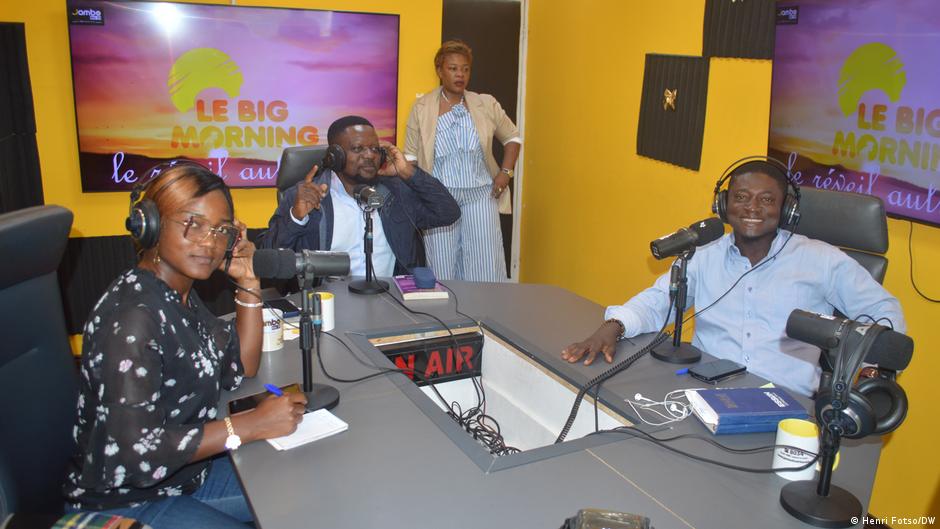
In Douala, the vibrant Jambo FM radio station has made a deliberate choice to entrust its crucial programming slots to a team of dynamic young journalists. This bold move comes with the inherent challenge of these emerging media professionals having to fiercely safeguard their autonomy and withstand ongoing intimidation.
Nestled in the bustling Deido district, specifically at a location known as Entrée de la gare, the studios of Jambo FM pulsate with a unique energy. Here, General Director Antoine Landry Lemogo, widely recognized as President Tchop Tchop, has opted to redefine the media landscape by placing the station’s broadcast firmly in the hands of the youth.
President Tchop Tchop articulated his vision, explaining that for true evolution, there is no alternative but to rely on the younger generation, who possess both vigor and a certain fearlessness. He noted that the country’s leadership, often of advanced age, is primarily concerned with self-preservation. He emphasized that one cannot condemn this reality without simultaneously empowering young people within one’s own ventures to forge a better future.
One female journalist at the station asserted that her gender presents absolutely no barrier to moderating heated discussions of this nature. She elaborated that success in such roles is entirely dependent on meticulous preparation, comprehensive knowledge, and a broad general culture. With such expertise, she explained, a journalist instinctively understands the boundaries for allowing guests or listeners to contribute.
Civic education and the tightrope of live broadcasting
The station’s flagship program, Big Morning, fosters complete interactivity. However, the nature of live broadcasting means operating on a knife-edge, balancing civic education with the constant risk of discussions veering off course.
Jordan Sorel Timba, another young journalist at Jambo FM, champions an approach rooted in constructive critique. He clarified their station’s stance, stating they are not present to undermine the existing government, but solely to underscore the societal challenges faced by their community. He also noted their commitment to commending the government when it undertakes beneficial initiatives, referencing a recent life-saving intervention by Laquintinie Hospital for a young Cameroonian. Should a caller deviate from appropriate conduct, he added, the ultimate recourse is to disconnect their microphone.
The pervasive violence against journalists, including the brutal killing of Martinez Zogo, understandably instills a sense of caution within the profession.
For Tamo Tabe, host of the live interactive show “Laissez parler les gens” (Let the People Speak) from 9 AM to 11 AM, Jambo FM’s telephone lines have become a critical pressure-release valve for a populace under strain. Tabe explained that since Cameroonians often cannot express their indignation or protest in the streets for fear of being misidentified as terrorists, radio offers a vital alternative. He described the station as an essential outlet, a platform where individuals can vent the profound, buried frustration they carry within.
To speak truth without causing undue harm or seeking undue favor: this is the delicate balance Jambo FM strives to maintain day after day, working to foster Cameroonian democracy, 36 years after the Appeal of La Baule linked development aid to the democratization of the African continent.