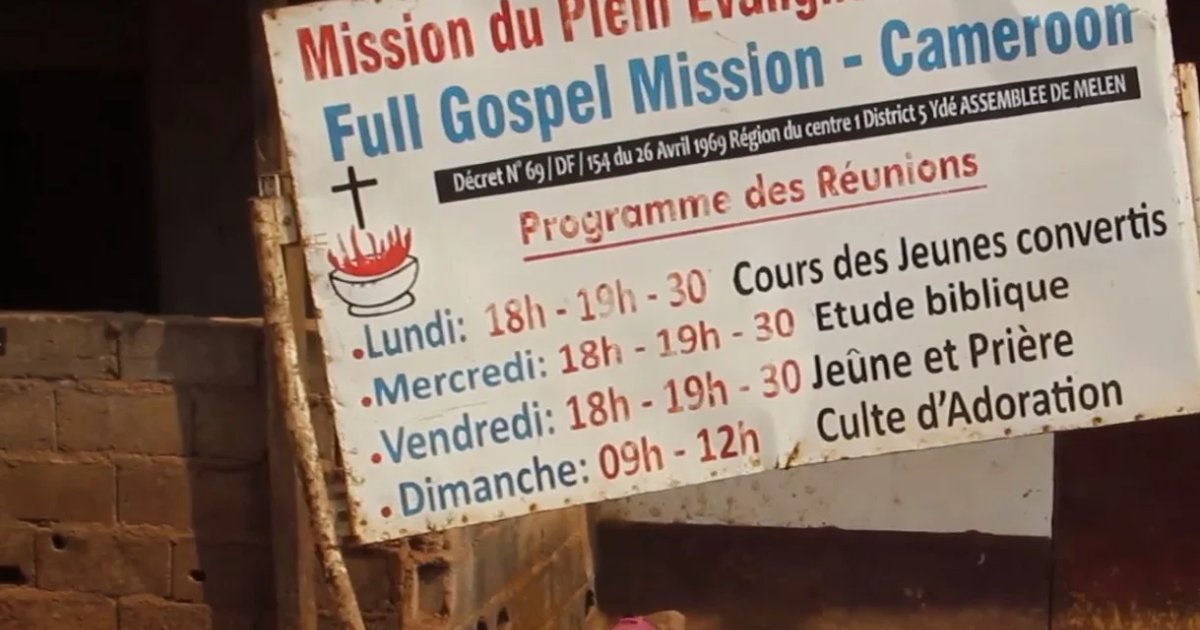
Cameroon’s Minister of Cults, Paul Atanga Nji, announced on July 8, 2026, the impending shutdown of 1,400 new churches across the nation. The minister cited a consistent pattern of administrative irregularities as the primary justification for this extensive action.
This decision follows a directive issued by the minister in 2024, which mandated all new churches to register with his department. Many have yet to comply. During a meeting with leaders of the “Vie et Paix” evangelical church, Minister Atanga Nji declared, “The period of tolerance has now expired.” This particular meeting was convened in the wake of a horrific incident in late June, where an 11-year-old girl was brutally murdered by a 22-year-old follower of the “Vie et Paix” church. The perpetrator inflicted 17 stab wounds, claiming to have acted under the direct command of the Holy Spirit.
The tragic event sparked widespread outrage and deep emotion throughout Cameroon. It also brought to light a similar, equally distressing crime committed in March, involving another 11-year-old girl, though the specific motives for that earlier incident remain undisclosed.
The Cameroonian government has been actively addressing the proliferation of new churches since 2006. In 2008, authorities officially recognized 81 associations, Christian churches, and religious institutions, including 46 Protestant and Pentecostal denominations, all operating in strict accordance with national law.
Much like other African nations, Cameroon has witnessed a significant surge in Christian sects since 1994. This phenomenon can be attributed to the law on freedom of association, coupled with the devaluation of the CFA franc (Communauté financière africaine). The economic hardships resulting from this devaluation pushed many vulnerable populations into the embrace of various preachers and their movements.
In 2025, the Cameroonian government had already closed nearly 200 places of worship belonging to new churches, primarily due to excessive noise pollution. At that time, unapproved new churches were sternly warned to “begin closing down and packing up their operations.”