In a significant blow to media freedom in Burkina Faso, the nation’s transitional military authorities have expelled two French journalists, Agnès Faivre of Libération and Sophie Douce of Le Monde. Both reporters possessed valid visas and accreditations necessary for their work in the country.
According to reports from both news organizations, national intelligence agents summoned and interrogated the journalists on March 31 in Ouagadougou, the capital, regarding their journalistic activities. They were subsequently given a mere 24 hours to depart the country, with no official reason provided for their expulsion.
In an editorial, Libération asserted that the decision to deport its correspondent was “unjustified” and directly linked to her investigation published on March 27. This inquiry focused on a video allegedly filmed at a military barracks in Ouahigouya, Yatenga province, depicting the bodies of children on the ground in the presence of individuals appearing to wear Burkinabè military uniforms. Le Monde condemned these expulsions as “unacceptable,” vehemently criticizing the “arbitrary decision.”
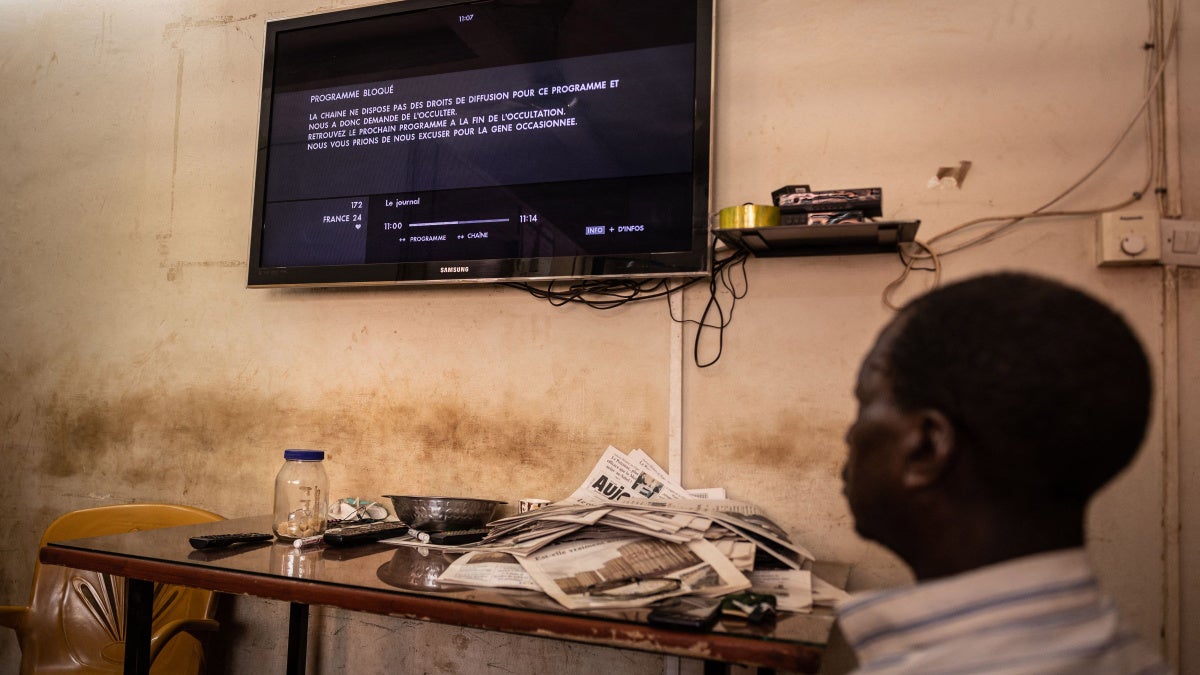
The forced departure of these two journalists marks the latest in a series of assaults on freedom of expression and media operations within Burkina Faso. This incident follows the suspension of the French international news channel France 24 on March 27, and the earlier suspension of French international radio station Radio France Internationale (RFI) on December 3, 2022. Both broadcasters were accused by the Burkinabè government of disseminating false news.
“The junta is inflicting irreparable damage on freedom of expression in this country,” stated Daouda Diallo, a prominent Burkinabè human rights activist and winner of the 2022 Martin Ennals Award, the highest accolade for human rights defenders. “Journalism is not a crime and should cease to be a dangerous profession in Burkina Faso.”
Both local and international journalists and news outlets operating in Burkina Faso are increasingly subjected to harassment, threats, and arbitrary arrests. This pattern reflects a blatant attempt by the military junta to silence independent and critical sources of information across the nation.
As Burkina Faso grapples with an armed conflict involving Islamist armed groups, journalists must be allowed to work freely without fear of reprisal. The transitional military authorities should reverse their decision, permitting Agnès Faivre and Sophie Douce to return. Crucially, authorities must dismantle the obstacles that impede the vital work of journalists who inform and educate the Burkinabè populace.
…………….