Amidst the vast, arid expanse of the Sahel, where conflicts unfold far from global scrutiny, Mali confronts a stark reality: the dismissal of forces previously holding the line against burgeoning instability carries significant repercussions.
The recent surge in devastating attacks across the nation is neither coincidental nor an act of fate. Instead, they represent the anticipated fallout from a political severance, proudly declared as an assertion of sovereignty. This performative independence, fueled by anti-French sentiment, served as a tool for domestic legitimation.
Bamako’s decision: the french departure achieved
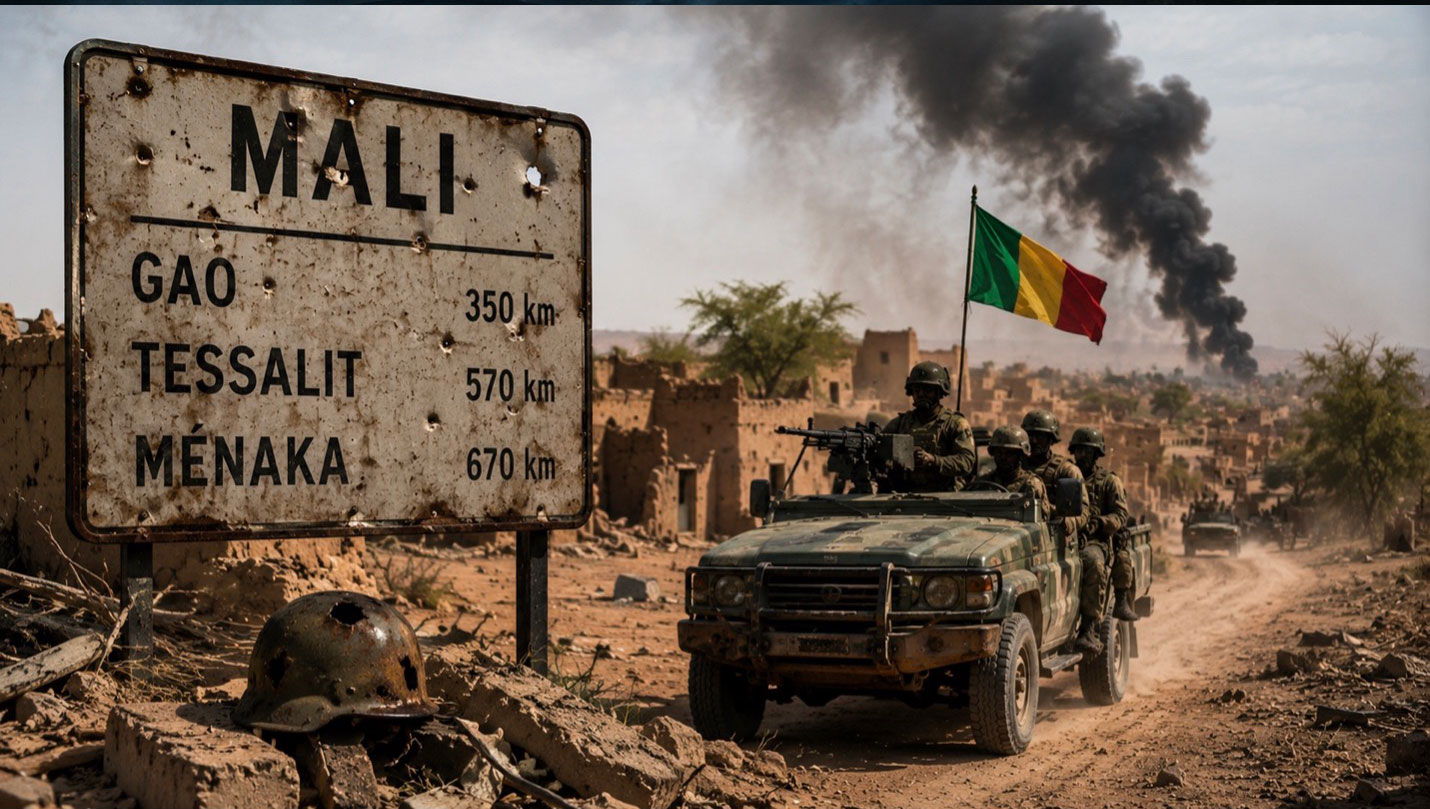
French military convoys eventually departed from critical locations like Gao, Tessalit, and Ménaka, met by derisive jeers from segments of the public, inflamed by years of accusatory rhetoric. At that moment, operational realities seemed to hold little sway. The crucial role French forces played in 2013, halting the imminent collapse of the Malian state as jihadist columns advanced southward, was conveniently overlooked.
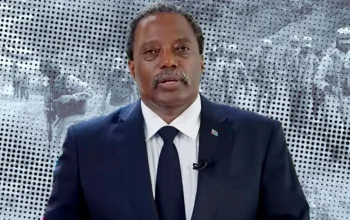
President Emmanuel Macron, with a remarkable coolness, stated: « Mali did not make the best decision by expelling the French army ». This straightforward, almost clinical observation now resonates as a clear strategic truth.
The French head of state has consistently acknowledged past French missteps, recognizing that Paris occasionally overestimated military solutions while failing to adequately foster essential local political reforms. Yet, on one point, his stance remains unwavering: without French intervention, Mali could have descended into complete disarray. He previously declared unequivocally: « Without France, Mali would no longer be a unified state ».
This profound truth appears to be re-emerging with harsh clarity today.
On the ground, however, slogans and political posturing hold no sway. Following the evacuation of French bases, a stark security vacuum became undeniable. Affiliates of Al-Qaïda and the Islamic State swiftly capitalized on these vulnerabilities. Where Operation Barkhane once contained, monitored, engaged, and gathered intelligence, Malian authorities now struggle to maintain lasting control over their vast territory.
Underlying this unfolding situation is a crucial legacy that should not be overlooked.
the ultimate sacrifice: french soldiers in the Sahel
Fifty-eight dedicated individuals perished in a conflict that was neither abstract nor theoretical. Their lives were lost in places like Kidal, the Adrar des Ifoghas, and In Delimane, on roads riddled with mines, during arduous night operations, under scorching temperatures, confronting an elusive, mobile, and diffuse adversary.
These soldiers were not occupiers, nor were they colonial predators reinvented through militant narratives. They served as instruments of a military commitment undertaken by the Republic, aimed at preventing the establishment of a terrorist stronghold within the heart of the Sahel.
Their commitment came at a profound cost.
Their sacrifice demands at least one imperative: to ensure their memory is not diluted by ideological oversimplifications.
While France acknowledges its past errors, it also bore the brunt of a colossal military effort for years, almost single-handedly striving to maintain a fragile regional balance.
Mali consciously chose to dismantle this established security framework in the name of declared independence, and now it must contend with the subsequent fallout.
President Emmanuel Macron’s assertion that Bamako did not make « la meilleure décision » (the best decision) was devoid of post-colonial resentment or sentimental regret. He was merely observing a truth brutally confirmed by current events: in specific global regions, declared sovereignty alone is insufficient to repel advancing jihadist forces.
For France, the Sahel represented a theater of significant diplomatic strain.
Yet, for the French soldiers involved, it remains something more profound: a field of honor.
And this honor, forged through sacrifice, cannot be swayed by shifting public opinion.