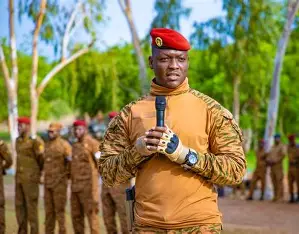
On a pivotal Friday in June 2026, Burkina Faso made a historic announcement: the immediate severance of all diplomatic ties with France. Ouagadougou’s authorities framed this decisive step as a necessary rejection of what they describe as persistent neocolonial interference, including alleged covert support for destabilizing networks operating within the country’s borders.
While this decision undeniably marks a sharp turn in bilateral relations, it also ignites a deeper conversation about what sovereignty truly means in the modern geopolitical landscape. Is cutting ties with a former colonial power an act of liberation—or merely a shift from one sphere of influence to another?
From colonial legacy to new alliances: what does sovereignty look like today?
The rupture with France comes at a time when Burkina Faso has been actively diversifying its international partnerships. Since 2023, Ouagadougou has deepened military collaboration with Moscow, sought economic cooperation with Beijing and Ankara, and explored energy and infrastructure agreements with Tehran. These moves are often framed as part of a broader strategic pivot toward a multipolar world.
Yet multipolarity does not automatically guarantee independence. True sovereignty demands more than changing partners—it requires the capacity to make decisions based on national interest alone, free from political, economic, or ideological constraints imposed by any foreign power. Can Burkina Faso ensure that its new alliances serve its long-term development, or will it merely trade one form of dependency for another?
A regional domino effect?
The timing of Burkina Faso’s announcement has intensified speculation about whether Mali and Niger—its fellow members of the Alliance of Sahel States (AES)—might follow suit in the coming months. The three nations have increasingly aligned their foreign policies, especially in their growing engagement with Russia.
If Mali and Niger adopt similar measures, it would reinforce perceptions of a coordinated regional strategy. But this raises a critical question: are these decisions driven by independent national priorities, or are they being steered by a shared geopolitical agenda centered on a new strategic partner? Some observers suggest that a pattern of simultaneous alignment could signal a deliberate shift in bloc affiliation rather than genuine emancipation from external influence.
Sovereignty beyond rhetoric: the real test begins now
Breaking from Paris to embrace Moscow, Beijing, or Ankara does not, in itself, equate to achieving full autonomy. History shows that great powers—regardless of their ideology or geographic origin—pursue objectives that prioritize their own interests. Burkina Faso’s challenge now is to prove that this rupture is not just symbolic, but the foundation for a sustainable path forward.
This journey demands concrete action: securing domestic revenue streams, investing in local industries, protecting national territory, strengthening governance, and designing a foreign policy that reflects the will of the Burkinabè people—not the demands of external patrons. Real sovereignty is measured not by the number of embassies closed, but by the ability to set one’s own course in a complex world.
The ultimate test for Burkina Faso—and potentially for the Sahel region—will be whether this bold political decision leads to enduring self-determination… or simply replaces one form of external control with another.