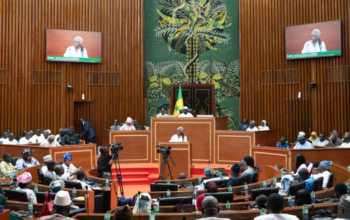

A significant constitutional revision was enacted in Benin on November 1st, following an urgent parliamentary procedure. This new framework introduces a ‘presidential ticket’ system, requiring the President of the Republic and a Vice-President to be elected concurrently. The successful candidates must secure an absolute majority of votes over two rounds of balloting.
Among the key provisions, the revised constitution officially abolishes the death penalty and establishes an independent Court of Accounts. It also integrates the principle of affirmative action, specifically designed to enhance women’s representation in electoral processes.
The new legislative text imposes a limit of three terms for members of parliament. Additionally, it provides a mechanism for deputies who were temporarily replaced by their alternates to reclaim their seats.
The existing two-consecutive-term limit for the President, a cornerstone of the 1990 constitution, has been further strengthened. The updated provision now stipulates a lifetime restriction, meaning no individual can serve more than two presidential terms in total throughout their life.