venance konan dissects the modern face of panafricanism
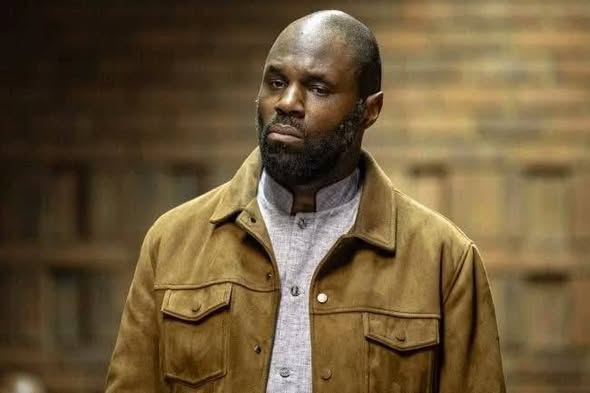
As South African courts prepare to rule on the fate of Kémi Séba, the pan-African activist arrested in April while attempting to enter Zimbabwe illegally, writer Venance Konan questions whether the high-profile social media figure truly embodies modern pan-Africanism. This reflection offers a deep dive into the movement’s evolution and its contemporary manifestations.
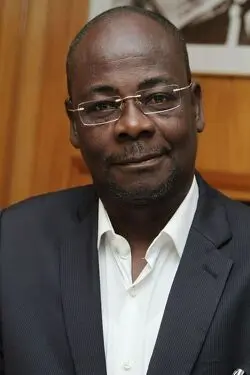
What connection could possibly link a Black pan-African activist with a white supremacist? The case of Kémi Séba—born Stellio Gilles Robert Capo Chichi in Benin, holding a Nigerian diplomatic passport—highlights this paradox. Recently detained in South Africa alongside his 18-year-old son and François Van der Merwe, a South African white supremacist nostalgic for apartheid, Séba faces prosecution in Benin for “apology for state security crimes and incitement to rebellion” after publicly supporting soldiers involved in a failed December coup. An international arrest warrant has been issued against him.
Once a French citizen, Séba lost his nationality due to his anti-French rhetoric, virulent anti-CFA franc stance, and antisemitic remarks. His arrest reveals a troubling alliance: while Séba portrays himself as a pan-African leader, he collaborates with figures advocating exclusionary ideologies.
Russia-backed pan-Africanism and dictatorial alliances
Séba joins voices like Franklin Nyamsi and Nathalie Yamb, prominent francophone pan-African figures known for their vocal opposition to French presence in Africa. Yet these same voices often align with Russian propaganda and support the military juntas of the Alliance of Sahel States (AES)—Assimi Goïta of Mali, Ibrahim Traoré of Burkina Faso, and Abdourahamane Tiani of Niger. This raises a critical question: does modern pan-Africanism mean rejecting France only to submit to Russian influence while endorsing undemocratic regimes?
The pan-African movement, born in early 20th-century Black intellectual circles in the Americas and Caribbean, historically championed anticolonial struggles. Figures like Kwame Nkrumah of Ghana, Sékou Touré of Guinea, and Patrice Lumumba of Congo galvanized the movement, which later fueled independence movements across Africa. The Fédération des étudiants d’Afrique noire en France (FEANF), a student union founded in 1950, became a hub for political mobilization advocating decolonization and continental unity. Its confrontational stance against France’s Algerian war policies led to severe repression, including reduced scholarships and police surveillance, culminating in its dissolution in 1980.
From unity to fragmentation
The independence of Ghana in 1957 and subsequent African decolonization were seen as triumphs of pan-Africanism, culminating in the creation of the Organization of African Unity (OAU) in 1963—a milestone toward continental unity. However, the post-independence era saw the rise of narrow nationalism and fragmentation. Conflicts erupted in regions like the Horn of Africa, Sudan, and the Great Lakes, while countries like Eritrea and Sudan split. In 2002, Mouammar Kadhafi attempted to revive the vision of a united Africa by transforming the OAU into the African Union (AU), but this initiative stagnated after his death in 2011. The AU’s New Partnership for Africa’s Development (NEPAD), launched in 2001 to accelerate integration, has since faded into obscurity.
Pan-Africanism in name only
Today, the term “pan-Africanist” is often invoked without substance. Political leaders across the continent—from Laurent Gbagbo in Côte d’Ivoire, who founded a party explicitly labeled pan-Africanist, to Senegal’s ruling party, PASTEF—routinely claim the mantle. Yet actions frequently contradict words. While some regions endure civil wars, others engage in xenophobic policies, such as South Africa’s mistreatment of African migrants or the persistent tensions between Sahelian states and their West African neighbors in ECOWAS.
The loudest voices in francophone Africa’s pan-African discourse—Séba, Nyamsi, and Yamb—are also the most controversial. All have faced sanctions or legal actions in Europe for their anti-Western rhetoric. They frame themselves as persecuted champions of African liberation. Yet their alliances raise doubts: by aligning with Russian interests and supporting authoritarian regimes, do they truly advance pan-African ideals? The human rights abuses and economic exploitation perpetrated by Russian-backed forces in the Sahel stand in stark contrast to the movement’s original ethos of dignity and self-determination.
Recent leaks suggest Nyamsi and Yamb may be financially supported by Faure Gnassingbé, Togo’s president, whom Séba has labeled an “opportunist.” Séba himself, despite losing his French nationality, has expressed regret over the loss, revealing a complex personal narrative. This version of pan-Africanism appears less about unity and liberation than about opportunism and shifting allegiances.
The urgent need for genuine pan-African unity
Where have the true pan-Africanists gone? Séba, Nyamsi, and Yamb dominate headlines, but their actions often undermine the movement’s core principles. Modern pan-Africanism cannot be reduced to anti-Western rhetoric or alliances with foreign powers. Instead, it must reclaim its original vision: solidarity, mutual respect, and collective progress for all Africans.
As global power dynamics shift, Africa faces existential challenges. To survive and thrive, the continent must unite—not under the banner of opportunism or foreign influence, but through genuine cooperation, respect for human rights, and shared economic prosperity. The time for authentic pan-African action is now.