panafricanism today: the contradictions of Kemi Seba and modern activists


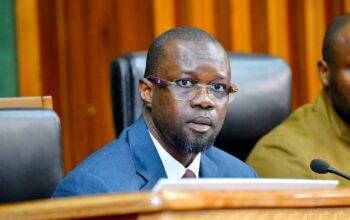
Kemi Seba appears in a Pretoria courtroom on April 20


As South Africa’s judiciary prepares to rule on the fate of Kemi Seba, the Beninese activist detained in April while attempting to enter Zimbabwe clandestinely, writer Venance Konan questions whether this social media phenomenon—with over 1.5 million followers—truly embodies today’s panafricanism. This moment invites a deeper look at the movement’s evolution and its modern expressions.
Kemi Seba, whose real name is Stellio Gilles Robert Capo Chichi, holds dual Beninese and Nigerien citizenship, including a diplomatic passport. His arrest in South Africa alongside his 18-year-old son and François Van der Merwe, a South African white supremacist nostalgic for apartheid, raises serious questions about his alliances and intentions.
Kemi Seba leads the NGO “Urgences panafricanistes” but is best known for his fiery panafricanist activism, particularly his virulent anti-French rhetoric, opposition to the franc CFA, and antisemitic statements. These positions led to the revocation of his French citizenship, which he had acquired by birth. According to reports, Seba was attempting to enter Zimbabwe illegally, possibly en route to Europe. He faces charges in Benin for “apology for crimes against state security and incitement to rebellion” after posting a video supporting soldiers involved in last December’s failed coup. An international arrest warrant has been issued against him.
Russia’s propagandists and backers of Sahel dictators
Kemi Seba, along with Franklin Nyamsi and Nathalie Yamb, represents the loudest voices of panafricanism in Francophone Africa. These figures are at the forefront of the fight against French influence on the continent. Yet they also serve as the most vocal propagandists for Russia and the strongest supporters of the three military juntas in the Alliance of Sahel States (AES)—Assimi Goïta of Mali, Ibrahim Traoré of Burkina Faso, and Abdourahamane Tiani of Niger. Is this new panafricanism merely an anti-French crusade that leads to subjugation under Russian influence and support for authoritarian regimes that reject democracy?
From anticolonial movement to fragmented nationalism
The roots of panafricanism trace back to early 20th-century Black intellectual circles in the Americas and the Caribbean. It became a driving force in the continent’s anticolonial struggle, with leaders like Kwame Nkrumah of Ghana, Sékou Touré of Guinea, and Patrice Lumumba of the Congo at its forefront. The ideology united students in the Fédération des étudiants d’Afrique noire en France (FEANF), founded in 1950, which quickly adopted a political stance advocating for decolonization and African unity. Its strong opposition to the Algerian War drew the ire of French authorities, who retaliated by raising rents for African students, cutting scholarships, and subjecting them to constant police surveillance. The FEANF was dissolved in 1980.
The independence of Ghana in 1957 and most African nations in 1960 were seen as triumphs of the panafricanist struggle. The creation of the Organization of African Unity (OAU) was hailed as a major step toward continental unity. Yet, after independence, narrow nationalism took hold. Instead of unity, Africa saw secessions—such as Eritrea breaking away and the division of Sudan—or failed attempts like Biafra and Casamance. In 2002, Libyan leader Muammar Gaddafi attempted to revive the idea of a united Africa by transforming the OAU into the African Union (AU), but the effort stalled. Gaddafi was killed in 2011 by a Franco-American-British coalition. By 2001, the AU had launched the New Partnership for Africa’s Development (NEPAD), aimed at accelerating integration and development, but the initiative has since faded into obscurity.
From civil wars to the persecution of Africans
Today, panafricanism is often invoked rhetorically. Any visiting French politician is expected to declare, “I love Africa,” and African leaders routinely brand themselves as panafricanists. Many countries have ministries or departments dedicated to African integration. For example, former Ivorian president Laurent Gbagbo, who ruled from 2000 to 2010, recently launched a new political party, the Parti des peuples africains-Côte d’Ivoire (PPA-CI), which proclaims itself panafricanist.
Similarly, Senegal’s ruling party is called Les Patriotes africains du Sénégal pour le travail, l’éthique et la fraternité (PASTEF). Yet, far from unity, African nations either wage civil wars—such as in the Horn of Africa, Sudan, or the Great Lakes region—or engage in the persecution of African migrants, as seen in South Africa. Elsewhere, tensions simmer between neighbors, particularly between Sahel countries and their ECOWAS counterparts.
Urgent calls for true panafricanism
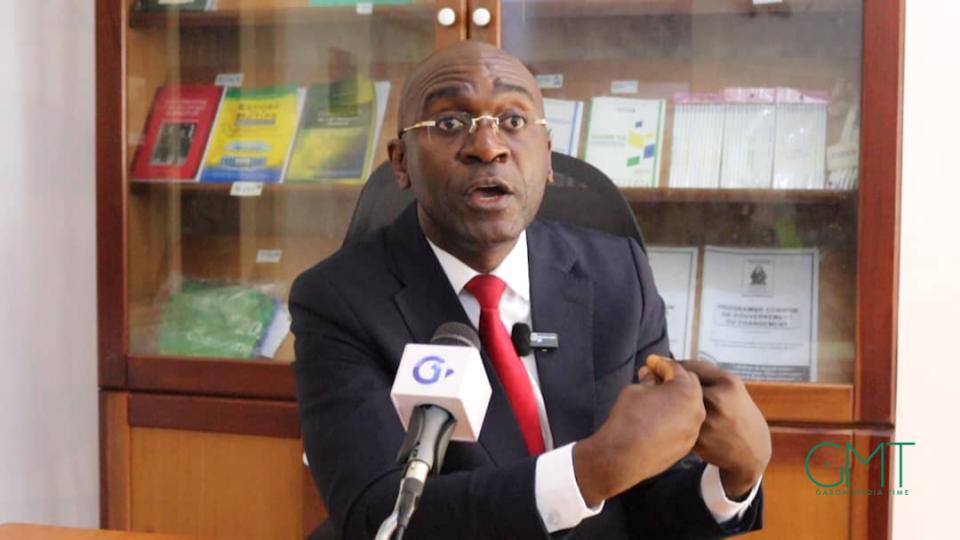
So where are today’s true panafricanists? The most visible voices belong to Kemi Seba, Franklin Nyamsi, and Nathalie Yamb. These are the figures dominating social media, each with a significant following. Seba, of Beninese origin, was once French but had his citizenship revoked. Nyamsi, from Cameroon, is also French and faces scrutiny from Paris for his anti-French stance. Yamb, of Cameroonian-Swiss heritage, has been sanctioned by the European Union for similar reasons. They claim to be persecuted for their battles against the West, particularly France. But where is the panafricanism in aligning with Russian interests? Can liberation come from replacing one form of domination with another? The atrocities committed by Russian-backed militias in the Sahel speak volumes. Where is panafricanism when activists align with ruthless dictatorships that suppress freedoms, imprison opponents, or silence dissent?
According to leaked phone conversations, Seba has accused Nyamsi and Yamb of being “opportunists” working for Faure Gnassingbé, Togo’s president. Seba, despite his anti-French rhetoric, has reportedly expressed regret over losing his French citizenship. Let’s be clear: this brand of panafricanism is tainted, corrupt, and little more than deception. Yet, in a world dominated by predatory powers, Africa’s survival may depend on rapid unity—on embracing a true, urgent panafricanism before it’s too late.