Lomé Takes Center Stage as Africa Charts a New Economic Course
For three days starting May 18, 2026, Lomé has transformed into the epicenter of continental economic ambition as the third edition of Biashara Afrika unfolds. The forum, dedicated to trade, investment, and African economic partnerships, has brought together heads of state, ministers, investors, and private sector leaders under one roof to turn visionary plans into tangible progress.
From Vision to Execution: The ZLECAf Imperative
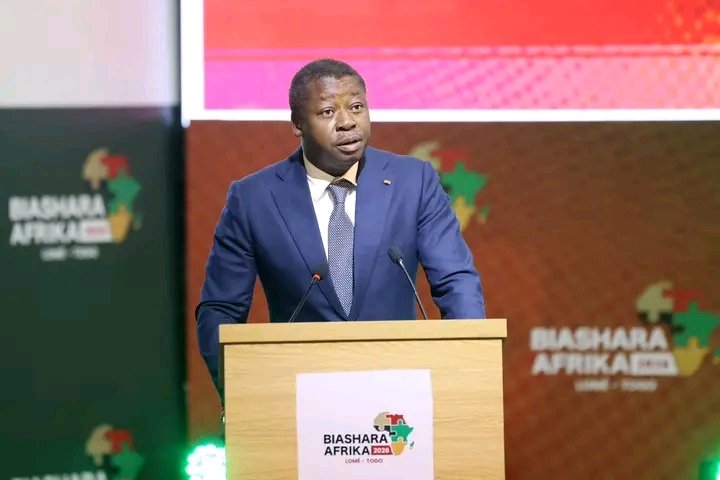
In a keynote address that set the tone for the event, Faure Essozimna Gnassingbé, Chair of the African Union’s Economic Council, delivered a powerful message: Africa must shift from policy declarations to measurable economic outcomes. Addressing a high-level audience in the Togolese capital, he emphasized that the continent’s future hinges on its ability to convert the African Continental Free Trade Area (ZLECAf) from a framework agreement into a living, breathing engine of growth.
The Togolese leader minced no words: “The era of declarations must now give way to the era of results.”
Honoring a Champion of Integration
Gnassingbé paid tribute to Issoufou Mahamadou, former President of Niger and a tireless advocate for the ZLECAf, whose relentless efforts helped lay the groundwork for the continent’s economic integration. His remarks underscored the importance of building on past achievements to propel Africa forward.
Breaking Down Barriers to Intra-African Trade
The forum highlighted persistent challenges that continue to stifle trade within Africa. Gnassingbé called out non-tariff barriers, cumbersome border procedures, and exorbitant logistics costs as major obstacles to seamless commerce. He stressed that the continent cannot afford to remain trapped in a cycle of exporting raw materials while importing finished goods—a pattern that drains resources and stifles industrialization.
Biashara Afrika 2026: More Than a Talk Shop
Rejecting the notion of Biashara Afrika as just another dialogue platform, Gnassingbé positioned it as a solutions hub—a place where partnerships are forged, investments are catalyzed, and the ZLECAf’s operationalization is accelerated. “This forum must be a launchpad for action, not just a stage for speeches,” he asserted.
The ZLECAf as a Tool for Continental Sovereignty
Gnassingbé framed the ZLECAf not merely as a trade agreement but as a strategic instrument for Africa’s economic sovereignty. In a world reshaped by geopolitical tensions, rising protectionism, and shifting global supply chains, he argued that no single African nation can navigate these challenges alone. “A fragmented Africa is a vulnerable Africa,” he warned. “Our strength lies in unity.”
Building Homegrown Industrial Champions
The Togolese leader championed the emergence of large-scale African enterprises capable of competing on the global stage. He lamented the continent’s reliance on raw material exports, advocating instead for the development of regional value chains and the scaling up of small and medium-sized enterprises (SMEs). “We must move beyond extracting wealth to creating it,” he declared.
Empowering Youth and Women Entrepreneurs
Gnassingbé reserved special emphasis for Africa’s youth and women, calling them the lifeblood of the continent’s economic future. He insisted that true integration must translate into tangible benefits for ordinary Africans—through job creation, access to markets, and support for female-led businesses. “This is not a project for elites or institutions alone,” he stressed. “It belongs to every African.”
Togo’s Role in Africa’s Economic Renaissance
Concluding his address, Gnassingbé reaffirmed Togo’s commitment to playing a pivotal role in Africa’s economic transformation. Leveraging its strategic location, robust logistics infrastructure, and regional connectivity, the country is positioning itself as a gateway to the continent’s burgeoning market. He expressed hope that Biashara Afrika 2026 would catalyze new partnerships and inject fresh momentum into Africa’s economic integration agenda.