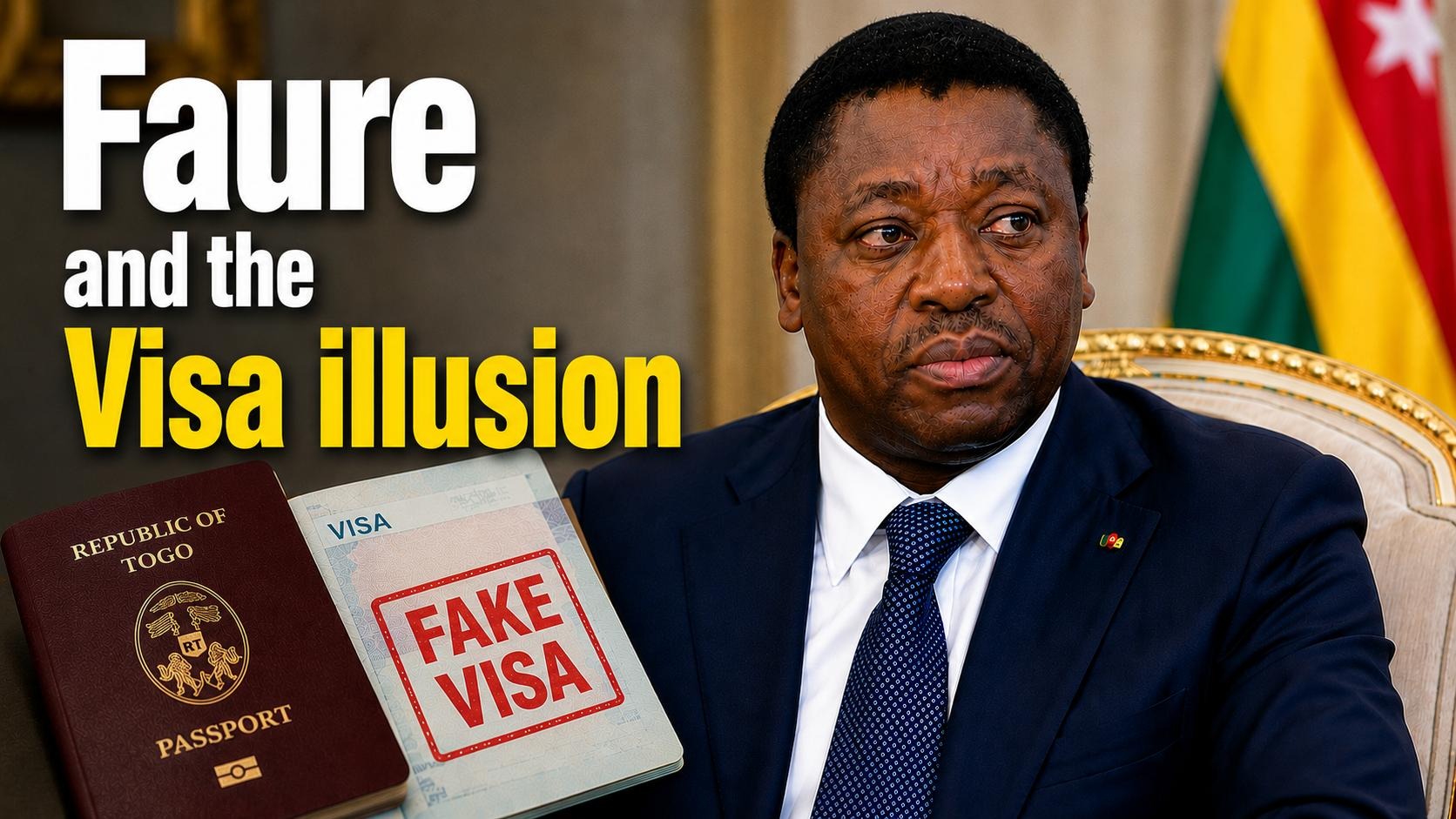
The announcement of a visa exemption for all African nationals arriving in Togo has been presented as a bold step toward continental integration. Yet beneath the polished rhetoric of a borderless Africa lies a more complex reality—one where political messaging overshadows genuine openness.
President Faure Gnassingbé’s administration has framed the decision as a landmark achievement for panafricanism, positioning Togo among the continent’s most progressive nations on freedom of movement. The move has drawn international attention, with media outlets and business leaders initially hailing it as a breakthrough for tourism and economic exchange. However, a closer examination reveals that the measure is far from the unconditional liberation it appears to be.
An exemption with stringent conditions
The policy, as outlined, appears inclusive and straightforward:
- Eligibility: All African nationals holding valid passports.
- Duration: Short-term stays capped at 30 days.
- Entry points: Theoretically applicable at all land, air, and maritime borders.
At first glance, the initiative aligns Togo with a select group of African countries—such as Rwanda and Benin—that have embraced open-door policies. Yet the fine print tells a different story, raising questions about the true motivations behind Lomé’s decision.
The digital visa trap: where bureaucracy replaces physical barriers
What seems like a relaxation of entry rules is, in practice, a shift from physical to digital surveillance. Travelers seeking entry are now subject to mandatory pre-screening through an online platform:
- Registration on the official portal voyage.gouv.tg at least 24 hours before arrival.
- Completion of an online travel declaration.
Critics argue that this system functions as an electronic travel authorization, akin to the ESTA or ETA systems used in the United States and the United Kingdom. The key difference? The Togolese government retains full discretionary power over who may enter. While the passport may grant initial access, it is the state’s algorithm—and not the law—that ultimately determines eligibility. Could this platform be used to block journalists, human rights activists, or political opponents under the guise of “incomplete documentation” or “security concerns”? The risk is undeniable.
A calculated move: diplomacy and surveillance intertwined
Faure Gnassingbé’s announcement serves a dual purpose, blending domestic consolidation with international image-building. After years of criticism over constitutional reforms that extend presidential term limits, the leader is leveraging panafricanist rhetoric to deflect attention from internal dissent.
Meanwhile, the centralized digital registration system offers the regime an unprecedented tool for monitoring visitors. By collecting data on entrepreneurs, journalists, and influencers before their arrival, Lomé gains real-time insights into the profiles of those entering the country. This modernized surveillance apparatus not only reinforces border control but also serves as a mechanism for exerting soft power.
A half-measure with economic implications
While the elimination of traditional visa fees may appeal to travelers and business professionals, the bureaucratic hurdles remain intact. Entrepreneurs and media figures hoping for a seamless flow of ideas and investments find themselves navigating a labyrinth of digital requirements. The promised openness, it seems, is conditional—and conditional on compliance with the state’s digital gatekeeping.
In the end, Togo’s visa exemption is less a bold step toward continental unity and more a carefully orchestrated blend of geopolitical strategy and digital authoritarianism. Faure Gnassingbé’s government presents the world with one hand open, while keeping the other firmly on the pulse of who crosses its borders.