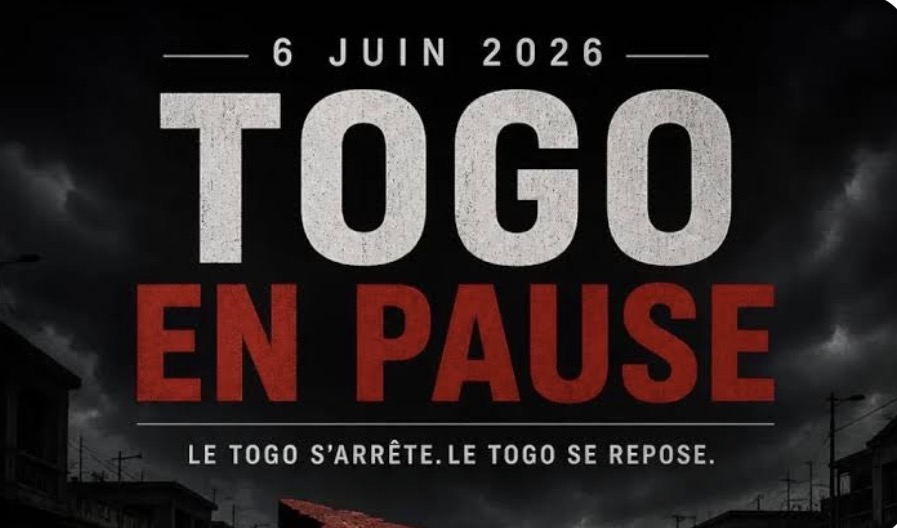
June 6, 2026, is not just another day on the calendar. It is a deliberate pause—a collective refusal to play by the rules of a system that has long outlived its legitimacy. For nearly six decades, Togo has been governed by a deeply entrenched militaro-political and ethnic power structure, one that thrives on exclusion, repression, and the silencing of dissent. The movement Togo en Pause, backed by the M66 coalition and the nation’s resilient opposition, is not merely a protest—it is an act of defiance that challenges the very foundations of this system.
The machinery of governance in Lomé has long operated under a familiar script: elections without real choices, institutions designed to rubber-stamp decisions, and promises that dissolve into empty rhetoric. The regime’s response to dissent—whether through crackdowns on protests, intimidation of critics, or the suffocation of independent media—is not an aberration. It is the system functioning exactly as intended: to maintain power at any cost.
a new generation rejects the status quo
Young Togolese have come of age in an environment where the narrative of the state is imposed, while the voice of the citizenry is systematically marginalized. They have witnessed the dispersal of marches, the harassment of leaders, and the erosion of civic freedoms. They have felt the weight of territorial inequalities, social stigma, and the harsh divide between promise and reality. Yet, they are not resigned to fate.
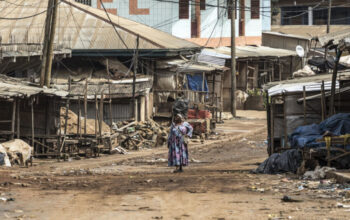
The Togo en Pause movement offers them a path forward—not to fill the streets with noise, but to create a deliberate silence. By staying home, suspending daily routines, and withdrawing participation, they are not retreating. They are making a statement: “If you refuse to listen, then witness our absence.” On June 6, every closed shop, every empty market stall, and every quiet street will serve as a silent but unmistakable rebuke to a system that has long ignored their demands.
a system designed to resist change
The foundations of Togo’s power structure are built on loyalty, not merit. Key positions in the military, security forces, civil service, and state-owned enterprises are held by those who answer to a narrow circle of influence, not the public interest. Beneath the veneer of modernization and international partnerships, the reality remains unchanged: persistent poverty, deepening inequalities, and a lack of opportunity for the majority.
This is why Togo en Pause is more than a protest—it is an act of collective clarity. It refuses to normalize what should never have been accepted in the first place: a system that prioritizes survival over progress, control over freedom, and power over justice.
unity in simplicity: a mobilization for all
The power of this movement lies in its inclusivity. It calls on workers, traders, students, civil servants, artisans, farmers, and the diaspora to participate in a single, unified act: suspending their contribution to the machinery of the state. June 6 is not about filling public spaces with bodies. It is about creating a void—one that forces the regime to confront its own emptiness.
This is not a call for chaos. It is a demand for dignity. It rejects the hollow rituals of politics, the cycle of broken promises, and the illusion of change without consequence. It says, loud and clear: “We are not extras in your political theater.”
the test of courage
To stay home, to refuse to work, to halt movement—these are not passive acts. They carry risk. There is the fear of lost income, the threat of retaliation, and the uncertainty of what comes next. For years, fear and division have been used to keep the population in check. June 6 will put these tools of control to the test.
The question is simple: Will the people of Togo continue to accommodate a system that has failed them, or will they embrace the uncertainty of change? The answer does not depend on a single slogan or a single organization. It is rooted in a history of unheard frustrations, of words too long suppressed, and of a will that spans generations.
june 6 is not the beginning or the end—it is a turning point
This is not the start of a revolution, nor is it the conclusion of one. It is a moment of reckoning. On June 6, Togo will stand still—not out of weakness, but out of strength. It will pause to signal that a system built on decades of unbroken power has finally been seen for what it is: unsustainable, unjust, and unacceptable.
When the day ends, the country will not be the same. It will have taken a stand. And from that stillness, it will rise.