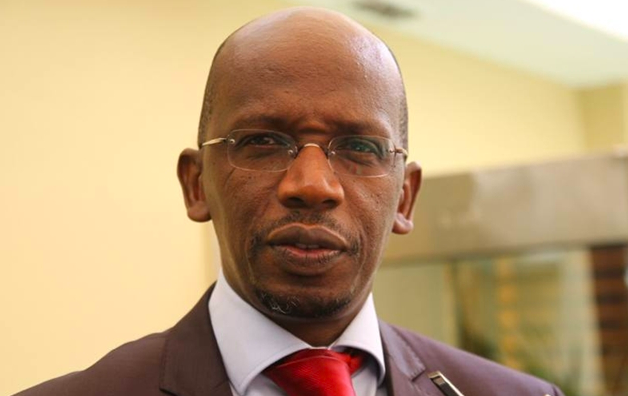
The period between 2024 and 2026 marked one of Senegal’s most instructive chapters in contemporary governance, country risk management, strategic communication, and international perception. The arrival of Ousmane Sonko as Prime Minister exposed how reckless governance, inflammatory public rhetoric, and institutional unpredictability can destabilize a nation with strong economic fundamentals within months. For global analysts, this episode now serves as a textbook case, illustrating the profound consequences on investor confidence, macroeconomic stability, job creation, financial credibility, and international appeal.
Investor confidence crumbles: when governance trumps economic strength
In 2025, Senegal’s foreign direct investments (FDI) collapsed by 98.9%, plummeting from $3.319 billion to just $37 million. Such a contraction is unprecedented in African economies outside of major external shocks. While the country’s growth hovered around 7.9%, oil production surged, and the FDI stock exceeded $24.9 billion, Senegal’s appeal vanished overnight. It slipped from the second most attractive FDI destination in Africa in 2023 to the 46th place by 2025.
Investors did not reject Senegal’s economy; they rejected its governance. The dual power structure at the Prime Minister’s office, inconsistent policy signals, aggressive oil contract renegotiations, the revelation of hidden debt pushing public debt to 119% of GDP, and the refusal to engage with the IMF created an environment of institutional uncertainty. This was immediately reflected in risk premiums, with four credit rating downgrades by Moody’s within a year and S&P downgrading the country to CCC+.
Jobs vanish: the social cost of investment paralysis
The collapse in FDI halted greenfield projects, industrial expansions, service hubs, and logistics infrastructure. Greenfield investments had already declined by 37% in 2024, signaling a deepening crisis of confidence. As Senegal’s development relies heavily on FDI-driven industries and services, this contraction triggered a sharp decline in direct, indirect, and induced employment. The ripple effect was immediate: construction projects ground to a halt, leaving workers, technicians, equipment operators, subcontracting SMEs, and the entire building supply chain stranded.
The construction sector—historically a major employer—entered paralysis, dragging down commerce, transport, and services. The result was a widening gap between headline economic growth and a contracting labor market, exposing the fragility of Senegal’s social fabric.
Local businesses suffocate: the first warning sign
Senegal’s private sector was the first to feel the heat. Faced with delayed payments, scarce credit lines, and a complete lack of visibility, businesses saw their margins erode and their growth prospects evaporate. A report by GAC Consulting bluntly concluded: “Senegal won the battle of numbers but lost the narrative war.” In a world where public speech is a financial asset, inconsistency became a risk premium. The country’s Narrative Risk Index (NRI) skyrocketed, with risk-related discourse 5.1 times more prominent than opportunity narratives. This shift amplified caution among banks, investors, and international partners, turning a governance crisis into a systemic confidence crisis.
Geopolitical missteps: when words become financial risks
The Prime Minister’s geopolitical statements further reinforced perceptions of unpredictability. Describing the Iran-US war as a conflict “triggered by the US and its ally Israel” projected an image of confrontation in a polarized international landscape. For investors, every word became a signal of country risk, especially in an environment already deemed unstable.
In today’s financial markets, a statement from Dakar can become a headline in London, an alert in New York, or a downgrade note in Washington. Public speech has become a tool of financial stability—or instability—where inconsistency fuels volatility.
A textbook lesson for global governance and emerging markets
This episode must now be studied in geopolitics, public governance, strategic communication, and country risk management programs worldwide. It demonstrates that sovereignty is not declared; it is built through rigor, coherence, discipline, and masterful international storytelling. It also proves that fragmented or conflict-driven public rhetoric can become a financial risk factor capable of undermining a state’s credibility beyond its fundamentals.
Donors return: proof that perception is shifting
The facts now confirm the change in narrative. Less than three months after the Prime Minister’s departure, international donors began returning. The World Bank approved a $140 million package to improve road connectivity in northern and central agricultural zones, while the African Development Bank greenlit a $35 million loan to strengthen public finances.
These commitments are not merely technical gestures. They are tangible proof that Senegal’s international narrative is changing. Donors only return when governance becomes predictable, public speech stops being a risk factor, and the state demonstrates it speaks with a single voice.
A lesson for Africa and emerging markets
The Senegalese experience offers a broader lesson for emerging markets: in a world where financial flows are hypersensitive to narrative, stability is not declared—it is proven. Trust is not claimed; it is earned. Attractiveness is not preserved through slogans but through daily discipline, institutional coherence, predictable policies, and mastered economic communication.
Senegal can repair the 2025 rupture. But this recovery demands governance that understands the narrative is now a financial asset. When governance regains coherence, attractiveness returns—every time.
You may also like
Gabon’s poultry import ban: inside the 2027 sovereignty gamble
Mali’s 66th independence anniversary: a national celebration with implications for the AES
Mali: assimi goïta’s army confronts repeated battlefield losses
Niger : l’écart entre le discours sécuritaire du CNSP et la réalité des zones exposées
Niger: the double silence at the heart of power