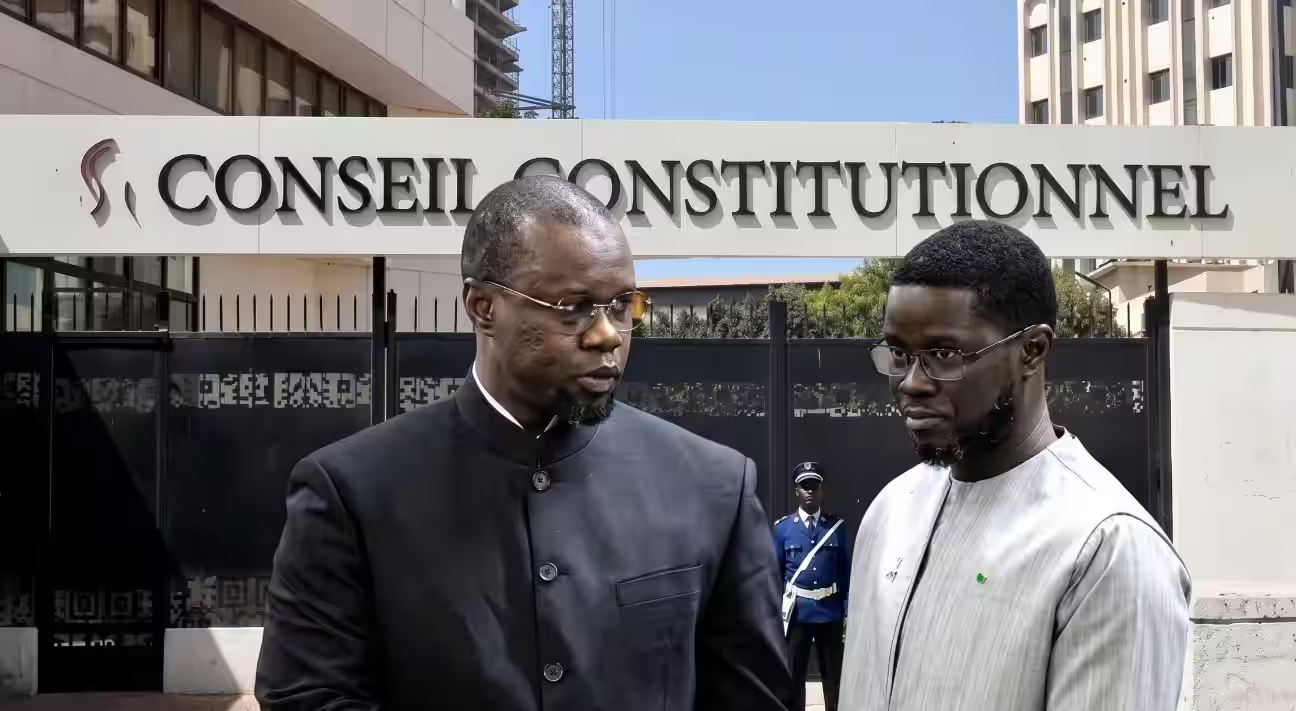
The Constitutional Council’s ruling regarding the reinstatement of Ousmane Sonko to the National Assembly has ignited intense scrutiny and legal analyses within Senegal’s judicial circles. This particular decision, potentially indicating a shift in established jurisprudence, raises crucial questions about the consistency of institutions when confronted with fundamental constitutional challenges.
Issued on June 17, 2026, by the constitutional judge, the decision concerning Ousmane Sonko’s return to the National Assembly continues to provoke divergent interpretations across the Senegalese legal landscape. While officially presented as a strictly procedural matter—citing the judge’s lack of jurisdiction—some observers perceive a more profound implication, suggesting a subtle alteration in constitutional jurisprudence. At the heart of this dispute, the Constitutional Council of Senegal faces questions regarding the coherence of its own judicial trajectory. Indeed, numerous public law analysts contend that the recent ruling diverges sharply from a more assertive stance observed just a few years prior, notably during the institutional events of February 2024. This case extends beyond mere electoral litigation. A critical examination of the June 17, 2026, decision highlights a stark contrast between two pivotal moments in recent constitutional justice. On one hand, an earlier phase where the judge adopted an expansive interpretation of its role, acting as a regulator of institutional operations and a guarantor of institutional stability. On the other, the recent decision which, according to this analysis, favors a more restrictive approach, focusing narrowly on the legal classification of the contested act. The core of the criticized reasoning…